English
 Español
 Français
 Deutsch
 Italiano
 Português
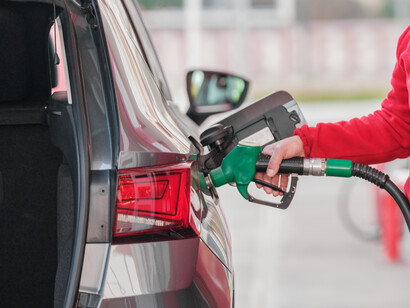
If we were to pick one word that best describes the modern world’s approach to energy, it would be “insanity.” The global economy is addicted to fossil fuels. We have suffered six oil shocks in the last 50 years, but we keep doing the same thing over and over again and expecting a different result.
The latest shock began when Iran closed the Strait of Hormuz in response to the attack by the United States and Israel. It should not have been a surprise. Military experts have warned for decades that the Strait threatens global economic stability. A fifth of the world’s petroleum supply is shipped through the narrow waterway between the Persian Gulf and the Gulf of Oman.
Iran borders much of the Strait’s shoreline. Its military closed the passage in March. Just the threat of its attacks on oil tankers discouraged insurance companies from insuring them, and shipping companies from taking the risk of attack. With little effort and cost, Iran closed the world’s most important oil spigot. Oil prices shot up, risking a global recession.
Energy markets have a long history with Iran. It has the world’s third-largest crude oil reserves. In 1973, it and other OPEC members embargoed oil shipments to the United States, the UK, Japan, the Netherlands, and several other countries that supported Israel during the Yom Kippur War. The price of oil quadrupled.
Six years later, the Iranian Revolution disrupted oil shipments again, triggering another crisis. Economists blamed the two crises for abruptly ending the economic expansion that followed World War II.
More than 70 percent of the world’s oil supply is transported by sea. The Strait of Hormuz is one of at least 8 bottlenecks in the world’s shipping lanes. Some can be circumvented, if necessary, but others cannot.
A month after the latest shock began, 60 countries used emergency measures to cope with the loss of oil. They reportedly implemented nearly 200 policies to save fuel, keep consumer costs down, and increase their own energy production.
China stopped exporting fuel; the Philippines declared a national emergency; Sri Lanka, Bangladesh, Slovenia, and Myanmar rationed fuel; Sudan rationed electricity in its capital; Vietnam encouraged people to stay home or use bicycles rather than petroleum-powered transportation; Thailand asked its people to stop using air conditioners; and middle-class Americans struggled to afford gas. At least 18 European countries lowered consumer energy costs. Seventeen countries capped fuel prices.
Unfortunately, eight countries decided to increase their use of coal, the dirtiest fossil fuel, but India, Barbados, and the UK reportedly responded by emphasizing the importance of clean power, and France and the Philippines responded with new renewable energy announcements.
However, geography and wars are not the only risks to oil supplies and prices. Countries that rely on those fuels don’t control their prices. Oil prices are set by the law of supply and demand in the global marketplace. Oil producers manipulate prices by producing more or less petroleum.
For example, the United States leads the world in oil and gas production. President Donald Trump aggressively promotes more production as America’s path to energy independence. But Iran reminds us of the fallacy of that view. Its control of Hormuz hurt Americans like everyone else. And anyone who remembers the 1970s crises knows that this one could have been much worse.
In addition to choke points and price manipulations, oil and other fossil fuels are risky commodities for another very important reason. They are altering the planet’s climate in ways that cause a wide variety of disastrous impacts. Scientists have known this for more than a century. Politicians have been warned about it for about 75 years. But it was not until 1992 that the international community decided to do something. It agreed to begin meeting annually to define each nation’s obligations to address the problem.
It took 23 years for countries to define their goal. They agreed in Paris to limit Earth’s warming to well below 2 °C relative to pre-industrial levels, and preferably no more than 1.5 °C. Countries agreed to each develop voluntary plans to help achieve that objective.
The most direct approaches are to a) switch from fossil fuels to pollution-free renewable energy, and b) conserve and enhance the ability of ecosystems to absorb and store carbon dioxide, the principal greenhouse gas. Oceans, forests, soils, and many other ecosystems do this naturally to maintain the planet’s carbon balance, the natural cycle in which living things emit carbon while other living things absorb it. Fossil fuels have upset the balance by emitting more carbon pollution than nature can absorb and store. The excess lingers in the atmosphere like a blanket that holds too much of the sun’s heat on the planet’s surface.
To restore the balance, countries have agreed to help the world achieve a “net zero carbon” economy by 2030. Then, because the carbon “blanket” is already much too thick, they would find ways to remove the excess from the atmosphere. (Scientists define “safe” as 350 parts per million of carbon dioxide in the atmosphere. The current level is approaching 430 ppm and climbing. This excess is called “overshoot.”)
Countries signed off on that plan 11 years ago, but they are underperforming. Scientists expect their current plans to still result in global warming of 2.8 °C. While an extra degree or two seems small, every tenth makes a significant difference in what the future will be like. Many experts say it is no longer possible to keep warming to 1.5 °C. Climate impacts already underway will cause extreme heat waves, droughts, ecosystem loss, sea-level rise, and threats to ocean life. Food prices will rise. Nations will compete for resources. But at 2.8 °C, climate change would be catastrophic and potentially irreversible.
Despite these warnings, greenhouse gas emissions set a record last year, driven by increased fossil fuel pollution in the United States and China, the two largest sources.
Now, we have reached a point at which problems overlap: the world’s oil addiction causes climate change, and both threaten our economic security. In addition, climate change threatens the maritime system on which reliable oil supplies depend. An Oxford study examined 1,340 of the world’s ports and found that nearly 9 in 10 are exposed to sea-level rise and storms large enough to disrupt operations.
Meanwhile, Iran has shown again how oil can be used as a weapon that can prevail in asymmetric conflicts. And military experts have long warned that climate change itself threatens international security by “intensifying existing social, economic, and political tensions, transforming environmental hazards into widespread instability, conflict, and humanitarian crises. It exacerbates resource scarcity, drives mass displacement, and destabilizes regions, particularly in fragile states, creating a complex, compounding security risk.”
The economic costs of climate change are expected to reach trillions of dollars this year, including $1.3 trillion in corporate revenue losses. Some economists expect the world economy to resemble a permanent recession.
The United Nations says climate-related disaster costs now exceed $2.3 trillion annually, including cascading and ecosystem costs. “For comparison, a national debt of just $300 billion was enough to trigger the European sovereign debt crisis,” the UN notes. “Disaster risk is increasingly a systemic threat to global financial stability.”
If we get the feeling that the global economy and quality of life are hanging in the balance, even though events have warned us about it for generations, we have begun to understand the insanity of fossil-fuel addiction.
Facing facts
Some facts are straightforward, indisputable, inescapable, and nonnegotiable. Fossil fuels are finite. At some point, the readily available supplies will be exhausted. Long before that happens, they will become too expensive to use. In fact, that’s already the case, especially if we count all their costs to society and the environment, including the economic consequences of supply interruptions.
Fossil fuels are anti-democratic. Few people have the wherewithal to produce their own natural gas, oil, or coal. So, energy consumers (that’s everybody) are at the mercy of the fossil energy industry, utility monopolies, and companies in the greenhouse gas supply chain. Many still adhere to the neo-liberal dictum that their only obligation is to increase profits for their corporate officers and shareholders. Considerations like environmental protection and human health are not their problems.
Fossil fuels are substantially underpriced. If markets priced coal, oil, and gas to reflect the health and environmental costs they impose, no one except the very rich could afford them. So, governments and the powerful industry act like carbon cartels, colluding to hide those costs. The last time the International Monetary Fund calculated the true costs of fossil fuels, it estimated they totaled more than $7 trillion in 2022, including tax subsidies, environmental damage, and health impacts. The IMF predicted that subsidies would exceed $8 trillion by 2030. If these costs had been reflected in market prices, we would have replaced fossil fuels with energy from sunlight, wind, water, and geothermal sources long ago.
Even though fossil fuels benefit from subsidies and externalized costs, clean energy has been ready for years to outcompete them. Economists point out that unsubsidized electricity generated from sunlight and wind has been cheaper than that from fossil and nuclear sources for at least a decade.
Like all forms of energy, renewable resources require capital investments in the hardware needed to convert them into useful energy. But after that, they are free and always will be. They are inexhaustible, ubiquitous, can be used at the point of consumption rather than requiring transmission infrastructure, and are pollution-free. They can go online rapidly compared to the many years required to build conventional power plants. They can be scaled to serve individual buildings, neighborhoods, cities, or entire regions.
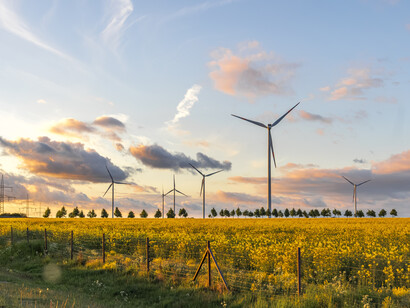
In addition to no emissions, they are environmentally benign in other ways. As one advocate noted, a solar spill is a sunny day. The solar energy hitting the Earth’s surface in one hour is enough to power the entire world for a year. We don’t have to blast, dig, fracture, or pollute water to produce it. They are intermittent, but their power can be stored for 24/7 use. Their hardware, like many modern technologies, requires rare-earth minerals, but they can be recycled.
Sunlight (which also produces wind) is the best power plant that civilization never built. It delivers clean energy in 8 minutes from 93 million miles away and will continue to do so for the next 5 billion years.
The carbon cartel
So why do fossil fuels still dominate the world’s energy mix? One reason is that nearly 100 countries produce it. They have been the heroes of economic progress for 150 years. There is still a certain macho romance associated with wildcatting, risk-taking, and roughnecking in oil fields, blowing up mountains to expose coal seams, penetrating deep into the Earth to find treasure that’s been hidden for hundreds of millions of years.
A more concrete reason is that the world is laced with trillions of dollars in fossil energy infrastructure, which economists call sunk costs. Recoverable underground reserves of oil and gas are valued in the tens of trillions of dollars. One study concluded that to achieve the Paris climate goals, about two-thirds of these reserves would have to remain unused. The industry and its investors are not inclined to leave those profits stranded.
The existing carbon cartel has incredible economic and political power. The industry’s annual revenues average nearly $3.5 trillion. The oil and gas sector spends lavishly on advertising to sway public opinion and influences government policies by donating generously to political campaigns. The annual gatherings of national leaders to discuss climate action are evidence of this. Some 1,600 fossil-fuel lobbyists attended the most recent conference, greatly outnumbering every national delegation except the host’s. Nearly 600 representatives from the fossil fuel industry were given special behind-the-scenes access to the negotiations.
During more than 30 years of negotiations, the commitments countries made at these meetings did not even mention fossil fuels until 2023, when the two words appeared briefly in the meeting’s closing documents. They disappeared again in 2024 and 2025.
The ongoing conflict between the old and new energy paradigms has increased interest in finding ways to continue using carbon-based energy while trapping its emissions before they enter the atmosphere. There is also growing interest in “direct air capture” technology that sucks greenhouse gases out of the atmosphere. Interest is growing, too, in a class of technologies called geoengineering – schemes to manipulate nature. Several would block some of the sunlight reaching the Earth’s surface. Others would promote more growth of plant life in oceans to absorb carbon dioxide.
However, none of these options is problem-free. Some are very costly. The others involve undetermined risks to nature. The most direct and cost-effective option for mitigating global warming remains transitioning from fossil fuels to sustainable energy, while minimizing disruption to communities, workers, and industries that rely on conventional energy.
Short-termism
Short-termism is another common barrier to the energy transition. It takes two forms. The first is the difficulty of getting business leaders to look beyond the next quarter and elected officials to look beyond the next election.
It is difficult to drive home the reality that while climate action and renewable energy both require short-term disruption and up-front investment, the long-term benefits far exceed the costs.
The second barrier is the need to address long-term problems with short-term leaders. The United States is an example of a country where presidents are elected every four years and members of Congress every two or six years. Each election produces new winners with their own philosophies, priorities, and obligations. However, to be effective and timely, energy and climate policies must persist over long terms, some permanently.
Another example is unfolding in Colombia, where President Gustavo Petro embarked on a program to cut fossil fuel production in favor of clean energy, requiring a shift from the country’s extractive economy to a more sustainable plan. Over the last three years, renewable energy has grown from 2 percent to 16 percent of the nation’s electric mix
However, President Gustavo is barred by the constitution from running for office again. He will step down in May. The question is whether Colombia’s exemplary energy policy will continue under new leadership, or whether the allure of short-term profits from oil exports will prevail.
In 2015, then-U.S. President Barack Obama signed the Paris Climate Agreement. After Donald Trump became president in 2017, he withdrew the U.S. from the pact. When Joe Biden took over the presidency in 2016, he re-enrolled America in the agreement. When Trump became president again in 2025, he pulled the country back out.
Regarding international treaties, it’s difficult to get nearly 200 nations to agree on anything, which is why the Paris agreement was so celebrated. There are currently over 3,500 international environmental agreements in force today, but they have largely failed to stop ecological degradation. Scientists convened by the Stockholm Resilience Center reported last year that civilization has crossed into the danger zones for seven of the nine critical planetary boundaries.
We may now see more first-mover countries form “coalitions of the willing” to move more quickly on these issues. For example, 18 countries have signed a Fossil Fuel Nonproliferation Treaty, promising to collaborate on clean energy technologies and investments. Other countries may follow suit by forming multilateral “climate clubs” to collaborate on topics such as trade tariffs against polluters, carbon price adjustments on imports, cutting-edge climate policies and research, and clean supply chain agreements.
The inevitable transition
The good news is that the clean energy transition is progressing despite resistance from the carbon cartel. There is more than enough money to finance the shift. The International Energy Agency (IEA) estimates that an investment of nearly $5 trillion annually by 2030 would finance the shift to zero-net carbon by mid-century. A redirection of fossil energy subsidies (again, they’re now expected to total $8 trillion by that year) would cover the cost.
McKinsey & Company, a global management consulting firm, confirms that benefits would far exceed costs. Such an economy would add over $10 trillion to global GDP by 2050, create 9 million more jobs than are lost by 2030, create a $450 billion green market, significantly reduce public health costs and productivity losses, and lower the costs of climate-related changes in weather.
It would also reduce the needless costs of energy disruptions caused by weather, wars, saboteurs and terrorists, or market manipulations. The transition to energy from indigenous sunlight, wind, geothermal temperatures, and water would effectively eliminate the interruption costs of future disasters, wars, or supply manipulations.
Global investment in clean energy (including nuclear) rose to a record $2.2 trillion last year, up 8 percent from the year before. It was twice the world’s investment in oil, gas, and coal. The transition advanced despite record coal demand in China, India, and Southeast Asia.
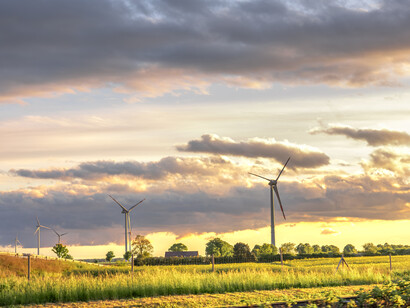
As the use of solar and wind power grows, their costs keep falling. The Climate Council, an independent Australian organization that promotes climate action, notes that it took the world 68 years to reach 1 terawatt of solar energy, but only 2 years to double it. The countries leading the deployment of solar and wind power are, in order, Denmark, Djibouti, Lithuania, Luxembourg, Portugal, the Netherlands, Germany, Spain, Ireland, Greece, Mauritania, Australia, the UK, Estonia, and Chile.
The costs of storing solar and wind energy so it is always available have also dropped significantly. And research is underway on substitutes for the rare-earth minerals used in solar panels, wind turbines, electric vehicles, and many other modern technologies.
Conventional wisdom has long held that the energy transition has stalled, not because of technological delays but because of a lack of political will. That will change when we stop assuming that every oil crisis and weather disaster is the last. We face a calamity-filled future and a profound loss of quality of life on the planet if we don’t conduct a sustained transition to energy sources that cooperate with nature rather than disrupt and degrade it.
In the meantime, with governments moving too slowly, the battle for progress has spread to the courts. In an advisory opinion last year, the International Court of Justice ruled that countries have a binding legal obligation to protect the climate from greenhouse gas emissions,
As of this month, victims of climate change worldwide have filed over 3,000 lawsuits against governments and corporations for their roles in global warming. Many attempt to hold fossil fuel producers and major polluters accountable for climate-altering emissions.
Although most cases have been filed in the United States, nearly 60 percent of the lawsuits since 2020 have been in the Global South. Oil and gas companies are often defendants not only for physical damages but also for alleged fraud and human rights violations. Columbia University’s Sabin Center, which tracks the cases, says 2026 is a key year in which many decisive cases may finally be resolved.
The lawsuits have evolved from demands for greater emission reductions to claims for compensation from climate victims under the “polluter pays” principle, a longstanding policy under which those who produce pollution must pay to manage it, clean it up, and compensate its victims for damages. About 175 countries have incorporated the principle into their environmental policies.
In an unprecedented case, Ukraine reportedly will attempt to hold Russia accountable for $43 billion in reparations for the carbon dioxide emissions that have resulted from its war on the country, including the pollution from burning forests, buildings, and equipment.
Other lawsuits cite the Public Trust Doctrine, an ancient principle that holds governments responsible for protecting certain natural resources for current and future generations. Climate-action advocates want to extend the Doctrine to the atmosphere. Other legal leverage includes statutes and constitutions that establish the legal rights of future generations to a clean and stable future.
In the United States, major oil companies are pushing back. Fifteen U.S. states are debating, and some have passed, laws that shield oil and gas companies from liability for climate-related damages, including the costs of recovering from weather disasters. The Trump administration is pushing Congress to give oil and gas companies a nationwide liability shield.
However, the best outcome this year would be for the Iran oil shutoff to become a lasting wake-up call to the unacceptable and rapidly accumulating liabilities associated with fossil fuels. As the old maxim says, a crisis is a terrible thing to waste.