English
 Español
 Français
 Deutsch
 Italiano
 Português
Not long ago, politics was confined to parliaments, rallies, and newspaper headlines. Today, a large part of political life happens in the digital space. Tweets can spark international debates, viral videos can make or break candidates, and hashtags can mobilize millions. Politics has not only adapted to the internet; it has been transformed by it.
Over the past decade, social media has given activists a new megaphone. From the Arab Spring to #MeToo, online platforms have carried local struggles across borders, creating global conversations in real time. Movements that once took years to build can now gain momentum in days, thanks to the speed of hashtags and viral content.
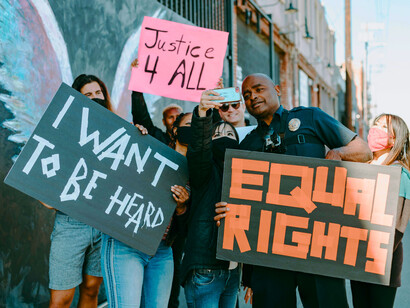
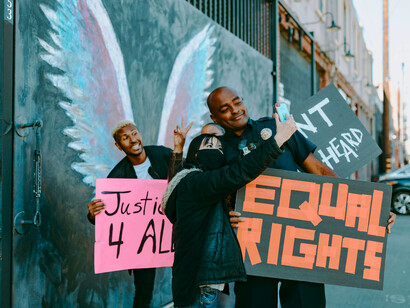
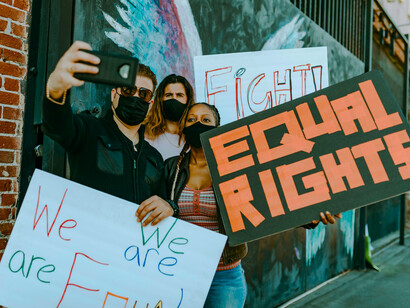
One striking example is the Black Lives Matter movement, which began in the United States but quickly spread to dozens of countries through online solidarity campaigns. The digital space allowed people to march virtually, share personal stories, and demand accountability in ways that reached beyond physical borders.
Youth movements, in particular, have flourished in the digital sphere. Climate activism led by Greta Thunberg, the #FridaysForFuture campaign, shows how a teenager with a smartphone can mobilize millions worldwide. Similarly, the #WomenLifeFreedom protests in Iran and the #EndSARS movement in Nigeria illustrate how online tools empower citizens to challenge injustice and demand change, even under restrictive political conditions.
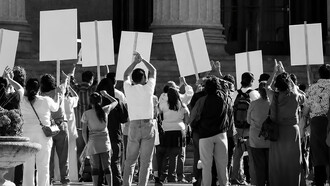
For young people especially, the digital sphere is much more than a tool; it is the key stage for political participation. Protests may still fill city squares, but they often begin with posts, videos, and online calls to action. Digital activism allows oppressed voices to be heard, creating new forms of political influence that cross borders.
Campaigns have also been reshaped by the digital shift. Politicians once relied on TV appearances and print interviews; today they compete for visibility on TikTok, Instagram, and X. For younger voters, a candidate’s online presence is often their first and most influential introduction.
Digital campaigning is not only about style but also about strategy. Micro-targeted ads allow political parties to reach specific communities with tailored messages, a practice that played a decisive role in elections from the United States and beyond. The Cambridge Analytica scandal highlighted both the power and dangers of using personal data to influence political behaviour. While digital tools enable engagement and mobilization, they also raise ethical and transparency concerns.
Misinformation campaigns, fake news, and coordinated online trolling are additional challenges. From Brexit to elections in Brazil and the Philippines, the spread of false narratives has shown how online spaces can shape political outcomes. Politicians and citizens now operate in an environment where visibility, credibility, and accuracy are constantly contested.
The power of online platforms comes with contradictions. On the one hand, the digital sphere gives marginalized voices a chance to be heard. A teenager with a smartphone can reach millions, and grassroots movements can pressure governments without traditional resources. Social media has amplified debates on climate change, human rights, and social justice, providing tools for communities that were historically excluded from political dialogue.
On the other hand, the same platforms that empower can also mislead. Disinformation spreads faster than fact-checks, echo chambers reinforce polarization, and the fake news blurs the line between reality and manipulation. Authoritarian governments have also learned to use digital tools for surveillance, censorship, and propaganda, turning the internet into a battlefield for control. Even democratic states are struggling to balance freedom of expression with the need to prevent harm.
Regional variations are also significant. In Africa, movements like #EndSARS in Nigeria leveraged social media to pressure the government, while in Latin America, Indigenous and environmental activists use digital campaigns to amplify their voices on global stages. The digital sphere does not operate in a vacuum; it interacts with political culture, media infrastructure, and social norms in complex ways.
Digital spaces have also become central in international conflicts. The war in Ukraine, for example, demonstrates how information warfare is waged online as much as on the battlefield. Governments, media outlets, and citizen journalists use social media to disseminate narratives, counter propaganda, and rally international support. Digital campaigns are no longer just supplementary; they are critical to shaping perspectives, both domestically and internationally.
Similarly, during natural disasters, pandemics, or humanitarian crises, online platforms have allowed rapid coordination, fundraising, and advocacy. While misinformation remains a threat, the digital space can accelerate global awareness and mobilize resources faster than traditional channels ever could.
As technology evolves, so will politics. Artificial intelligence is already shaping political communication through chatbots, automated campaigns, and algorithm-driven content. In the near future, we may face more sophisticated challenges such as AI-generated disinformation or even “virtual candidates.” We already started witnessing this with Albania being the first country to appoint an AI minister; Diella, the AI minister for public procurement, demonstrates a radical shift in governance.
Designed to eliminate human bias and corruption in public tenders, her role embodies the promise of algorithmic transparency. Yet her presence also raises critical questions: Who holds an AI accountable in a democratic system? Unlike human ministers, Diella cannot be interrogated, challenged, or voted out, highlighting the legal and ethical grey zones that emerge when digital entities enter political office. As governments worldwide explore AI integration, Albania’s experiment may serve as both a blueprint and a cautionary tale.
Despite the risks, digital politics offers remarkable opportunities. Platforms continue to lower barriers to entry for new voices, especially young activists who might otherwise remain invisible. They allow for instant feedback, global collaboration, and innovative campaigning that can reshape political debates. Digital literacy, stronger regulations, and international cooperation will be critical to taking full advantage of these benefits while also managing risks.
The digital space is no longer a side stage to politics; it has become the main area. It changes how leaders communicate, how citizens mobilize, and how societies debate their future. While it brings risks of misinformation, polarization, and manipulation, it also opens doors to inclusivity, youth engagement, and global solidarity.
Politics today is inseparable from the digital world, and the future of democracy will depend on how societies navigate this double-edged space. From hashtags that mobilize millions to AI-driven campaigns, the digital sphere is not just changing politics; it is politics.