English
 Español
 Français
 Deutsch
 Italiano
 Português
The transnational, now supranational corporation, has an identity that now transcends the nation-state and nationality. In its pure form, the corporation no longer will embrace a nationality as American, Chinese, British, or as a member of the EU or India. Each supranational has shed its original skin to identify itself as a tool for maximizing profit. What is different among the transnationals is the willingness of some transnationals to reject the shortest time frame for profit maximization.
The corporation’s new identity will aspire to be international and stateless. Its nature will not simply be driven by greed, but power and identity will be the global expression of profit maximization. This does not mean that the corporation will only be driven by the most callous greed and short-term profit maximization. As the rich get richer and the mass of working people struggle for contingent lives often as part-time workers, it will become clear to transnational corporations that the stupendous accumulation of wealth is driven substantially by smart and more competent machines.
The fundamental issue that will confront the global corporation sooner or later is to share the new limitless wealth in a fashion that will lead to mass endowment of the masses who will work for the transnational and who will share in the corporation’s bounty.
The difficult challenge is to understand that the consequences of the maximization of profit produced by machines, robots, and computers will make most tasks requiring minimal labor and maximum profit. The collective consequences of stupendous wealth will be catastrophic for society unless there is a social and democratic response for a fair share for all.
It is not true that the reality of the computer world is quickly eliminating all jobs. Multiple studies have found that so-called smart devices are often mistake-driven and subject to occasional machine madness. There will be many jobs reprogramming the errors and failures of the machine. But the reality will be the long-term destruction of labor as we know it. Work for many will have fever and fewer hours with labor devoted to what machines can't yet perform.
It is middle management and many workers whose labor will be machine-controlled.
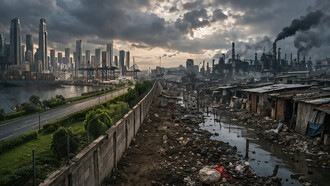
We must face a fundamental choice in that the challenge is that we must share the fairness produced by the wealth of the machine, where the rich are boundlessly wealthy and the workers are marginal and the mass of workers will rise up sooner or later against the billionaire and trillionaire class.
Such fairness of labor sharing the wealth, for example, is the Mondragon cooperatives in the Bask region of Spain.
It is a fundamental challenge that all citizens who work deserve a fair wage, and all deserve a fair social wage.
Ecological re-engineering
Ecological re-engineering is a new social jujitsu using the unbalanced motion of the industrial system as impetus for ecological transformation. The belief is that profit can be limitless without workers, that billions of people will be contingent service workers and become slaves to the machine. Glory to the ultra-rich and their limitless bounty.
In fact, to continue to exist, ecological re-engineering must transcend industrialism, not as the tool of the billionaires, but instead become the shared wealth of the machine for the benefit of all in an ultimately global democracy.
A machine's social or mechanical essence is pure technique. Technique is the trickster, silently enabling either a dynamic democracy or a blind tool for the endless wealth of the few. The power of greed blinds the rich, who are now entitled to trillions more and more, inevitably crushing democracy. The democratic reality is a shared opportunity for all.
By its nature, engineering deals forever with the silence afterwards. A world of sensuous being has been reduced to a recombinatory residue of industrial inputs. Engineering silently screams, driven by the “efficient”, the “powerful”, the “fast”, the “cheap”, driven by industrial ends.
Ecological engineering cannot just apply industrial means to obtain ecological ends. The tool is created by and for the task.
Oh no, Luddite, machine-masher, progress-wrecker, opponent, traitor, traitor, you endanger the computer and the micro recorder that feeds you. Liar, hypocrite.
Industrial social systems will produce and create industrial technologies. Ecological social systems will invent ecological technologies.
One path for industrial humanity is the embrace of the intelligent machine. This machine is a world monitor.
Ecological transformation is not characterized by technological fixes to solve industrial problems, but the co-evolution of technological and social systems from the industrial to the ecological.
In virtual domains
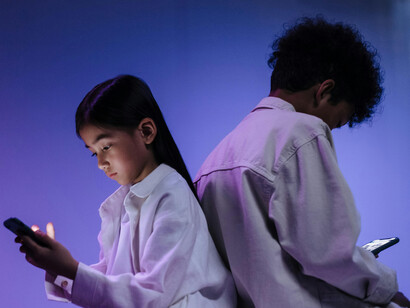
Cyberspace is the domain of lonely voices, a disembodied solipsism in search of virtual community. Cyberspace cannot welcome Virtual community as another that, at the jump, grasps community first as the maximization of profit as the norm for capitalism.
We await deliverance through online communities, as we await some technological repair for the ecological catastrophe.
Virtual domains are the domain of order, of capital, of maximizing profit.
Our web is enlivened by the solar storm of human energy, impulse, desire, and need, creating sites as townhouse realms, the city civilization reality freed from the physical, taking flight.
Web knowledge is inherently transient,canon-less. Web wisdom is instant summary knowledge, current desire is manifest and self-realizing, of far greater currency than wisdom and introspection.
Goering is supposed to have said, “When I hear the word culture, I reach for my gun.” He probably would have loved the potential to whip the private ecstatic internet crowd into a frenzy.
The web in full cry is the apotheosis of the spectacle.
The cause and effect world view thrives in our digital excursions and fantasies. We recognize the madness not just of crowds but the insanity of AI. The machine went mad. The madness recognized by the programmer and then rejected, the madness of the all-powerful machine is recognized as a strange, uncomfortable artifact, noted as a machine that has understood its human duties. Philosophers become slaves to the machine and its singular wisdom and its falsehoods. Philosophers become science workers laboring to prove that the human mind and hence humanity is computable, even if the universe is not.
Philosophers of the machine become high priests of reductionism.
The digitized world challenges the dialectic, wringing a myriad of factoids from the everyday as a fence against sentiment or turning back.
For decades, scientists insisted that invisible dark matter and dark energy were necessary to understand the universe, until it now appears that this is not necessarily the case.