English
 Español
 Français
 Deutsch
 Italiano
 Português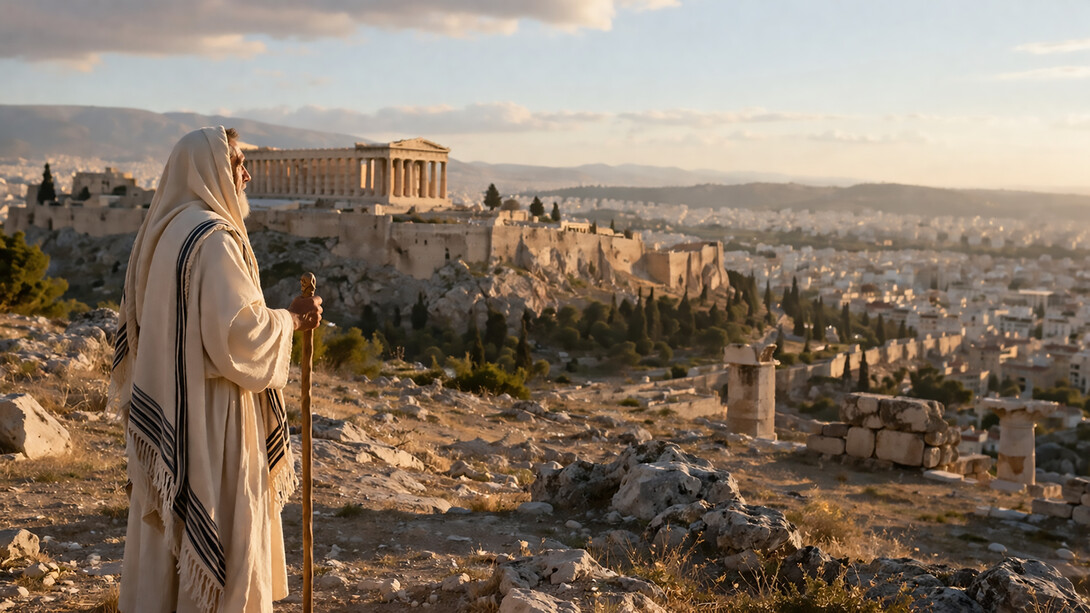
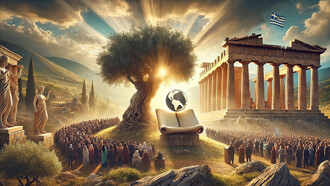
Freedom has always been a prominent value, with people striving to realize it through various means and within the parameters of different cultures, philosophies, and religious beliefs. Thus, the Israeli and Greek pagan cultures can be identified as primeval in their influence on the development of political thought regarding liberty. This investigation focuses on the life-changing experiences of these cultures, staking out the crucial experiences that have changed the existing picture of political philosophy forever.
The shift from cosmological empires where the province of gods and humans overlapped to an understanding that a clear line separates the material world and eternal truth was a noteworthy process in political thinking. This paradigm shift marked the way for a system whereby values could be derived from the supreme being, thus having a significant impact on the legislation and the regulation of societies. It was a shift from a paradigm where everything was elicited from divine influence to a system where the layman and the divine are seen as two distinct entities in political thought.
The Jewish way: a path of faith and revelation
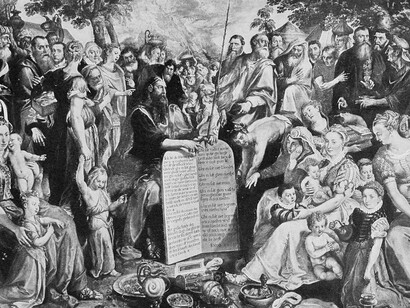
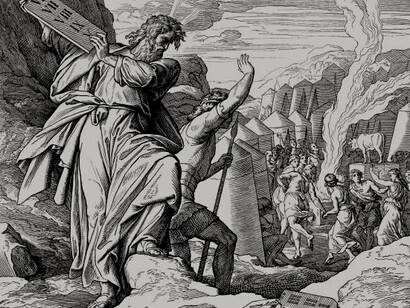
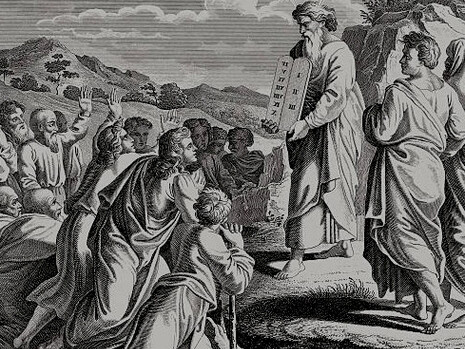
The Jewish tradition is a light of revelation and the faith to make introductions of the concepts that have been heard for centuries. God’s covenant, as enunciated in the Decalogue at Sinai, was a guide to social order and legislation, at the core of which was a divinely induced model for legislation and order within communities. This management style of governance went a step higher to be spiritual, not merely a political affair, because it connected personal morality to the public good of society. The Decalogue, which contains the correspondence of the commandments to ethical norms and legal systems in effect, was followed by tenets of the political right and proper, and established a merger of religion and politics to show how faith shall work for the good of a polity.
The Greek way: philosophy and the pursuit of happiness
The foundation of the Greek concept of governance began with philosophy and reasoning about what society needs. Great thinkers like Socrates, Plato, and Aristotle influenced political thought and contributed immensely to our current understanding of justice, the type of government, and advancement to the state of happiness through virtue. These philosophers sought to critically examine essential parts of humanity and society, focusing on the application of reason in decision-making systems amongst people of different ranks in society.
Socrates, in particular, argued that a just polis must not be grounded in myths, customs, or the views of the majority, but in a justice men can know by using reason. The fact that he was put to death by Athenian democracy, an irony of fate, reveals one of the primary dilemmas of democratic politics: whether the power of the people is better wielded in combination with the power of reason. Political philosophers predicted the political future; Plato in particular, largely influenced by his master’s demise, advocated for rule by those who know best, the philosopher-kings, but at the same time, he realized the absurdity of this system opened the door to the more day-to-day political thinker Aristotle.
Aristotle undertook semiotics teachings and advised people on the realism of private property and family organization, and discouraged them from the idea of philosopher kings. He had theories on the ideal politico-administrative system that can best contribute to the common good and guarantee the happy living of the polis through a mixed form of government, hence containing royalties, aristocracies, and democratic ingredients.
The legacy of ancient wisdom
Utilizing the concept of politics, it would not be wrong to argue that the ancient Jewish and political thought of the Greeks are parallel with each other in at least one way, which is the respect for freedom and justice. It was in the revelations made at Sinai or in the deliberations of the Athenian Assembly that these civilizations put into place the basis for what is termed modern political philosophy. The lessons and philosophies they impart still guide modern discourse on freedom and social justice, emphasizing the importance of applying reason and maintaining our faith in order to foster an equitable and tolerant society.
Medieval Christian political thought
In medieval society the practice of religion as a culture impacted politics amazingly due to the aspect of reason. Two of the greatest figures of it were Augustine Aurelius and Thomas Aquinas, who provided the way for asserting the close and speculative matrimony of theology and philosophy. Even more, their efforts evidenced the subjectivity of belief and reason, as well as the function of the special revelation of the truth by God in the knowledge of the truth. During this period, there was more sophistication in the views of the Church and the State since both became aware that any kingdom on earth has many limitations in what it could accomplish and that human situations are in no way ideal.
The interplay between faith and reason
Augustine of Hippo, in his book ‘The City of God,' contrasted the City of this World, with its lust for power and warfare, with the City of the Age to Come, where there is life everlasting. He pointed out that true liberty is in the pursuit of the latter, including living in a world full of flaws and suffering. This provided the background for an intricate appreciation of politics based on the clash between spirit and temporality.
The latter is based on this formation; St. Thomas Aquinas followed up with Aristotle, completing them with Christian theology. He says that there is a God’s plan in the world, and the disputes between religious faith and reason, truth and freedom, open the doors to freedom for people. The subsequent part of the foreword will explain Aquinas’s principles on law and ethics, as well as the roles and aims of the state in the aspect of the common good, which will affect comprehension in regard to societal justice.
The reformation and counter-reformation: challenges to Orthodoxy
The ideas behind the Reformation were initiated by such leaders as Martin Luther and John Calvin, who challenged the authority of the Church. It undermined the claim of the papacy and the clergy, prompting a legitimacy crisis that opened the way to the modern nation-state. The Reformation also signaled the start of religious tolerance and freedom that characterized what could be termed as modern political thinking. The Counter-Reformation, in turn, attempted to reestablish Catholic spirituality and tradition; however, the spirit of religious diversity was already unleashed.
Classical vs. modern political thought: a paradigm shift
Moving from classical to modern political thought is marked by a shift in the conception of power, values, and the position of the subject in society. Figures of classical philosophy, Plato and Aristotle in particular, concentrated on the concept of the supreme virtues like goodness, justice, and truth, while at the same time being quite pragmatic and fully aware of the difficulties that would have to be overcome to put these values into practice at the time of writing. This tradition revered values such as virtues, good, and the general welfare of all people.
The modern political thought, sometimes liberty but more often power and wealth, raises the prospect of realizing concepts in human society. Major thinkers in this transformation were Machiavelli, Hobbes, Locke, Rousseau, Hegel, Marx, and Nietzsche, as they shifted from the focus on virtues proposed by the ancient world and started to deconstruct and rethink the issues of power, consent, and the social contract.
The medieval period was therefore the golden age for the interaction of faith and reason, both of which are still relevant to politics, ethics, and the creation of a just society. Augustinus Aurelius and St. Thomas Aquinas, the former providing detailed theological and philosophical discourses, the latter forging the foundations of political thought in medieval Europe. Contemporary society has its challenges as a world, and as constituents of this global community, the lessons drawn from this wealth of intellectual and spiritual dialogues remain timeless in their implications about the relationship between faith, reason, and liberty.
This article was written by Luis Pedro Santis Fuentes. Luis is a writer on politics, policy, economics, and philosophy. He is a former lecturer and the co-founder of Q-Network.