English
 Español
 Français
 Deutsch
 Italiano
 Português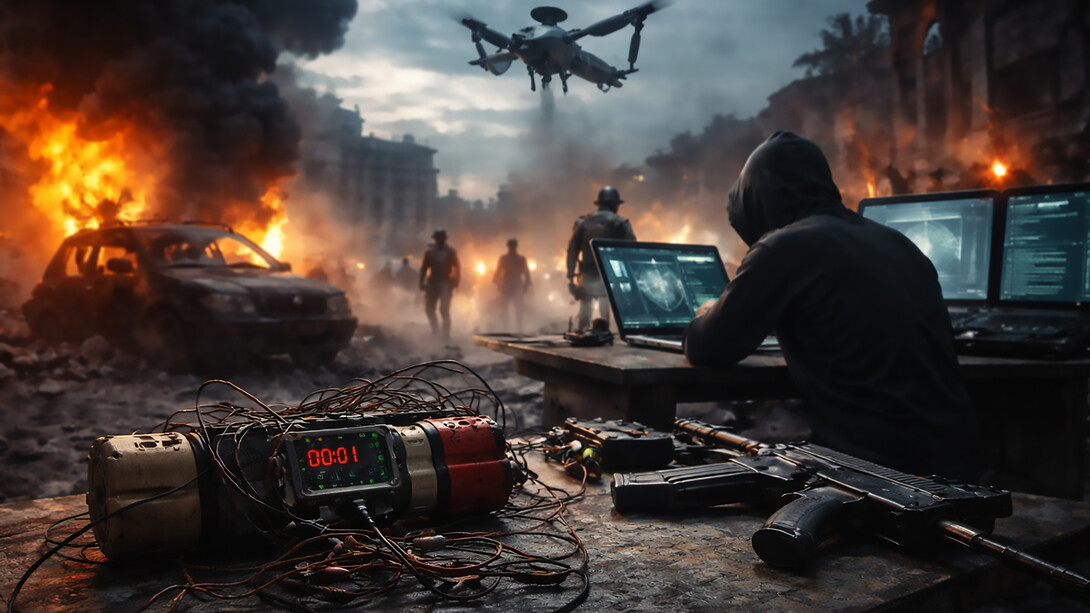
In the traditional understanding of security, terrorism was mostly seen as a threat separate from interstate war and handled within the framework of crime. For many years, conventional wars have formed the main focus of security threats. This classical view, defined by armies and battlefronts, usually treated terrorism as a public order problem threatening internal stability or as the actions of marginal groups. However, since the post–Cold War period, threat perceptions have changed fundamentally. Instead of conventional wars, asymmetric elements such as ethnic and religious radical terrorist organisations, cyberattacks, economic warfare, sabotage, and propaganda have gained priority.
In the modern world, the line between war and peace has become blurred. Terrorism has moved beyond being only a law enforcement issue and has become part of geopolitical struggles. The emergence of the concept of the “war on terror” after September 11, 2001, shows that states have begun to accept terrorism as both a cause and a tool of war. The main reason why the classical approach has become insufficient is that terrorism is no longer an isolated act of violence but is increasingly used as a flexible instrument within hybrid warfare strategies.
In today’s security architecture, terrorism goes beyond being only an internal threat or a method used by radical groups and can function as a proxy actor in international power struggles. While states seek to advance their interests without entering direct military confrontation, they may use terrorist organisations as pawns. This situation has created a hybrid conflict environment where terrorism and interstate competition intersect. Therefore, it is no longer possible to explain the role of terrorism through classical frameworks; the strategic use of violence requires an updated analytical perspective.
The concept of hybrid warfare and the place of terrorism within this structure
Hybrid warfare is a concept that describes a complex form of conflict in which conventional (regular) and irregular elements, as well as overt and covert methods, are intertwined. In this model, diplomatic, economic, cyber, and informational actions are synchronised with proxy forces and, when necessary, conventional military power. Terrorism has become part of this structure as one of the important components of hybrid warfare. Especially in the 21st century, major powers and regional actors have begun to use terrorist organisations as the “ground force” of hybrid warfare. The concept of hybrid warfare introduced into the literature by Frank Hoffman was concretised through the tactics used by Hezbollah during the 2006 Lebanon War, pointing to a model of war in which terrorist actions are intertwined with regular military operations.
In a hybrid warfare environment, terrorism operates through different dimensions. On the one hand, non-state armed actors (terrorist organisations, militias, and criminal networks) carry out operations in areas where regular armies cannot easily reach. On the other hand, states attempt to achieve their objectives by covertly supporting these actors. Terrorist attacks against the target country are often carried out by groups that are directed or supported by hostile intelligence services. The essence of the hybrid warfare concept lies in the integrated use of conventional and unconventional tools within the same conflict. For example, while cyberattacks, economic sanctions, and diplomatic pressure continue, terrorist acts are used to destabilise the rear areas and to gain psychological superiority.
Why do states resort to terrorism within hybrid strategies? One reason is the high military and political costs of entering a direct conventional war. Rather than risking the destruction and international reaction that open conflict would bring, major powers may prefer to support terrorism and insurgent movements that weaken the target country from within. In this way, they can harm their rivals without officially declaring war, while keeping responsibility hidden through a policy of “denial”. As a result, in hybrid warfare, terrorism has become a strategic tool that operates in the shadow of conventional armies, expanding their room for manoeuvre and eroding the enemy from within. Both state-supported terrorist groups and radical organisations with their own agendas appear on the stage as actors of hybrid conflicts.
One of the most critical functions of terrorism in the context of hybrid warfare is its ability to influence public opinion and decision-making processes in the target country. The sudden and intense violence created through terrorist acts generates waves of fear and panic within society. Civilians are meant to feel insecure, daily life is disrupted, and a constant sense of threat is imposed. This atmosphere creates a social psychology that serves the strategic goals of terrorism: public opinion may become open to pressure in the direction desired by terrorist actors. For example, successive bomb attacks may lead the public to pressure the government to “provide security”, forcing decision-makers to take rapid and harsh measures. Or, conversely, the public may show tendencies toward peace and concessions. Indeed, the ultimate aim of terrorism is to turn societies into a lever in order to impose its political demands on its opponents.
Terrorism may also aim to push states into a crisis of legitimacy. The image of a government that cannot protect its citizens in the face of continuous attacks weakens the authority of political leaders and calls into question the state’s most basic promise: the ability to provide security. In such a situation, the social contract is damaged. When society begins to believe that “the state cannot protect us”, trust in governance declines. Especially in democratic countries, voters may strongly punish governments that appear powerless against terrorism. The change of government in Spain after the 2004 Madrid train bombings is a concrete example showing that terrorism can influence election results. Similarly, after the 2015 Paris attacks, debates over security failures increased criticism of the government in France, while following the 2016 Brussels bombings, intelligence weaknesses became the subject of wide-ranging investigations. These examples show that terrorism can weaken state authority and produce serious political consequences.
Another strategic function is to wear down the state by dispersing its security resources. A country under terrorist threat is forced to deploy soldiers and police to city squares, public transport systems, and critical infrastructure facilities. Intelligence agencies operate under constant alert, and states of emergency may be introduced. This condition of “permanent vigilance” consumes both material and moral resources and creates a burden that is unsustainable in the long term. Even Osama bin Laden, the leader of Al-Qaeda, openly expressed in a message published in 2004 a strategy of “bleeding and bankrupting” the United States. In other words, terrorist organisations envision a long-term war of attrition capable of exhausting even superpowers economically and militarily. A state that is constantly forced to take counterterrorism measures struggles to focus on other national priorities. As it prioritizes internal security, it may have to make concessions in its foreign policy or development goals. This, in turn, leads to a form of weakening that indirectly benefits rival powers.
In summary, terrorism functions as a flexible, multi-dimensional tool within hybrid strategies: intimidating and directing society, weakening the state, pressuring decision-makers, and exhausting resources. All of these effects can be triggered by a single bomb attack or assassination. The psychological impact of violence is far greater than its physical impact, and terrorists aim to turn this to their advantage. It should not be forgotten that the success of terrorism is measured not by the number of people it kills, but by the perceptions and reactions it creates. For this reason, actors of hybrid warfare use terrorism like a carefully staged theatre in pursuit of strategic gains.
ISIS attacks in Europe
One of the most striking manifestations of global jihadist terrorism in recent years has been the attacks carried out in the heart of Europe by the Islamic State of Iraq and Syria (ISIS/Daesh). On the night of 13 November 2015 in Paris, coordinated terrorist attacks targeting the Bataclan Theatre, the national stadium, and café-bars resulted in the deaths of 130 people. This was followed on 22 March 2016 by suicide bombings at Brussels Zaventem Airport and the Maelbeek metro station, in which 32 people lost their lives. These two events created one of the deepest shocks in European public opinion since the Second World War and contain important lessons about the effects of terrorism in hybrid warfare.
The main objective of ISIS in these attacks was, first of all, to spread fear within European societies and to extract political concessions. After the Paris attacks, the French public, overwhelmed by shock and mourning, became unable to gather freely in public spaces, while the government declared a nationwide state of emergency. One of the longest states of emergency in French history lasted continuously for 23 months from November 2015 onwards. During this period, French security forces carried out tens of thousands of operations, raids, and arrests, and military and police patrols in public spaces became part of daily life. In Brussels, immediately after the attacks, the city entered a state of “lockdown” for several days; schools and the metro system were temporarily closed, and citizens were called to stay at home. These reactions demonstrate how quickly terrorism can paralyse public order. Society experienced a form of psychological siege, as if under the threat of an invisible enemy.
These attacks had a dual effect on public opinion. On the one hand, fear and insecurity reached very high levels. Surveys conducted across Europe showed that after the Paris attacks, people began to see terrorism as the most serious problem, and the tendency to avoid crowded places in daily life increased. On the other hand, especially in France, a short-term “rally around the flag” effect was observed. The public expressed unity and solidarity, showing support for the government against terrorism, and a temporary sense of social cohesion emerged despite the terrorists’ aim to divide society. However, this effect did not last. Over time, security concerns gave way to questioning, and debates over the refugee crisis, Islamophobia, and integration problems intensified. These fault lines, deliberately targeted by ISIS, moved to the centre of public debate. For example, some of the attackers were young people born and raised in Europe, a fact interpreted as a failure of integration policies, while prejudices against migrant and Muslim communities grew stronger. In this way, terrorists sharpened social divisions and created fertile ground for their own propaganda.
On the security policy front, the Paris and Brussels attacks triggered profound changes across EU countries. France hardened its counterterrorism laws in order to make emergency conditions permanent; the powers of intelligence services were expanded, and new regulations were introduced regarding the monitoring of digital communications. Belgium moved to address the long-criticised disconnect between its intelligence and police institutions by establishing joint databases and coordination centres.
At the European Union level, measures such as stricter controls at external borders, the tracking of foreign fighters, and the sharing of flight passenger data (the PNR system) gained momentum. In a sense, the terrorist threat pushed states toward more security-oriented and precautionary policies, shifting the balance between personal freedoms and security in favour of security. However, this development also sparked debates over civil liberties. Prolonged states of emergency and expanded police powers began to be questioned from the perspective of democratic values. How to continue counterterrorism efforts while remaining within a democratic legal framework became a major issue in Europe during this period.
States’ responses to these attacks in terms of foreign policy also carried a strategic dimension. Although the aim of ISIS was to intimidate European countries and force them to withdraw from their interventions in the Middle East, the outcome took the opposite direction. Immediately after the Paris attacks, then French President François Hollande declared that “France is at war!” and intensified international operations against ISIS. France and its allies increased airstrikes in Syria and Iraq, and ISIS’s stronghold of Raqqa was subjected to heavy bombardment within months. Belgium, despite its limited military capacity, also chose to contribute more actively to coalition efforts.
Across Europe, driven by the fear that “we could be the next target”, the will to form a common front in counterterrorism grew stronger. These developments showed that terrorism can be a weapon that backfires in hybrid warfare. While it may terrify societies in the short term, in the long run, it can sharpen state resolve and strengthen alliances. Indeed, ISIS paid the price for its “spectacular” attacks in the West by losing territory and manpower on the ground, while its ability to recruit participants from Europe was severely weakened by strict security measures. This balance offered an important lesson: the use of terrorism in hybrid warfare does not always achieve its aims, and tactical gains can sometimes lead to strategic losses.
As an extension of the hybrid warfare concept, the use of terrorist organisations in proxy wars has become particularly visible in the Middle East. A proxy war refers to situations in which rival states confront each other indirectly through third-party actors rather than engaging directly. In such conflicts, terrorist groups can become “contract fighters” for major powers or regional actors. The Syrian civil war (2011–) provides one of the most striking examples of this phenomenon. In Syria’s multi-actor proxy struggle, different external powers have sought to gain influence through armed groups they support. Some of these groups are defined as terrorist organisations by other actors. For example, Al-Nusra Front, affiliated with Al-Qaeda and later renamed Hayat Tahrir al-Sham, fought against the regime in Syria while at times receiving unofficial logistical support from regional states.
Similar dynamics can be observed in other Middle Eastern conflicts. The Yemeni civil war has become a proxy battlefield between Iran and Saudi Arabia, while terrorist organisations such as Al-Qaeda and ISIS have exploited the chaos to expand their influence. In projecting its regional power, Iran has relied not only on structures like Hezbollah and Hashd al-Shaabi but also on supporting the Houthis in Yemen and deploying militias that adopt terrorist methods to the front lines. While these groups function as strategic proxies for Iran, they are labelled as terrorists by its rivals. Likewise, the period following the U.S. occupation of Iraq witnessed the manipulation of various terrorist groups by external powers. At one stage, Al-Qaeda elements were drawn into intelligence games that fuelled civil war dynamics, while the later emergence of ISIS was again treated as part of broader international power competition.
The common feature of these cases is that terrorist organisations are used like pawns in a broader strategic picture, leading both to regional instability and to humanitarian tragedies. States see certain advantages in using terrorist groups as proxy actors. While wearing the shield of deniability, they can weaken their enemies indirectly and avoid the political risks of direct war. For example, if a country directly attacks its neighbour, it faces international backlash. However, if the same country secretly supplies weapons to a separatist terrorist organisation inside that neighbour, it can destabilise the target state from within without openly violating international law.
This tactic has been used repeatedly since the Cold War. The Soviet Union and the United States supported groups within each other’s spheres of influence. In Afghanistan during the 1980s, the mujahideen fighting against the Soviet occupation were supported by the United States, and later terrorist networks emerged from within these groups. For many years, Pakistan viewed radical militant organisations as elements of strategic depth in its policies toward Kashmir and Afghanistan. In the Israel-Palestine context, the presence of organisations such as Hamas has been manipulated in different ways by regional actors. These examples show that terrorism has become the unofficial “currency” of proxy wars.
However, it should not be forgotten that the use of terrorism as a proxy can produce uncontrollable consequences. Terrorist organisations may act as tools of a state as long as their interests overlap, but in the long run, they pursue their own agendas. The fact that some groups supported as proxies in Syria later began to threaten their sponsors, or that elements trained against the Soviets in Afghanistan went on to carry out terrorism against the West in the 2000s, are striking examples of this dynamic. Therefore, terrorism nurtured for short-term advantage in hybrid warfare can, in the long run, bite the very actor that fed it.
In recent years, the development of armed drone technologies (UAVs/UCAVs) and high-precision intelligence capabilities has made it easier to target terrorist leadership cadres. For this reason, some assessments suggest that major powers may become less inclined to rely on terrorist groups. Nevertheless, in today’s regional conflicts, terrorist organisations continue to remain indispensable pawns on the geopolitical chessboard.
State reflexes: the transformation of security policies
The new role that terrorism has gained within the context of hybrid warfare has deeply transformed state security reflexes and the policies shaping them. For many years, counterterrorism was largely treated within the framework of internal security and law enforcement, seen as a limited and reactive field under the responsibility of police and intelligence units. However, with the rise of hybrid threats, this approach has proven insufficient, and counterterrorism has moved to the centre of national security strategies. Today, states no longer view terrorism only as a factor disrupting internal order but as a strategic issue directly linked to foreign policy, defence planning, and social stability. This has led to a more comprehensive, multi-layered, and long-term transformation in security policies.
The first and most visible dimension of this transformation has emerged in the legal and institutional sphere. Many countries have updated their counterterrorism legislation, adopting stricter and more comprehensive regulations. The expansion of terrorism definitions, harsher criminal penalties, and new legal frameworks limiting communication and travel freedoms have been key elements of this process. In France, the state of emergency declared after the 2015 Paris attacks gradually turned into permanent counterterrorism laws, is a striking example of this trend.
Similarly, the United Kingdom expanded its security legislation to combat radicalisation and extremism, increasing the state’s preventive intervention capacity. At the institutional level, intelligence agencies were restructured, counterterrorism units were strengthened, and authorities previously scattered across different institutions began to be gathered under centralised coordination mechanisms. Belgium’s comprehensive reforms in its security bureaucracy after the 2015–2016 attacks reflect this broader trend toward improved information sharing and institutional coordination. Turkey also introduced significant reforms in counterterrorism and internal security structures, especially after 2016, aiming to adapt the hierarchical and functional organisation of its security institutions to hybrid threats.
Alongside legal and institutional change, there has also been a clear shift in military and policing reflexes. Faced with the terrorist threat, states have expanded their understanding of “defence”, and the boundaries between internal security and national defence have become increasingly blurred. In many countries, armed forces have become more visible in domestic security roles under certain conditions, while police forces have taken on more operational and semi-military roles in counterterrorism. The protection of critical infrastructure and public spaces by military patrols has become a common practice in European cities, and high-security protocols now surround airports, train stations, and major events.
At the same time, a preventive security approach has gained importance, with the early detection of potential threats becoming a core objective. Measures such as monitoring the movements of suspicious individuals, passport restrictions, electronic surveillance, and close tracking of terrorist financing have become widespread. This proactive approach has made coordination between intelligence and law enforcement agencies a vital element, placing information sharing and joint operational capacity at the centre of security policies.
The cross-border nature of terrorism has also forced state reflexes to extend beyond national borders. In this context, international cooperation has become an integral part of security policies developed against hybrid threats. NATO has defined terrorism as one of the main threats facing the alliance, strengthening the emphasis on collective action, while the European Union has developed mechanisms to increase intelligence sharing among member states. Through institutions such as Europol and Interpol, the tracking of foreign terrorist fighters, real-time sharing of border-crossing data, and the creation of joint databases have been advanced. Within the framework of the United Nations, global programmes aimed at preventing the financing of terrorism and combating radicalisation have been implemented. Countries such as Turkey continue to contribute to the international dimension of counterterrorism by playing active roles both within NATO and in regional initiatives. This shows that in a hybrid warfare environment, counterterrorism cannot be conducted alone and that a collective security approach has become essential.
The transformation of security policies has not been limited to hard power instruments but has also included public diplomacy and social resilience. States have increasingly recognised that a long-term struggle against terrorism cannot succeed through military and police methods alone. As a result, education programmes aimed at preventing radicalisation, social cohesion projects, and dialogue mechanisms with different identity groups have been developed. Awareness campaigns against violent extremism have been introduced in schools, and counter-narratives have been produced to challenge terrorist propaganda in digital spaces. European countries in particular have launched psychosocial programmes to rehabilitate and reintegrate foreign fighters returning from conflict zones, aiming to strengthen societal resilience. Based on the understanding that terrorism is effective to the extent that it creates fear and division, strengthening society’s psychological and social resistance has become a core element of security policy.
Taken together, these developments clearly show that counterterrorism in the context of hybrid warfare requires a multi-layered and flexible state reflex. States have turned toward mixed strategies that combine hard and soft power and have begun to view security policies not only in terms of eliminating physical threats but also in relation to the continuity of public order, social trust, and the protection of democratic values. Achieving this balance is not easy. Excessively security-oriented measures may reinforce the climate of fear that terrorism seeks to create and lead to the narrowing of freedoms, while weak or overly relaxed approaches may open space for terrorist organisations to manoeuvre. In the age of hybrid warfare, the main challenge for states is to continuously adjust their reflexes while living with this dilemma and to develop policies that are both determined and proportionate against the strategic use of terrorism.
At this stage, it is clear that terrorism has moved beyond the classical definition of a purely “military threat” and has become a flexible and multipurpose power instrument within hybrid strategies. The strategic use of violence allows non-state actors to influence the course of international politics, while states themselves may also manipulate this tool for their own interests. This two-way game has made the global and regional security environment extremely complex.
In the coming years, hybrid threats are likely to diversify further, and terrorism may evolve into new forms alongside technological developments. Cyber terrorism, assassinations carried out with unmanned aerial vehicles, and the risks related to the use of biological and chemical agents are among the emerging concerns. States will have to respond to these threats not only with traditional military and police forces but also through preparedness that requires mobilisation across society as a whole. Otherwise, the shadowy spaces in which hybrid strategies operate will expand, and societies will continue to become targets of conflict without any formal declaration of war.