English
 Español
 Français
 Deutsch
 Italiano
 Português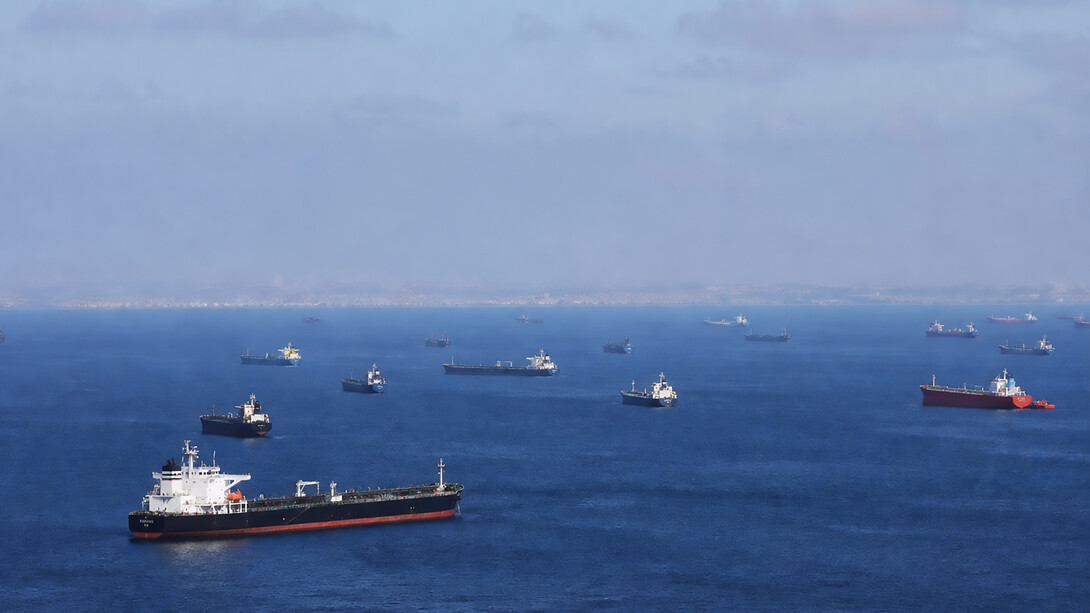
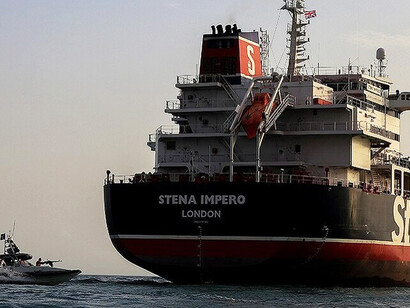
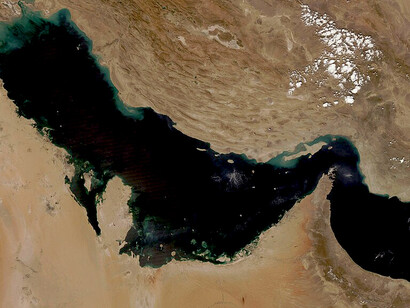
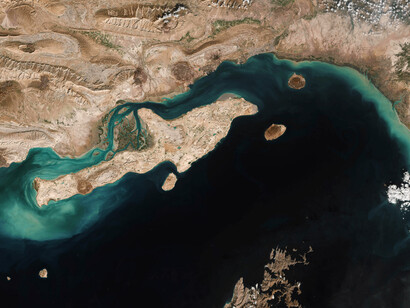
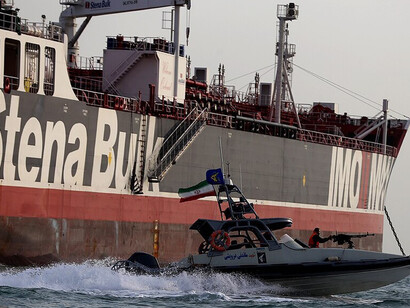
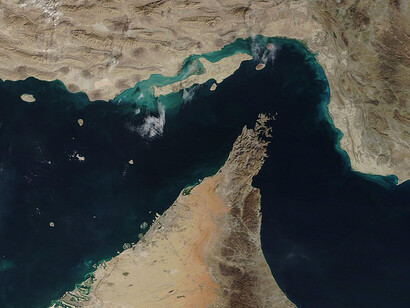
The most powerful climate argument of 2026 may not come from a COP summit or a scientific report. It may come from a narrow stretch of water between Iran and Oman. The Strait of Hormuz has done what decades of climate diplomacy have often struggled to do: it has reminded the world that fossil fuels not only heat the planet but also hold the global economy hostage.
The recent escalation around Iran and the United States has been treated largely as an oil-market emergency. Prices rise, tankers wait, governments panic. Analysts calculate how much supply is trapped, how much can be rerouted and how long consumers can absorb the shock. Reuters reported that oil prices rose sharply amid the continuing Iran conflict, with Brent crude and US benchmark WTI crude gaining as markets saw little sign of a near-term end to the war (Reuters, 2026a). The International Energy Agency (IEA) estimates that nearly 20 million barrels per day of oil moved through the Strait of Hormuz in 2025, while only around 3.5 to 5.5 million barrels per day could be shifted through alternative routes out of the Gulf, mainly via Saudi Arabia and the UAE (IEA, 2026a).
The world has built its energy system around a bottleneck. One strait, one conflict, one blockade and one miscalculation can shake inflation, food prices, public budgets and political stability across continents. The climate crisis is usually discussed as a crisis of emissions; Hormuz reminds us that it is also a crisis of dependence.
For decades, “energy security” has meant securing access to fossil fuels. It has meant naval routes, strategic reserves, producer alliances, pipelines, subsidies, emergency diplomacy and military protection around key chokepoints. This model is often presented as realism. But the current crisis exposes its fragility. If a country’s energy security depends on permanently defending oil routes through militarised waters, then it is not really secure. It is simply managing insecurity at great cost.
This is where the climate debate needs sharper language. The transition away from fossil fuels is often framed as sacrifice: higher costs and consumer discomfort. But in moments like this, the transition looks less like sacrifice and more like escape. A decarbonised world is not only a cleaner world. It is a world that is harder to blackmail.
The Strait of Hormuz is not just geography. It is power. Oil does not merely exist underground. It must be extracted, loaded, shipped, insured, defended, traded, refined and delivered. Every step creates vulnerability. Every route becomes political. Every chokepoint becomes a bargaining chip. The same is true for liquefied natural gas, fertiliser inputs, petrochemicals and other fossil-linked commodities that shape daily life far beyond energy markets. The IEA has described Hormuz as a route through which about 25 per cent of the world’s seaborne oil trade passed in 2025, with limited options to bypass it (IEA, 2026b).
The UAE’s decision to leave OPEC and OPEC+ adds another layer to this story. On paper, it looks like a declaration of autonomy. It suggests that a major Gulf producer wants more freedom from cartel discipline, production quotas and Saudi-led coordination. Reuters reported in April 2026 that the UAE planned to leave both OPEC and OPEC+ (Reuters, 2026b). Yet Fitch noted that the exit would have no near-term impact because the disruption around Hormuz still limits the UAE’s ability to export more oil immediately (Reuters, 2026c).
This is the paradox at the heart of the moment: the UAE can leave OPEC, but it cannot leave geography.
These are the limits of fossil-fuel sovereignty. A country may free itself from a cartel, but it remains tied to the routes, risks and rivalries that make oil valuable in the first place. The real exit from OPEC is not institutional; it is infrastructural. It is the slow, difficult move from a world powered by chokepoints to a world powered by distributed energy.
Solar panels do not need the Strait of Hormuz. Wind farms do not require tanker convoys. Heat pumps are not priced through wartime shipping premiums. Batteries, grids, local renewables, regional power pools and energy efficiency measures are often discussed in technical language, but they are also political tools. They reduce exposure. They reduce panic. They reduce the ability of any single route, regime, cartel, or conflict to hold ordinary people’s lives hostage.
China offers a useful example, though not a perfect one. It remains heavily dependent on coal, so it should not be romanticised as a climate model. But it has understood clean energy as more than an environmental agenda. It is also an industrial and geopolitical strategy. In 2025, China added more than 430 million kilowatts of new wind and solar capacity, and its cumulative grid-connected wind and solar capacity reached 1.84 billion kilowatts, surpassing thermal power in installed capacity for the first time, according to National Energy Administration data reported by China’s State Council (State Council of China, 2026).
In other words, China is not only trying to cut emissions. It is positioning itself in the infrastructure of the next energy order. The countries that dominate solar panels, batteries, electric vehicles, grids and clean-tech supply chains may gain the kind of influence once held by those who controlled oilfields, tankers and chokepoints. This is not a simple story of green virtue. It is a story of power changing shape.
This does not mean the energy transition is automatically just. It can be extractive in new ways. Critical minerals can create new dependencies. Green technologies can reproduce old inequalities if poorer countries remain raw-material suppliers while richer countries capture the value of manufacturing, finance, and patents. A careless transition can shift the burden rather than end it. But the answer to that risk cannot be nostalgia for oil. Fossil-fuel dependence is already unjust, and its costs are not shared equally.
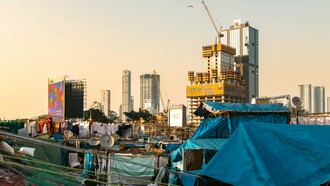
For wealthy countries, a Hormuz crisis may appear as inflation, market volatility, pressure at petrol stations and difficult central bank decisions. For poorer and import-dependent countries, it can become something far more brutal: higher fuel bills, higher food prices, more expensive fertiliser, weaker currencies, rising debt and less money for health, education and climate adaptation. The countries least responsible for the climate crisis often pay twice: first through floods, droughts and heatwaves and then through the price shocks of the fossil-fuel system that caused the crisis in the first place.
This is the hidden climate injustice of oil geopolitics. The harms are not limited to carbon dioxide in the atmosphere. They are built into the political economy of dependence. A farmer in Pakistan, Kenya or Bangladesh may never think about Hormuz as a strategic chokepoint. But they may feel it through diesel prices, fertiliser costs, transport bills and food inflation. Fossil fuels travel through straits. Their consequences travel through households.
The usual response to oil shocks is to search for more oil. Drill more, ship more, subsidise more, negotiate more, secure more. But this response keeps the world inside the same trap. It treats the symptom as the cure. Each crisis becomes an argument for deeper dependence on the system that produced the vulnerability.
A better response would ask a different question: how much of this panic could be avoided in a world less dependent on oil? Not all of it, of course. No energy system is free from politics. Renewable supply chains also need justice and resilience. But there is a meaningful difference between an energy system concentrated in a handful of producers and maritime chokepoints and one distributed across rooftops, cities, farms, grids, and regions.
The climate transition, then, should not be sold only as an environmental necessity. It should be understood as a project of geopolitical self-defence. It is about reducing emissions but also about reducing exposure to war, cartel politics, shipping disruptions and price shocks. It is about giving countries, especially vulnerable ones, more room to breathe.
Hormuz is often described as a narrow waterway. It is more than that. It is a mirror. It shows the absurdity of an advanced global economy still trembling before the movement of barrels through a strait. It shows that the fossil-fuel age is not just dirty. It is nervous, fragile, militarised, and expensive to maintain.
The future will not belong to the countries that secure the last barrel of oil. It will belong to those that no longer need to panic when that barrel cannot pass through a strait.
Sources
International Energy Agency. (2026a). Strait of Hormuz.
International Energy Agency. (2026b). The Middle East and global energy markets.
Reuters. (2026a, April 28). The UAE is to leave OPEC and OPEC+ oil producer groups.
Reuters. (2026b, April 28). UAE exit weakens OPEC+ power over oil market, but group to stay together, sources say.
Reuters. (2026c, April 30). Oil retreats after hitting a four-year high on concern of US-Iran war escalation.
Reuters. (2026d, April 30). The prospect of prolonged Iran war disruption drives oil forecasts higher.
U.S. Energy Information Administration. (2025, June 16). Amid regional conflict, the Strait of Hormuz remains a critical oil chokepoint.
State Council of the People’s Republic of China. (2026, February 12). China’s newly installed wind and solar power capacity is up 22 pct in 2025.