English
 Español
 Français
 Deutsch
 Italiano
 Português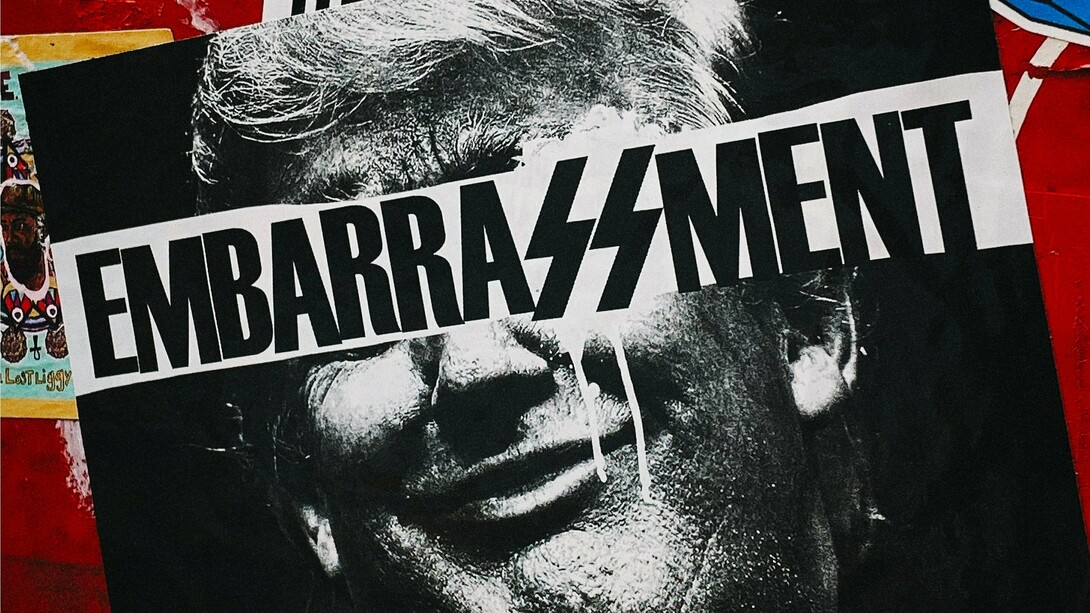
The troll
The word "troll" is an ancient Norse term for any ‘magical, monstrous, or uncanny being. Trolls are said to be characterized by brute strength and sometimes slow-wittedness.’ When you examine the term "uncanny," it refers to something that is so strangely mysterious, unnatural, or unfamiliar that it feels unsettling or eerie. It describes situations, people, or objects that are just slightly "off," leaving you with a lingering, hard-to-explain feeling that “something isn't quite right.”
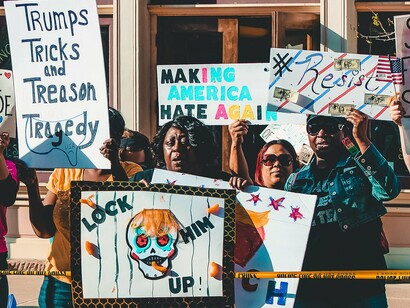
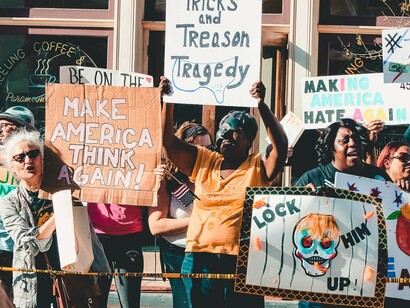
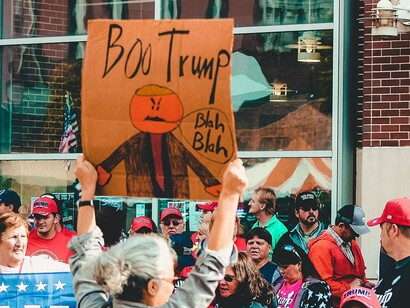
Today, we have experienced the emergence of a troll on the world stage. Its name is Donald J. Trump. He is uncanny and enjoys the exercise of brute strength. His presence makes us feel unsettled and infects us with a feeling of eeriness. A few synonyms for eerie include creepy, unreal, abnormal, strange, bizarre, and freaky. There is absolutely no question that Trump is at least ‘slightly off.’ Since Trump emerged from his cave network in the forest some 20 months ago, a global consensus has emerged that “something isn't quite right.”
Furthermore, the behavior of trolls is said to “reflect low agreeableness and includes behaviors like lying, manipulating, and seeking to harm or provoke others. Agreeableness-Antagonism is also strongly correlated with sadism, which suggests that some disagreeable individuals experience pleasure as a result of causing others pain.” Finally, "Don't feed the trolls" is a phrase designed to avoid engaging with individuals whose primary goal is to provoke drama. Trolls do not seek genuine discussion; they thrive on emotional reactions. Responding—or "feeding" them—only encourages further disruption.”
My prediction
Before Trump took office in late January 2025, I published several pieces at Meer1 (January 3, 2025, and May 3, 2025). In these two pieces, some 18 months ago, I predicted the following:
“Yes—America has elected an idiot as president of the United States again. There are clearly more questions than answers populating world affairs today. How will the Trump administration deal with these issues?
The answer to that question is yet to be seen. However, one thing that you can be absolutely certain of is to expect the unexpected. Trump has demonstrated his adoration of absolute power, oligarchs, loyalists, sycophants, the spotlight, narcissism, deflection of personal accountability, ego, disdain for norms, belittling others, propensity for conflict and controversy, an elevated appreciation for the need for vengeance, a lifetime of episodes of immoral and unsavory conduct, and the inability to embrace honesty.
Perhaps the most fundamental issue with Trump is his inability to listen to others—particularly those who have views contrary to his own. He doesn’t learn, read reports, briefings, or books. He is malleable and has a propensity to be influenced by flattery. He is superbly designed to be used by leaders around the globe he currently admires. He can be duped. He goes with his gut. He may start a military conflict with Iran. He is unequivocally unpredictable. Expect a raucous ride. Expect significant, unanticipated events to arise that rearrange the landscape of reality during his next term.”
Well, how was the accuracy of my published prediction? Trolls are not an imagined fiction. They are among us. In early January 2025 I was issuing a warning that a new and terribly dangerous troll was about to emerge. It has.
The toll
A quote from former Harvard and London School of Economics Professor Charles Handy is pertinent here:
The first step is to measure whatever can be easily counted. This is OK as far as it goes. The second step is to disregard that which can’t be easily measured or to give it an arbitrary quantitative value. This is artificial and misleading. The third step is to presume that which can’t be measured easily really isn’t important. This is blindness. The fourth step is to say that which can’t be easily measured really doesn’t exist. This is suicide.
With Trump, we can easily count the global conflicts he has initiated, lives lost in those conflicts, those killed and maimed by his ICE and HSI henchmen, monies expended, structures and infrastructure destroyed, tariffs collected, countries threatened with invasion/overthrow, etc. I am not going to enumerate all those specifics here. However, we are going to address the toll of the Trump troll by examining ‘that which can’t be easily measured.’2
It’s this stuff that’s truly important.
Stay with me.
Animal spirits
In their book, Animal Spirits – How Human Psychology Drives the Economy, and Why It Matters for Global Capitalism3, economists Akerlof and Shiller state:
The confidence of a nation, or of any large group, tends to revolve around stories. Of particular relevance are new era stories, those that purport to describe historic changes that will propel the economy into a brand new era. Confidence is not just the emotional state of an individual. It is a view of other people’s confidence and of other people’s perceptions of other people’s confidence. (Emphasis is mine, p. 55).
Stories, new narratives, a new era, emotional states, perceptions—confidence—all terms that John Maynard Keynes might point to as sources of explanatory power for economic fluctuations and the instabilities that inhabit capitalism. Keynes, Akerlof, and Shiller refer to these influences as animal spirits3. "Animal spirits" is a term coined by economist John Maynard Keynes in his 1936 book, The General Theory of Employment, Interest, and Money. It describes the human emotions, instincts, beliefs, and psychological factors—such as confidence, optimism, and fear—that drive economic decision-making and business investments, rather than pure rational calculation.”
By any historical standard, Trump has, and continues to cause, incalculable damage to the USA, global partners, friends, allies, and perceived enemies. Honestly, the fundamental pillars of American democracy and worldwide stability are under siege. Why is trust so darn important in today’s world?
Trust
With the collapse of trust, the vast and delicate web of commercial transactions collapses and economic activity grinds to a halt. As the economy declines, however, the breakdown of trust becomes more general. Legislators and political executives stop trusting one another. Politicians who are bound by partisan or legislative compacts stop trusting one another. Employers and workers, landlords and tenants, and neighbors of different races and ethnicities—all stop trusting one another.
Even among nations, trust declines and is displaced by rancor and antagonism. An initial problem of decaying commercial trust degenerates into a broader and more difficult problem of decaying societal and intersocietal trust.4
Trump has decimated the trust of US citizens, immigrants, institutions, elected political officials, allies, and countless countries across the globe. Clearly, he cannot be trusted. The world is now soaked in this reality; The President of the United States is unstable and untrustworthy. His actions in this, his second term, have unequivocally demonstrated this.
Any existing measures of “Trump trust” are all at historical lows for a sitting US president. For US citizens, Trump’s stories about America as the “hottest country in the world,” are only accurate when considering the ongoing wildfires currently destroying the Pacific Northwest region in the US.
Trust is fragile and malleable. However, when the trust of a national leader has plummeted to the depths that ‘trust in Trump’ has, one must give serious consideration to the process and costs of recouping lost trust. In Trump’s case, this could take decades to reinvigorate and restore.
Confidence
Confidence is an ever-changing complex of interwoven strands that provides humans with a degree of essential certainty in human relations. Confidence is also composed of trust and vice versa. Confidence is inhabited by predictability and faith, if you will. Beliefs and hopes inhabit confidence.
Trump has been, and continues to be, a purveyor of mistrust. Recent polls show that the public’s trust of Trump personally and politically is at all-time lows for a US president. As The New York Times recently reported5, “The latest surveys indicate that Mr. Trump is now all but the most unpopular second-term president at this stage of their tenure in the history of polling going back to the 1940s. The only exception is not one that would give Mr. Trump much solace: Richard M. Nixon had even less public support at this stage in his second term but at that point he was just days away from resigning over the Watergate scandal.”
Narrative
The stories Trump spins on a daily basis have spawned an industry examining the veracity of his statements. Needless to say, his narratives have been fact checked for truth and accuracy. The results are what you might expect; Trump is a spin machine. He has a fleeting relationship with reality, facts, the truth, and believability. He is a legally convicted fraudster, a propensity that is clearly flourishing during his current term in office.
The absence of truthfulness in Trump’s storytelling (narratives are comprised of dozens and dozens of stories) continues to erode the integrity of the person and the USA itself. Trump is self-deceived.
Self-deception occurs because we all want to feel good, and self-deception can help us do so. There is some truth to this, as we shall see, but not much. The main biological objection is this: Even if being happier is associated with higher survival and reproduction, as expected, why should we use such a dubious—and potentially costly—mechanism as self-deception to regulate our happiness? Lying to ourselves has costs.
We are basing conscious activity on falsehoods, and in many situations this can turn around and bite us, as we shall see many, many times in this book. Whether during airplane crashes, the planning of stupid offensive wars, personal romantic disasters, fanciful disputes, or whatever, we shall see time and again that self-deception brings with it the expected costs of being alienated from reality.6
In this sense, one of the primary problems with Trump is his alienation from reality.
Summary
The tragedy of the ongoing rampage of the Trump troll is that the damage cannot be easily measured. Trump disregards it. He gives it an arbitrary quantitative value. He espouses narratives that are both artificial and misleading. We cannot presume that which can’t be measured easily really isn’t important. This would be blindness. Trump assumes that what can’t be easily measured really doesn’t exist. This is, in fact, fatal for societies who continue down this path.
Trust, confidence, honesty, predictability, and dependability—all cornerstones of national and international stability. All are difficult to measure. Shall we continue to ignore the ongoing erosion of the essential, fundamental animal spirits that undergird societies?
I fully expect Trump to continue to be slow-witted, conflict-creating, argumentative, and oblivious to the ongoing degradation of American and global stability. He has demonstrated that he is unequivocally a troll, as defined herein. He cannot be ignored. He is dangerous.
The United States of America is under siege by Donald Trump and his sycophants. How will the US and the world respond?
Expect the unexpected. It can get worse…
Notes
1 Trump’s manufacture of madness. May 2025.
2 Handy, Charles. The Age of Paradox. Harvard Business School Press © 1994 p. 221.
3 Animal Spirits: How Human Psychology Drives the Economy, and Why It Matters for Global Capitalism.
4 Coe, Urling C. (Urling Campbell), b. 1881. Frontier doctor: observations on the changing west / Urling C. Coe; introduction by Robert Bunting. MacMillan Co. 1940. P. 205.
5 The New York Times. Trump’s Polling Numbers Hit a New Low. Don’t Expect Him to Change Course.
6 Trivers, Robert. The Folly of Fools – The Logic of Deceit and Self-Deception in Human Life, Basic Books – A Division of the Perseus Books Group New York, NY Copyright © 2011, p.4.