English
 Español
 Français
 Deutsch
 Italiano
 Português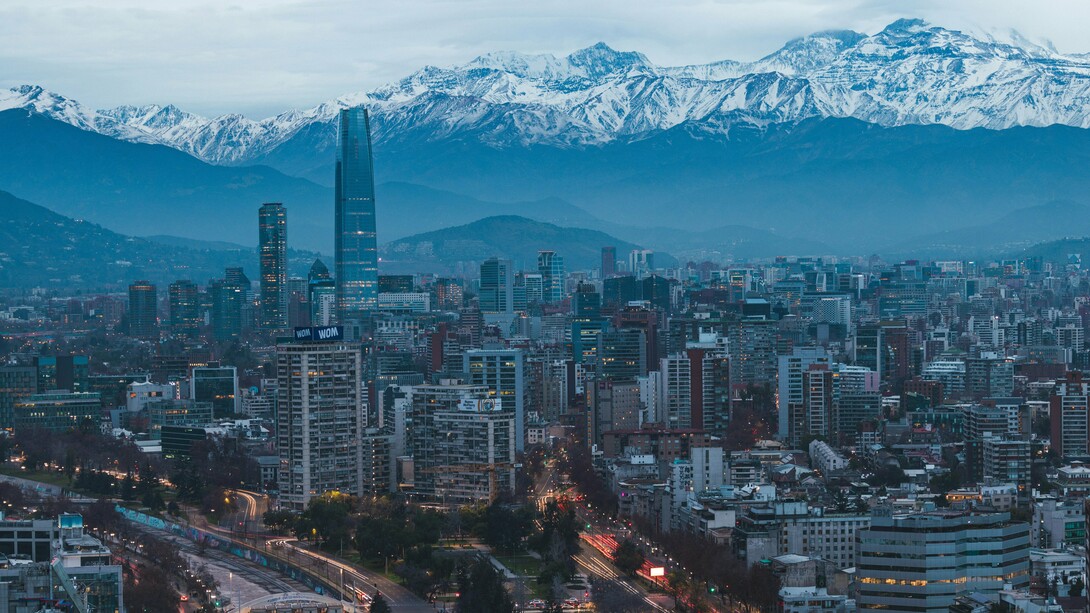
The Non-Aligned Movement (NAM) was formally established in Belgrade, then the capital of the Socialist Federal Republic of Yugoslavia, in 1961, when 25 countries gathered there. The movement's founders were President Josip Broz Tito of Yugoslavia, President Gamal Abdel Nasser of Egypt, and Prime Minister Jawaharlal Nehru of India. The precursor to this was the well-known Bandung Conference, which was held in Indonesia in 1955 and brought together 29 countries from Africa and Asia who were committed to the fight against colonialism, the defence of sovereignty, peaceful coexistence and solidarity among developing countries.
At that time, the United Nations was humanity’s hope for preventing new wars and conflicts. By 1961, the number of member states had grown from the 55 that founded the organisation in 1945 to 104. The world was recovering from the devastating Second World War, and the process of decolonisation was underway in a bipolar world — a 'Cold War' world, as George Orwell put it — controlled by the United States and the Soviet Union.
Two military blocs controlled by the two nuclear powers had emerged: NATO and the Warsaw Pact. While NATO proclaimed the defence of the free world, it simultaneously supported military coups and installed dictatorships and governments aligned with its interests. Meanwhile, the Soviets sought to expand socialism globally by providing military support to secessionist or rebel groups. At the NAM conference in Havana in 1979, Fidel Castro went so far as to proclaim that the socialist countries were his 'natural allies'.
However, President Tito quickly and firmly refuted this, drawing on his history of fighting the German and Italian occupations of Yugoslavia, liberating the country, and breaking with the Soviet Union in 1948 despite threats from Stalin, who sought to impose his hegemony. Tito became the leader and symbol of the NAM, developing a solid theoretical and practical stance on non-alignment supported by an autonomous military force.
The strengthening of the NAM over the last century can be explained by the existence of a bipolar world divided into two military blocs, the struggle against colonialism and for independence, and the apartheid regime in South Africa, which mobilised African people and progressive movements around the world.
Today, the United Nations comprises 193 sovereign states, while the NAM has around 120 member countries. This raises the question: Which countries are truly non-aligned? There is no easy answer, except for regional powers such as India and Brazil and countries with military, economic and demographic strength. Are Saudi Arabia, Algeria, Iran, Ethiopia, Cuba, North Korea, Colombia or Egypt non-aligned, to name a few?
In an alternative world with only one military bloc, NATO, all other countries would have to be non-aligned. However, this is not the case because states act in accordance with their own interests, shaped by historical and geopolitical circumstances. We must also distinguish between the growing number of countries that advocate autonomy, especially in terms of trade and investment, though this is not synonymous with the NAM.
In today's world, which is characterised by rivalry between two major powers — the People's Republic of China and the United States — in economic, military, scientific and space spheres, non-alignment should be the norm, but it is not and is unlikely to become so.
Out of 33 countries in Latin America and the Caribbean, only 18 are members of the NAM. Brazil, Argentina, Mexico, Costa Rica, Paraguay and Uruguay are not members of the movement, representing around 70% of the population of Latin America and the Caribbean. We must now add Chile to this list: on 3 August, it officially announced its withdrawal from the NAM. The reasons are unclear, but it has been reported that Chile considers the NAM to be a political movement that is out of step with the current reality, as well as being inconsistent with its status as an OECD member country and its foreign policy interests. These interests should align with those of like-minded nations.
Is President José A. Kast’s decision to withdraw Chile from the NAM justified?
Chile initially joined as an observer in 1964, becoming a full member in 1971 under Salvador Allende's presidency. The military dictatorship withdrew Chile from the movement in 1973, but the country rejoined with the return to democracy in 1990. For 36 years, successive governments maintained a consistent foreign policy stance regarding the NAM.
On many occasions when resolutions ran counter to Chile’s interests, the country exercised its right to reserve judgement on certain statements. Withdrawing Chile from the NAM today goes against the national interest, since the diverse member countries have often supported Chile in international organisations, particularly regarding political causes, disputes and environmental conservation issues and also on the economic front when seeking to open new markets in Asia and Africa.
There is no guarantee that Chile will not need this support in the future, and the country has nothing to lose by remaining a member since the NAM poses no threat and many countries act independently without leaving the movement.
Conversely, the current government seems to be participating in the demonisation of far-right groups that are trying to undermine the international order and even delegitimise bodies such as the United Nations and the International Criminal Court. Once again, just four months into their term, Chile’s foreign policy is revealing its weaknesses and inconsistencies. Neither declarations of loyalty to the Trump administration nor talks with Secretary of State Marco Rubio have yielded results. The most evident proof of this is the discriminatory 12.5% tariff imposed on Chilean exports, which violates the 2004 Free Trade Agreement with the United States.
The current U.S. ambassador's arrogant and undiplomatic statements regarding two Chilean ministers clearly demonstrate Washington's expectations of Chile: subservient alignment, as advocated by extremist sectors, which endangers the national interest. This will fuel pressure to increase defence spending, as can be inferred from recent statements by US Under Secretary of Defence Elbridge Colby, who declared that Latin America’s low military spending was 'absurd'.
Under the pretext of the war on drugs, the aim is to create the so-called 'Shield of the Americas' to combat drugs militarily by engaging the armed forces. This would require greater investment and the purchase of military equipment, and the United States would almost certainly be the supplier. This will lead to greater dependence and less control over sovereignty, as well as closing the doors to Chinese investment or trade agreements regarding infrastructure or strategic mineral resources. This is Washington's direct message to the countries in the region.
Maintaining autonomy in foreign policy is synonymous with respect for sovereignty, as Chile has demonstrated at key international junctures, such as when it served as a non-permanent member of the United Nations Security Council and refused to endorse the decision to support the illegal war against Iraq in 2003. The Non-Aligned Movement (NAM) will continue to exist, and Chile will face the consequences of President Kast’s government’s decision to withdraw the country when seeking support and votes in international organisations.