English
 Español
 Français
 Deutsch
 Italiano
 Português
In today’s world, neuroscience makes it possible to recode your old belief system. You are not a hostage to the past. If you want to break free from the roles you’ve been repeating since childhood, you can change your life. The roles imposed by our internal belief system begin in the early years of life, when the brain memorises various situations and interprets them as threats. Sometimes the body remembers old patterns and builds beliefs based on fears and prejudices that were once meant to protect us but no longer serve us today. Modern science comes to the rescue, helping to reduce the effects of past trauma and reprogramme your thinking at the level of the nervous system and the body, encoding a new story within you – the story of the winner of your own life.
Lost in our old identities
Many of us don’t really know what ‘tape’ our subconscious recorded during our childhood. It could have been low self-esteem, a particular view of how to earn money, the difficulty of achieving anything, and many other beliefs that became ingrained in our subconscious like a mantra, influenced by a strong stimulus or the beliefs of others that have stayed with us for the long term. As children, we possess a receptive memory and openness that did not necessarily work to our advantage. We cannot recall many of these situations because we were simply too young at the time. Besides, it is the subconscious that calls the shots and decides, without our knowledge or control, what it adopts for the long term and imprints onto the ‘hard drive’ of our mind.
And that is why we often fail to realise the impact of these childhood imprints. This is where the body comes to our aid, revealing reactions of which we ourselves were unaware. Sometimes we do not feel the psychological effects of stress, but the body and the nervous system may have retained the old pattern and are constantly replaying old reactions, producing excessive amounts of stress hormones. The body may also choose more subtle forms of communication. It may freeze in certain situations, feeling helpless or unable to make decisions. Another form of dialogue with ourselves is also inexplicable, fatigue. We attribute this to burnout, the weather, or age, yet the reasons may be more deeply encoded within the body, which, for example, demands expression in a particular area, whilst we suppress that potential within ourselves. This is how unconscious frustration and a sense of unfulfillment grow, knocking on our door in a rather unusual way, manifesting through the body and its fatigue.
Our mind may also subconsciously scan the reactions of those around us and the emotions of others if, during childhood, we were exposed to unpredictable behaviour from our parents. Adults with such hyper-developed vigilance do not perceive it in itself; it is a programme that runs in the background like an antivirus application, constantly doing heavy lifting and straining the nervous system. Outwardly, there is fatigue of unknown origin, whilst inwardly there is a constant effort that remains unconscious and unrecognised.
While nervous tension may be a component of stress, one can be stressed without feeling tension.
(Gabor Mate)
The role of mentoring
The field of mentoring began to take shape to fill a niche that psychology could not address. Whilst psychology focuses on integrating the human psyche, mentoring looks elsewhere – towards the realisation of dreams and the transformation of thought patterns and beliefs – in order to create a more fulfilling life. Mentoring is not about patching people up or healing them but about transforming outdated patterns of thinking. And the big prize here is not just peace of mind but often success, career and money, because it is not just well-being that is built but the right mindset.
Mentors do not need to be experts in academia, because their field of study is, above all, life itself. Here, the expertise lies in bringing about a spectacular change in one’s own life; that is why mentors are generally trendsetters – the pioneers of a life-changing revolution.
Psychosomatics
The modern world offers a vast array of psychosomatic approaches to working with the body, designed to support the mind-body connection. This field focuses not only on mental well-being but also on resetting cellular memory and expanding the nervous system. The body should not be isolated in therapeutic processes, as it is the vessel that stores the most difficult experiences. And this memory can, unfortunately, lead to many illnesses if we do not ‘log out’ these burdens from the body.
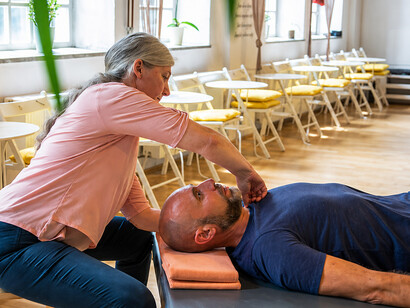
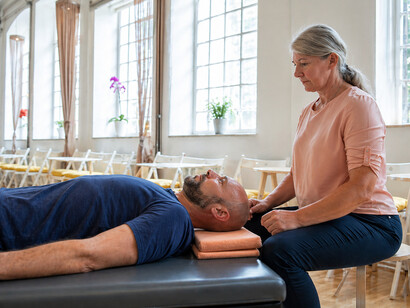
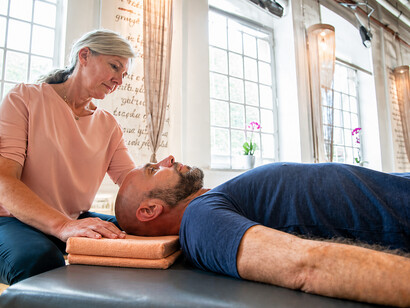
The field of psychosomatics includes various forms of dance and movement; massage, e.g., Access Bars®; as well as therapies based on body awareness, such as Somatic Experience (SE). All these techniques and methods anchor new patterns in the body, which eliminate a person’s sense of helplessness and enhance agency, shaping a sense of a completely new ‘self’. Psychosomatics, therefore, supports the individual in building a new identity, as it detaches them from outdated reactions – both mental and physical – which were once intended to protect us, for example, by triggering stress responses, but which today hinder our functioning.
Psychosomatics reveals to us a connection with our own bodies, the sense of which we may have lost somewhere along the way. Paradoxically, this lack of sensation may not be outwardly perceptible but manifests itself in difficulties in following one’s intuition in life, testing various life options, or searching for one’s true self. Restoring the relationship with the body helps rebuild our sense of self and understand our own needs and desires.
Working with the subconscious
There are many methods for working with the subconscious that can influence its content. And many of them work in different ways. For example, guided meditation helps to communicate new meanings to the subconscious, which can influence how we perceive ourselves in the world. Affirmations – phrases designed to remind us of important mottos and messages – subtly become our guides, a compass pointing the way to ourselves. Yoga nidra works in a similar way, inducing a state of deep relaxation in the body, where the body more readily and receptively accepts external messages based on the transformation of thought patterns. Hypnosis, on the other hand, works on the deeper layers of the subconscious, engaging it in profound inner work that takes us out of so-called ‘autopilot’ – that is, behaviours we do not control.
The subconscious is the most delicate realm, where we have buried the most. It may hold treasures and trophies, as well as the burdens of the past. And that is why working with the subconscious comes to our aid, for only it can help us drag out of these dark corners the unseen and forgotten fragments of ourselves, which can then be redefined and rearranged. Working with this area requires a great deal of subtlety and knowledge, because it is in the subconscious that a person is most vulnerable, and it is precisely this that forms the matrix of our inner beliefs.
We do not have to carry the burdens of the past. Our body is an excellent communicator of what is hidden from our consciousness. It is worth heeding its cues and making use of the benefits of science to give ourselves the chance to rebuild our lives. We can build a completely new life in which we play a role entirely different from the one we once did. A life in which we hold the cards and take full control, without leaving things to chance.