English
 Español
 Français
 Deutsch
 Italiano
 Português
Being attractive has always carried a certain promise. The attention, the ease in social situations, the quiet confidence that comes from being perceived as desirable. For many men, it feels like a shortcut, a way to bypass friction in dating, work, and everyday interactions.
That idea has recently taken on a more structured form online. Figures like Clavicular have popularised “looksmaxxing,” the deliberate optimisation of one’s physical appearance, framing attractiveness not just as a bonus, but as a solution. The underlying belief is simple: improve how you look, and life improves with it.
It sounds intuitive. But does the evidence actually support it?
To answer that, the question needs to be reframed. Not whether attractiveness feels powerful, but whether it produces measurable advantages across key areas of life, income, social mobility, relationships, and general treatment by others.
Research does suggest that it does, to a degree. Across multiple studies, physical attractiveness has been linked to better health outcomes, higher perceived intelligence, and more favourable social treatment. One of the key explanations for this is the halo effect — a cognitive bias where people attribute positive traits like competence and trustworthiness to those they find physically appealing. In practice, this means that attractiveness can shape first impressions before any actual information is exchanged.
This bias shows up clearly in high-stakes environments like the criminal justice system. Studies using longitudinal datasets have found that individuals rated as more attractive are less likely to engage in criminal behaviour and, if they do, are less likely to be arrested or convicted. In practical terms, attractiveness appears to shape not just how people are seen, but how they are judged.
But this is where the narrative begins to shift.
When researchers look closer, the effect is neither universal nor equally distributed. For men in particular, the advantages of attractiveness in areas like sentencing outcomes are inconsistent or weak. Some studies find that while attractive women benefit from leniency, the same effect does not significantly apply to men. That complicates the idea that attractiveness alone is a reliable advantage across all contexts, especially for the demographic that “looksmaxxing” culture primarily targets.
Even outside the justice system, the size of the “attractiveness advantage” is often smaller than it appears. Wage studies, for instance, do find that more attractive individuals tend to earn slightly more, but the difference is marginal rather than transformative. It is the kind of advantage that compounds subtly over time, not one that radically changes life outcomes on its own.
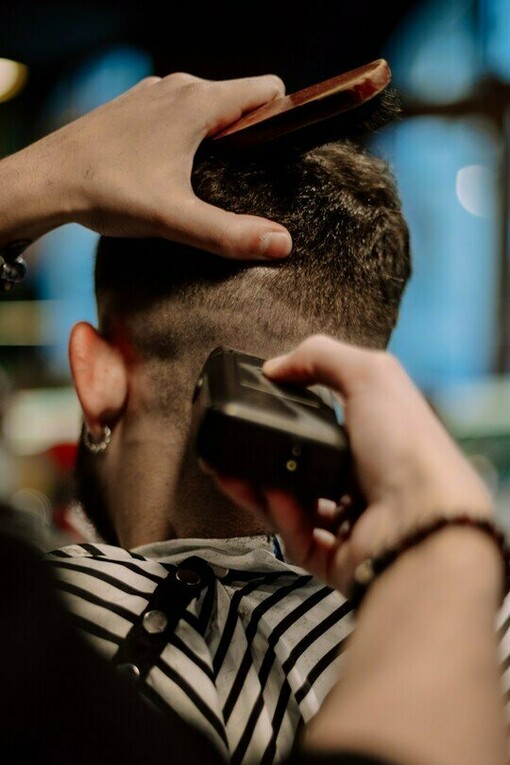
More importantly, attractiveness rarely operates in isolation. Factors like grooming, clothing, posture, and overall presentation often influence how “attractive” someone is perceived to be in the first place. Research shows that well-groomed individuals are more likely to be viewed as trustworthy and competent, even when controlling for baseline physical attractiveness. In other words, what people respond to is not just facial structure or symmetry, but the signals that surround it.
This raises a more uncomfortable question for the “looksmaxxing” argument: is it really attractiveness driving better outcomes or the behaviours that often come with it?
Confidence, social skills, and self-presentation tend to improve alongside efforts to enhance appearance. Someone who invests in their looks may also start dressing better, speaking more assertively, and engaging more socially. These traits have well-documented impacts on life outcomes, independent of physical looks. What appears to be an “attractiveness advantage” may, in part, be a behavioural one.
There is also the issue of perception over time. Attractiveness is most powerful in initial encounters, job interviews, first dates, and brief social interactions. But its influence tends to diminish as more information becomes available. Over the long term, competence, reliability, and emotional intelligence play a far greater role in determining success. In this sense, attractiveness may open doors, but it does not determine what happens after entry.
There are even instances where attractiveness can produce negative effects. Some research suggests that highly attractive individuals may be perceived as less competent in roles that require seriousness or technical expertise. Others may face assumptions of superficiality or have their achievements attributed to their appearance rather than their ability. These effects are not dominant, but they highlight the fact that attractiveness is not an unqualified advantage.
Taken together, the evidence points to a more nuanced reality. Attractiveness does confer advantages, particularly in perception and early-stage interactions. It can influence how people are treated, how quickly they are trusted, and how much attention they receive. But it is not the sweeping, life-defining force it is often made out to be.
Which brings us back to the original claim.
Clavicular’s framing of attractiveness as a near-universal solution is not entirely unfounded, but it is overstated. The science supports the presence of an effect, not the scale of it. Being attractive may open doors, but it does not eliminate the need to walk through them, nor does it guarantee what lies on the other side.
Notes
Knox, Krysta N., and Michael F. TenEyck. “Beauty Is Only Skin Deep: An Examination of Physical Attractiveness, Attractive Personality, and Personal Grooming on Criminal Justice Outcomes.” Plos One, vol. 18, no. 10, 11 Oct. 2023, p. e0291922.