English
 Español
 Français
 Deutsch
 Italiano
 Português
For decades, exercise has been prescribed to strengthen muscles, improve cardiovascular health, manage weight, and reduce the risk of chronic disease. Increasingly, however, research is pointing to another compelling reason to move: exercise may be one of the most effective and underutilized tools for supporting mental health.
As rates of anxiety, depression, stress, and burnout continue to rise, exercise is increasingly recognized as a foundational pillar of psychological well-being. While it is not a replacement for professional mental health care, it complements therapy, medication, and other evidence-based treatments.
The question is no longer whether exercise benefits mental health; it is how much, what kind, and how intentionally we should incorporate it into our lives.
Why movement changes the mind
Exercise influences the brain in remarkably diverse ways. Physical activity stimulates the release of endorphins, dopamine, serotonin, and endocannabinoids—neurochemicals associated with improved mood, motivation, and emotional regulation. At the same time, regular movement reduces circulating stress hormones such as cortisol while improving sleep quality, cognitive function, and resilience to everyday stress.
Modern neuroscience also shows that exercise increases levels of brain-derived neurotrophic factor (BDNF), often referred to as "fertilizer for the brain." BDNF supports neuroplasticity—the brain's ability to grow, adapt, and form new neural connections—which plays an important role in learning, memory, and recovery from depression.
Perhaps most importantly, exercise restores a sense of agency. Completing a workout, taking a walk, or simply moving consistently reinforces the belief that we can positively influence our physical and emotional well-being.
The mind-body connection: physicality shapes mindset
Not all exercise affects us in exactly the same way. While vigorous cardiovascular exercise and strength training are excellent for improving mood and reducing symptoms of anxiety and depression, mind-body movement practices add another dimension by intentionally integrating physical movement with breath, awareness, balance, and emotional regulation.
Practices such as yoga, Pilates, and MSINGI® exemplify this holistic approach. Rather than focusing solely on calories burned or physical performance, these modalities cultivate a deeper awareness of how movement influences both body and mind.4
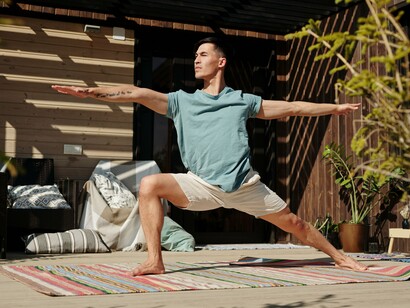
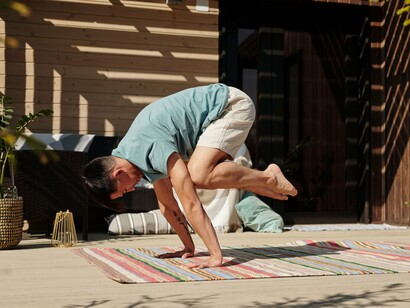
Yoga integrates breath, mobility, balance, and meditation to calm the nervous system. Pilates develops core strength, posture, and body awareness through controlled movement. MSINGI® combines purposeful functional movement with music and rhythm to simultaneously enhance physical competence, cognitive engagement, emotional expression, and social connection.
These approaches recognize that physicality is more than fitness: it is one of the foundational pillars that shapes mindset. As movement quality improves, individuals often experience greater confidence, reduced fear of movement, enhanced self-efficacy, and a stronger sense of emotional well-being. This reciprocal relationship illustrates a powerful truth: when we intentionally care for the body, we create the conditions for the mind to thrive.
What is the right dose?
Current physical activity guidelines recommend adults accumulate at least 150 minutes of moderate-intensity aerobic activity each week, combined with two strength-training sessions1,3. For mental health, however, consistency is often more important than intensity.
Research suggests that even 20–30 minutes of purposeful movement can improve mood, reduce stress, and enhance cognitive function on the same day. Whether it's a brisk walk, a resistance workout, a Pilates session, an evening yoga class, or a music-driven MSINGI® class, regular participation contributes meaningfully to emotional health.
Emerging research also supports the concept of "exercise snacks"—short bouts of movement distributed throughout the day. These brief interruptions to prolonged sitting can improve concentration, reduce mental fatigue, and elevate mood, making movement an accessible mental health strategy even for busy people.
Exercise versus therapy: a false choice
A common question is whether exercise is "better" than therapy.
The evidence suggests this is the wrong comparison.
Psychotherapy addresses underlying thought patterns, trauma, relationships, and coping strategies. Exercise works through complementary biological and psychological mechanisms that improve emotional regulation, resilience, sleep, self-confidence, and stress management.
For individuals experiencing mild to moderate symptoms of depression or anxiety, regular physical activity can produce meaningful improvements.2 For more significant mental health challenges, exercise is most effective as part of a comprehensive care plan that includes qualified mental health professionals.
There is also the important consideration of cost. Individual therapy sessions often range from $150–250 per hour in many Canadian communities, while a quality fitness membership typically costs $50–100 per month, with walking, cycling, community recreation, and home exercise available at little or no cost. Although therapy and exercise serve different purposes, regular movement remains one of the most accessible and cost-effective investments in overall well-being.
Five practical ways to turn exercise into a mental health practice
1. Match your movement to your emotional needs
High stress may call for restorative practices like yoga, Pilates, or MSINGI®, while low energy may benefit from a brisk walk or strength workout. Learn to choose movement based on how you want to feel, not simply what you want to achieve physically.
2. Begin every workout with mindful breathing
Take one minute before you move to slow your breathing and notice your emotional state. This simple ritual helps shift your nervous system toward greater calm and prepares both mind and body for purposeful movement.
3. Prioritize consistency over intensity
Mental health benefits accumulate through regular participation. Twenty minutes of movement most days of the week is often more effective than occasional high-intensity workouts followed by long periods of inactivity.
4. Choose movement that creates joy and connection
Music, rhythm, nature, and supportive communities enhance adherence and emotional well-being. Group fitness, walking clubs, yoga studios, Pilates classes, or MSINGI programs can strengthen both physical health and meaningful social connection.
5. Reflect on how you feel and not just what you accomplished.
Instead of evaluating your workout solely by calories, pace, or weight lifted, ask yourself: Do I feel calmer? More focused? More optimistic? Recognizing these psychological benefits reinforces exercise as an investment in lifelong mental wellness.
The future of fitness is whole-person health
As healthcare increasingly recognizes the inseparable relationship between physical and mental well-being, fitness professionals are becoming important contributors to preventative mental health. Their role extends beyond helping people become stronger or leaner; they help individuals become more resilient, confident, emotionally balanced, and connected.
Mind-body practices such as yoga, Pilates, and MSINGI® demonstrate that exercise is more than physical activity; it is an experience that shapes how we think, feel, respond to stress, and engage with the world.
Exercise will never replace psychologists, psychiatrists, or counselors. But it deserves recognition as one of the essential pillars of mental health—a daily practice that strengthens physical capacity while cultivating emotional resilience, cognitive vitality, and overall well-being.
Notes
1 American College of Sports Medicine. (2024). ACSM's Guidelines for Exercise Testing and Prescription (12th ed.).
2 Singh, B., et al. (2023). Effectiveness of physical activity interventions for improving depression, anxiety and psychological distress: An umbrella review. British Journal of Sports Medicine, 57(18), 1203–1209.
3 World Health Organization. (2022). Guidelines on Physical Activity and Sedentary Behavior.
4 Pascoe, M. C., Thompson, D. R., & Ski, C. F. (2021). Yoga, mindfulness-based stress reduction and stress-related physiological measures: A systematic review and meta-analysis. Psychophysiology, 58(1).