English
 Español
 Français
 Deutsch
 Italiano
 Português

The skincare industry has done a spectacular job selling one seductive fantasy: that if an ingredient sounds scientific enough, expensive enough, or futuristic enough, the skin will simply welcome it in and put it to work. A serum promises peptides, growth factors, antioxidants, stem-cell extracts, or “bioactive complexes,” and the imagination does the rest. We picture these ingredients marching confidently into the skin, repairing collagen, calming inflammation, and negotiating peace treaties with time.
The problem is that skin does not behave like an open door. It behaves more like a very suspicious bouncer.
That is not a design flaw. It is the whole point of skin. Its outermost layer, the stratum corneum, exists to keep the outside world outside. It limits water loss, blocks irritants, reduces microbial intrusion, and generally refuses entry to anything that has not earned it. This is why one of the least glamorous questions in skincare is also one of the most important: not just what is in the bottle, but whether it can actually get where it needs to go.
That question matters because many of the benefits consumers hope for—collagen stimulation, brightening, calming inflammation, or influencing living skin cells—depend on an ingredient reaching the right layer in a meaningful amount. And that is where reality gets less romantic.
Molecular size matters. So does stability. So does the vehicle carrying the ingredient. So does whether the skin barrier is calm, intact, and not already angry from six other products applied in a panic. Dermatologists consistently emphasize that order affects performance and that piling on too many products can backfire by irritating the skin instead of improving it.
But here is the smarter—and far more useful—version of the story: the conclusion is not that skincare does not work. It is that skincare works best when we stop asking every product to perform the same trick.
Some ingredients do not need to dive deep to be valuable. Sunscreen is the best example. It works precisely because it stays where it is needed, intercepting ultraviolet radiation before the damage travels deeper. Moisturizers are another misunderstood category. People often dismiss them as “superficial,” as if working at the level of the barrier were somehow a lesser achievement. In reality, supporting the barrier is one of the most intelligent things skincare can do. Surface action is not failure. In many cases, the surface is exactly where the job is.
This is also why the strongest skincare routines are usually less dramatic than people expect. They rely on fewer steps, better timing, and less chaos. The products still matter, of course. But so does how you use them.
How to make your creams and serums work harder in real life
This is where skincare leaves the laboratory fantasy and enters the bathroom mirror.
The first practical rule is simple: use products in the right order. The American Academy of Dermatology recommends cleansing first, then applying medication or treatment, followed by moisturizer and sunscreen. Cleveland Clinic guidance says much the same, while adding a helpful rule of thumb for layered routines: go from thinnest to thickest. In plain English, that means a watery serum should not be fighting its way through a heavy cream already sitting on the skin like winter wallpaper.
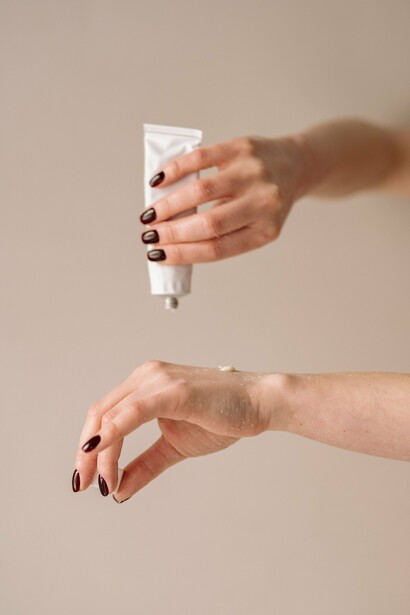
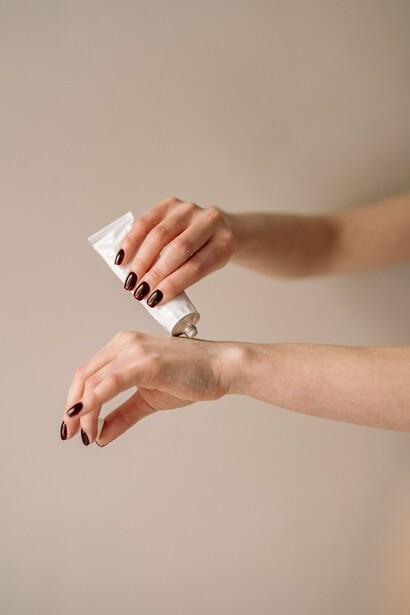
The second rule is even more important and oddly more ignored: do not wait forever after washing your face. For most non-retinoid routines, your moisturizer is most effective when applied while the skin is still slightly damp, because it helps seal in the water already sitting on the surface.
Northwestern Medicine states this directly, and clinical research comparing immediate versus delayed moisturizing found better hydration-related outcomes when moisturizer was applied right away rather than much later. In other words, if you cleanse your face, scroll your phone for nine minutes, answer two messages, reorganize your sink, and then remember your moisturizer, you have already missed one of the easiest wins in skincare.
That does not mean you need a stopwatch and military precision. In fact, most medical guidance focuses far more on sequence than on exact minute-by-minute delays. That is a clue in itself. For ordinary hydrating steps, what matters most is not waiting five ceremonial minutes between each bottle. What matters is that the previous layer has settled enough not to be rubbed into a slippery mess by the next one.
In real life, that usually means moving on once the product is no longer obviously wet—often around 30 to 60 seconds for a toner or lightweight serum. The big exception is retinoids, which are a different species altogether.
So how long should you actually wait between steps?
This is the question readers always want answered, preferably with the confidence of a boarding announcement.
For toner after washing, the practical answer is right away, if you use a toner at all. Toner goes on after cleansing. There is no prize for letting your face sit bare first. That said, toner is not essential for everyone. Cleveland Clinic treats it as optional and even notes that it can irritate some people. So the more useful question is not “How long should I wait?” but “Do I even need this step?” If your cleanser is gentle and your skin is happy, you may not.
For serum after toner, the most practical rule is as soon as the toner stops feeling visibly wet. Think “brief pause,” not “intermission.” If the toner is still dripping or tacky in a way that makes everything slide around, wait a moment. If it has settled, move on.
For cream after serum, again, you usually only need to wait until the serum has spread and settled—often less than a minute. Moisturizer is not there to sabotage the serum. In many routines, it helps lock in hydration and reduce transepidermal water loss. The real mistake is not applying moisturizer “too fast.” The real mistake is using a heavy cream first and then expecting a lighter treatment product to perform acrobatics on top of it.
And now for the important exception that saves many faces from unnecessary irritation: retinoid nights are different. Mayo Clinic advises waiting 20 to 30 minutes after washing before applying tretinoin, specifically to make sure the skin is completely dry, because applying it to wet skin can increase irritation. This is why the person who happily applies hyaluronic acid to damp skin may do very badly copying the same behavior with tretinoin. In skincare, context is everything.
Three real-life examples that instantly make a routine smarter
The first is the classic “I bought everything” routine. Cleanser. Acid toner. Vitamin C, niacinamide, and hyaluronic acid. Moisturizer. Oil. SPF. By step seven, the skin is no longer being cared for; it is being negotiated with by committee. Dermatology keeps repeating the same message because it is true: too many products increase the chance of irritation. Sometimes the most effective way to make skincare work better is not to add another serum. It is to stop giving your barrier so many personality tests.
The second is the “I’m in a rush” morning routine. You wash your face, your skin feels tight, and you are tempted to fling sunscreen onto dry skin and run. A smarter version is this: cleanse, use toner only if it actually helps your skin, apply your serum, then moisturizer while the skin still has a little softness and dampness left, and finish with sunscreen as the last step. That is not a 12-step ritual. That is simply good sequencing.
The third is the retinoid beginner who hears “apply actives on damp skin for better penetration” and assumes this applies to everything. It does not. With tretinoin, more penetration can simply mean more irritation. The better routine is the boring one: wash gently, pat dry, wait until the face is fully dry, use a pea-sized amount, then moisturize if needed. Skincare is full of moments where restraint looks less glamorous but performs better.
The truth people remember
Perhaps the most useful shift for readers is to stop thinking of skincare as a treasure hunt for the single most powerful ingredient. Power without delivery is mostly public relations. A routine becomes smarter when the questions change. Not “What sounds impressive?” but “What problem am I treating?” Not “How many actives can I stack?” but “What layer am I actually trying to affect?” Not “Should I wait seven minutes between every step?” but “Am I using the right product, in the right order, on the right kind of skin?”
That is also why overloading the skin often backfires. In the hope of doing more, people frequently undermine the very barrier that makes any intelligent treatment possible. Too many acids, too many actives, too much friction, too many trendy serums chasing the same result—suddenly the skin is irritated, the barrier is compromised, and the whole routine begins to resemble an argument rather than a strategy. Skin rarely rewards panic. It responds far better to consistency, restraint, and formulas that are actually matched to a real mechanism.
In the end, the biggest misunderstanding in modern skincare is not that ingredients fail. It is that consumers are often taught to admire ingredients in isolation, instead of asking whether the formula, the barrier, and the biology are all on speaking terms. Skin is not passive. It is selective. It is defensive. It is meant to be difficult.
And that is exactly why the best skincare is rarely the loudest. It is the kind that understands the door, respects the doorman, and still knows how to get the message through.
As Dr. Thiago Freire puts it, “The biggest mistake in skincare is assuming that more product means more results. Skin was designed to protect, not to surrender. The routines that work best are usually the ones that respect the barrier, use the right ingredients in the right order, and understand that consistency often outperforms complexity.”
References
American Academy of Dermatology. Should I apply my skin care products in a certain order?
Cleveland Clinic. How To Order Your Skin Care Routine.
Northwestern Medicine. Do You Really Need a Skin Care Routine?
Mayo Clinic. Tretinoin (topical route): proper use and precautions.
Ueda Y, et al. Optimal application method of a moisturizer on the basis of skin physiological functions. Journal of Cosmetic Dermatology. 2022.
Bouwstra JA, Nădăban A, Bras W, McCabe C, Bunge A, Gooris GS. The skin barrier: An extraordinary interface with an exceptional lipid organization. Progress in Lipid Research. 2023.
Bos JD, Meinardi MMHM. The 500 Dalton rule for the skin penetration of chemical compounds and drugs. Experimental Dermatology. 2000.
Rajkumar J, Chandan N, Lio P, Shi V. The Skin Barrier and Moisturization: Function, Disruption, and Mechanisms of Repair. Skin Pharmacology and Physiology. 2023.