 English
 Español
 Français
 Deutsch
 Italiano
 Português

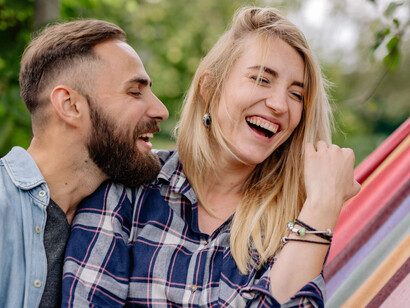
There are loves that arrive gently, like a familiar song, and there are loves that arrive like a question you cannot answer. To love someone whose views and values do not mirror your own is to enter a terrain that is both tender and dangerous—a place where the heart must learn to hold contradiction without hardening.
We are taught, in quiet and invisible ways, that love should feel like sameness. That the one who stands beside us should see the world as we do, speak the same truths, and carry the same fires. But this is not always how love comes. Sometimes it comes wearing the language of another story, shaped by different hands and raised inside a different remembering.
Because people are not born as blank pages. They are born into narratives—into families, into histories, into wounds and loyalties that stretch far beyond their own choosing. Beliefs are often inherited before they are ever examined. They live in the body like old songs, repeated so often they begin to feel like truth itself. To love someone is, in part, to witness these inheritances without immediately trying to tear them away.
And yet, to love well is not to leave those inheritances untouched. The soul asks questions. When two people love each other across difference, they become mirrors of this questioning. They ask, they listen, they return again and again to the fire—not to destroy, but to see more clearly.
But love cannot survive if it becomes a battlefield of persuasion. If every conversation is a quiet attempt to convert, the soul grows tired. Love, then, asks for something harder: to release the need to convince. To allow two truths to sit in the same room, breathing the same air, without forcing one to disappear. This is not indifference. It is discipline. It is the practice of letting difference exist without immediately turning it into war.
And still, there is a deeper knowing the body carries: love is not only about how someone holds you but also how they hold the world. Watch how they speak of those they oppose. Watch the softness—or the sharpness—with which they name the other. A person who can disagree without cruelty, who can stand firmly without dehumanising, carries a kind of integrity that love can rest inside.
I learnt this not from a distance but from within. From my people around and from myself. I loved people whose life was shaped by a story that stood in tension with my own. One was an IDF soldier, bound to his people, his history, his inheritance. The timing was excellent and awful—I just explored Palestine and was surrounded by the living pain of my friends there, whose lives had been marked by the realities of the occupied West Bank. Their grief lived close to me. It had names, faces, and voices I could not forget.
To love him was to stand at the crossing of these worlds.
My father married a woman his mother hated and therefore disowned him from the family. That same grandmother chose a husband who was “not enough” according to my grandmother’s family. My other grandmother and her husband created a life together, but they had to run away from home due to family disagreements. In these examples, the differences were mainly due to family disapproval at first. But even after this, internal conflict on certain issues "within the house" cannot be avoided.
There are cases where an engagement breaks down because the family does not consider the prospective husband wealthy enough. And there are cases when this conflict arises internally. Due to mismatched situations and opinions. But where a conflict arises, it does not mean that it is undiscoverable or unsolvable. It just arises. What we do with it is up to us. We do not have to destroy it; we have to recognise it and see with interest whether we can coexist with it. Because life requires not only love and a happy yes but also tolerance, tolerating what we do not like. Proportions are, of course, important here.
How can the heart stretch across something that feels so vast, so unresolved? What I understood from my dad’s case was that he was not in blind allegiance nor indifference to suffering. I saw a man who listened. A man who did not close his ears to other truths, who did not speak of others with hatred. But he listened to himself. And slowly, I understood that love was not about agreement—it was about how we carry our differences.
We love when we stop trying to win. We let the arguments loosen their grip. Instead of sharpening our words, we soften our listening. We allow our beliefs to coexist, not because they are aligned, but because we choose not to make love contingent on sameness. And in that space, something unexpected happens: difference becomes a doorway. A place of learning, of stretching, of seeing beyond the narrow edges of our own inheritance.
But this path is not for the faint of heart. It asks for wrestling—for sitting with questions that do not resolve, for holding discomfort without fleeing from it. Political conflicts, especially those soaked in history and pain, do not offer simple answers. To accept another’s perspective in such a space is to walk into the unknown again and again.
And yet, even here, there must be ground beneath your feet.
Love cannot ask you to abandon your deepest knowing. There are values that form the bones of who you are—your sense of dignity, your understanding of right and wrong, your way of seeing the humanity in others. If these are not shared, if they are fractured beyond recognition, love begins to lose its shape. It is possible to disagree on many things, but not on everything. Not on what makes a life worthy of respect.
So before you choose this kind of love, you must ask yourself: where are my lines? What is essential to me? What can I question, and what must I keep? Because to love someone across difference is to agree, in some quiet way, to meet that difference again and again. It is a daily crossing.
And still, the question lingers, as it always does.
Can we truly love someone if we do not love them as a whole? Can we separate the parts we cherish from the parts that unsettle us, holding one close while turning away from the other? Can love survive in fragments, or does it ask for a fuller seeing?
Perhaps love is not about closing the eyes. Perhaps it is about opening them wider than we ever have before. To see the beauty and the fracture, the alignment and the tension, and to choose—consciously and deliberately—whether we can remain.
Because love, in its truest form, is not blind. It sees. It knows. And then, with all that knowing, it decides.
And sometimes, that decision is to stay.
And sometimes, it is the opposite.
Being a good human takes only effort to respect, realise and be open to another human's world. Which is just as deep and dense as ours. Worth just as much and requires even more sensitive handling, as we never fully know what is going on on the other side.
We love people with the same political views, similar backgrounds, and the same ideas on life. And we love people with exact opposite views and ideas too. Differences cannot determine or stop love. Our conclusions do.
But when the noise is transformed into calmness within by a feeling, it creates acceptance. And that is when we truly love. Still asking questions. Still wrestling. Fighting. But if we do it with love, we never loose the main point.
I believe this should be the case in all human relationships. With acceptance, the ability to ask questions and respect the answer even if we don’t favour it. Love makes us strong. And those who are strong are able to refuse to hurt others.