English
 Español
 Français
 Deutsch
 Italiano
 Português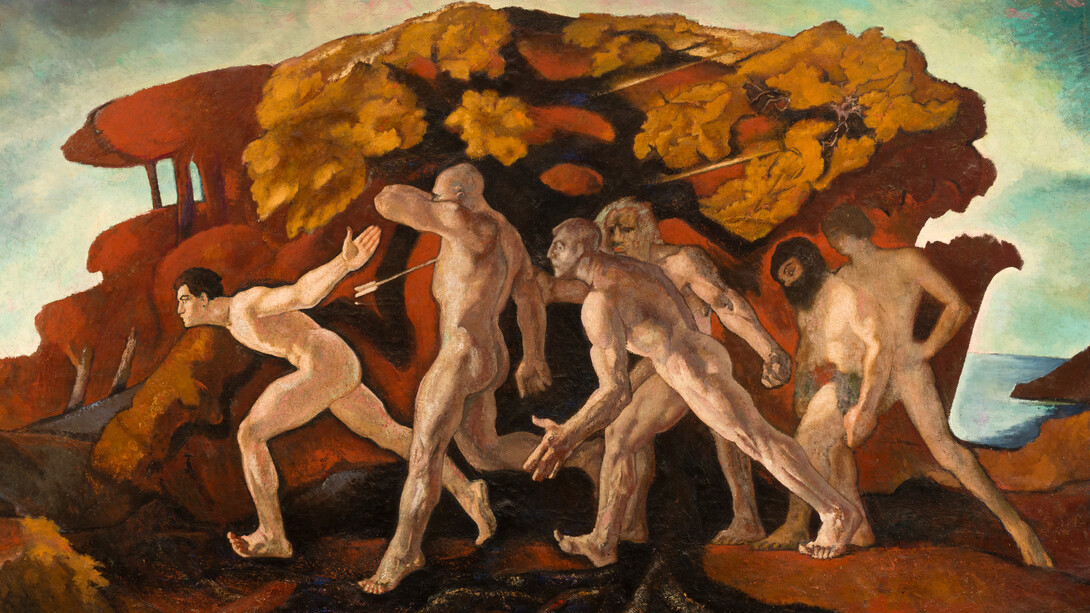
The Mart in Rovereto presents the most comprehensive exhibition ever devoted to Anselmo Bucci.
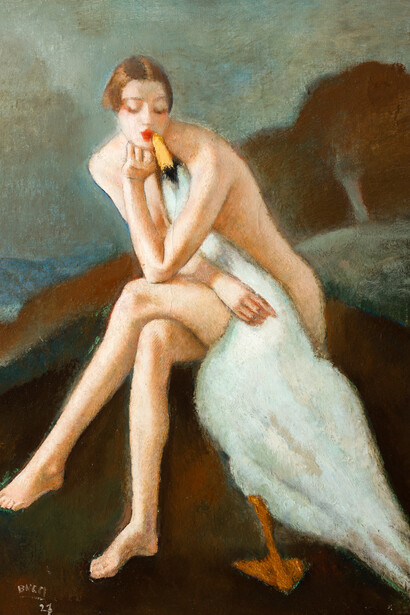
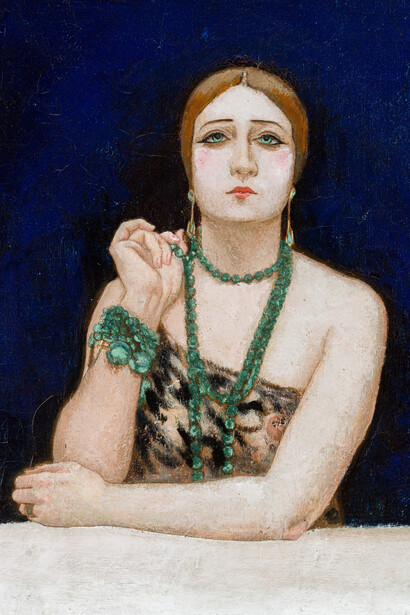
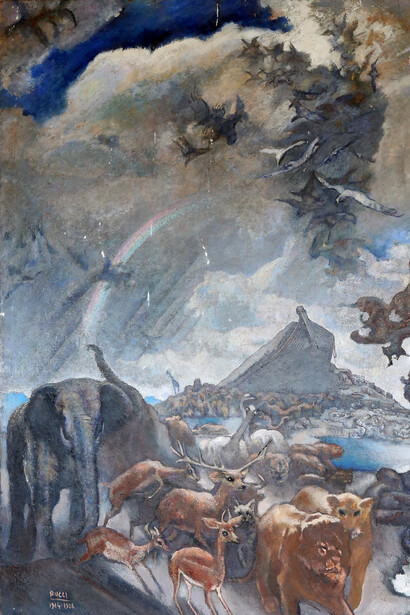
More than 150 works trace the career, life, and connections of a wide-ranging intellectual, bringing into focus one of the most complex, cultivated, and independent figures of the twentieth century. Paintings, prints, drawings, and photographs have been brought together at the Mart from major private and public collections, including the Quadreria Cesarini – Casa Museo in Fossombrone, the Musei Civici di Monza, the Museo del Novecento in Milan, the Galleria Nazionale d’Arte Moderna e Contemporanea in Rome, and the Istituto Centrale per la Storia del Risorgimento Italiano.
Painter, printmaker, draughtsman, and writer, Anselmo Bucci occupies a singular position in the artistic landscape of his time. A central figure in cultural life between Paris and Milan, he maintained a fierce intellectual independence, as evidenced by his complex relationship with the Novecento italiano group — of which he was a founding member and to which he gave its name — before eventually breaking away. Bucci moved across languages, techniques, and genres with rare freedom, sustaining an inner coherence grounded in a deep figurative culture and an uncommon literary sensibility — both forged by direct experience of urban modernity and of the First World War, which he witnessed on the front lines as a war artist.
True to its subtitle, The twentieth century between Italy and Europe, the exhibition foregrounds Bucci’s international dimension, tracing his path from the Marche region to Venice — then the quintessential cosmopolitan city — and on to Paris and Milan. Better known abroad than in Italy — his work was first championed by Guillaume Apollinaire and reviewed in the New York Times — Bucci cultivated a wide network of international contacts and personal relationships, exploring a broad range of subjects and themes with an original style and remarkable pictorial quality. Beyond painting, he was an accomplished printmaker and draughtsman of considerable sensitivity. Through celebrated works and lesser-known bodies of material — including his photographic and documentary archive — the exhibition offers a comprehensive reassessment of his output.
Structured into ten chronological and thematic sections, the exhibition traces the artist’s career from his early self-portraits to his mature work, illuminating his evolution over time and across media.
The exhibition closes with an extraordinary work, restored for the occasion and never before shown in a museum: I maschi. In this large, mythologically inspired painting, a group of hunters is overpowered by the Amazons — a scene that alludes to the conflict between the sexes and reveals Bucci’s enduring fascination with the male nude.
The exhibition is accompanied by a richly illustrated catalogue published by Dario Cimorelli Editore with essays by curators Avanzi and Baroni, Mart president Vittorio Sgarbi and leading scholars and art historians: Paolo Bolpagni, Luca Gregotti, Matteo Maria Mapelli and Elena Pontiggia. The volume includes reproductions and entries for all works in the exhibition, with scholarly apparatus edited by Luca Baroni.