English
 Español
 Français
 Deutsch
 Italiano
 Português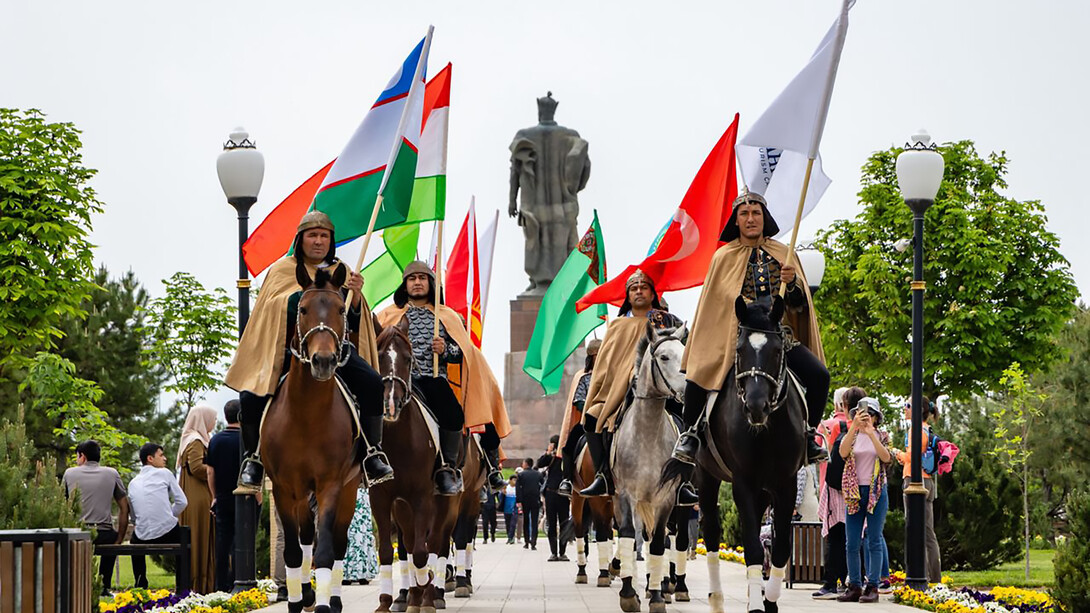
When travelers imagine Uzbekistan, the majestic Registan Square of Samarkand or the blue domes of Bukhara often come to mind. However, less than 80 kilometers south of Samarkand lies another hidden gem of Central Asia—Shahrisabz, a city that combines history, beauty, and pride. Known in Persian as the “Green City,” Shahrisabz offers visitors a fascinating journey through time, where ancient ruins, unique traditions, and modern charm coexist in perfect harmony. It is a city that shaped one of the greatest historical figures in history, Amir Timur, and continues to embody the grandeur of his legacy.
Founded more than 2,700 years ago, Shahrisabz is one of Central Asia’s most ancient cities. Formerly known as Kesh, it was once a prominent center of Sogdiana, a province of the Achaemenid Empire of Persia. Archaeological evidence traces its roots back to the 9th and 8th centuries BCE, making it a cradle of civilization long before many of the world’s great cities emerged. Over the centuries, the city witnessed the rise and fall of empires, from Achaemenids and Greeks to Turks, Arabs, and Mongols, each leaving behind traces that shaped the city’s unique cultural fabric.
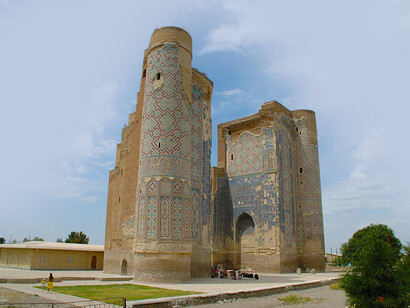
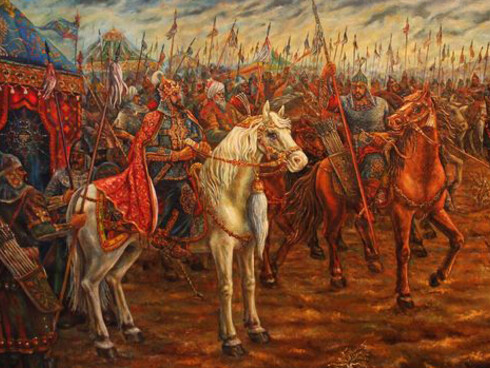
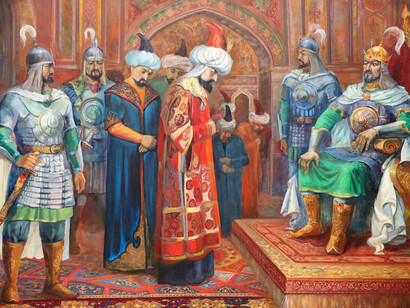
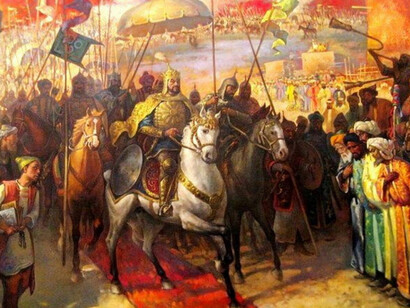
But it was during the 14th century that Shahrisabz truly rose to prominence as the birthplace of Amir Timur, one of history’s most influential rulers. Timur, who went on to establish a vast empire stretching from Delhi to Damascus, always regarded Shahrisabz as his hometown. It was here that he envisioned a city of monumental beauty and power, one that could rival any capital of his time. He initiated the construction of Ak-Saray Palace, known as the “White Palace,” which would become his greatest architectural masterpiece.
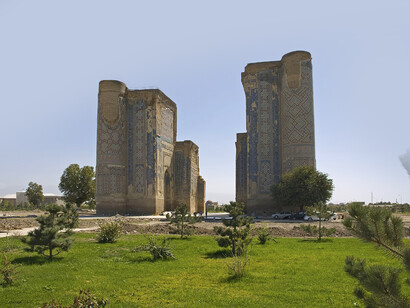
Today, all that remains of Ak-Saray are the two towering sides of its entrance gate, standing like silent witnesses of the past. Even in ruins, the palace’s grandeur remains undeniable. The entrance portal alone was 38 meters high and 22 meters wide, decorated with blue and gold tiles that shimmered under the sun. Above the arch once stood Timur’s bold inscription: “If you doubt our strength, look at the buildings we have built.”
Beyond the palace ruins lies a peaceful park adorned with fountains, basil plants, and tree-lined paths. Here stands a modern statue of Timur, standing proudly over his birthplace. Interestingly, this is one of three statues of him erected after Uzbekistan’s independence in 1991. The Shahrisabz statue shows him standing tall and dignified; in Samarkand, Timur is seated, ruling his empire, while in Tashkent, he rides his horse, pointing forward, a symbolic gesture toward progress and unity.
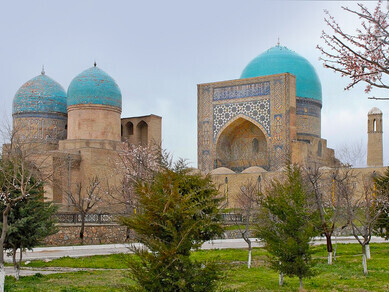
Nearby, the Dorut Tilavat Complex and Kok-Gumbaz Mosque offer a unique spiritual experience. Built in 1437 by Ulugh Beg, Timur’s grandson, Kok-Gumbaz, literally meaning “Blue Dome,” serves as the city’s main Friday mosque. Its blue dome and elegant design beautifully capture the artistic sensibilities of the Timurid era. Behind the mosque lies the necropolis of Dorut Tilavat, home to several tombs, including that of Sheikh Shamsiddin Kulol, Timur’s spiritual mentor.
Not far from here is the Dorus-Saodat Complex, also known as the “Seat of Power and Might.” This sacred site holds the tomb of Jehangir, Timur’s beloved eldest son, who died young. Behind it lies a mysterious underground chamber discovered by archaeologists in 1943. It contains a stone casket believed to have been intended for Timur himself, though fate led him to rest in Samarkand’s Gur-e-Amir Mausoleum instead.
Walking through Shahrisabz today, one can sense how the city blends its glorious past with living traditions. Along the park’s edges, local women stitch suzani, colorful hand-embroidered textiles that have long been part of Uzbek culture. The city’s famous Shahrisabz suzani, known for its radiant hues of yellow, orange, and blue, once played a central role in family life, often gifted during weddings and celebrations.
Shahrisabz also maintains the spirit of the Silk Road through its restored caravanserai, once a resting place for merchants and travelers journeying across Asia. Today, it serves as an event hall and restaurant, still fulfilling its ancient purpose of bringing people together. Sitting here, one can almost imagine traders from Persia, India, and China exchanging goods, stories, and laughter centuries ago.
Beyond its historical sites, Shahrisabz’s natural surroundings add to its charm. Nestled at an elevation of 622 meters and surrounded by the foothills of the Zarafshan Mountains, the city enjoys a Mediterranean climate, with mild winters and warm, sunny summers. The drive from Samarkand to Shahrisabz, crossing scenic mountain passes, is itself a breathtaking experience, revealing panoramic views of green valleys and ancient settlements. Perhaps, it is the reason why the city is called “Green City.”
In 2024, the Economic Cooperation Organization (ECO) named Shahrisabz its Tourism Capital, recognizing its historical, cultural, and architectural significance. The title is well deserved. Few places in Central Asia offer such a compact yet rich experience, where ancient ruins, sacred shrines, living traditions, and warm hospitality come together in one unforgettable setting.