English
 Español
 Français
 Deutsch
 Italiano
 Português
My journey as a social work program chair brought me to Hong Kong, where pride, protest, and professional purpose intertwined.
Madame Tussauds and Filipino pride
One of the highlights of my visit was Madame Tussauds, where I stood in awe at the lifelike wax figures. Among them, Pia Wurtzbach's presence was deeply symbolic. In Hong Kong, where many Filipinos work as domestic helpers, her wax figure offered a powerful reminder: we are more than our labour—we are achievers, leaders, and Miss Universe.
Visiting Madame Tussauds was just a stroke of luck for me because I really did not have money to visit this place because it is expensive but there is one Indian national who said that he wants someone to help him learn English in a conversational way and for that, he needs company for the whole day who loves to talk and discuss anything under the sun. I already forgot that guy’s name but for confidentiality purposes I will not reveal his name even if I remember it. He had worked with the military in India and left and moved to China. He currently taught skydiving, which for me is an amazing task, knowing that I have only met a few skydivers in my life.
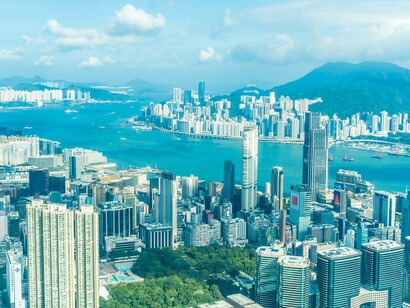
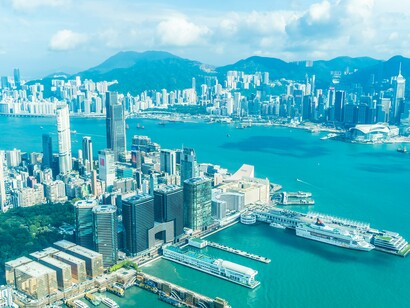
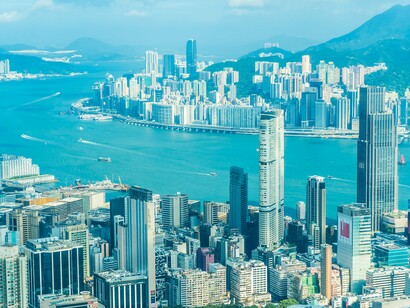
I think what fascinated me is the fact he was learning Chinese and then English because he said it was a requirement for his job in China. We walked around the city until we visited the famous Madame Tussauds and ended up at the Hong Kong Ferris Wheel at night, which allowed us to see the beauty of the city lights. Hong Kong is a magical place combining the forces of light and water that, even though it is small, looks so powerful from different angles of the city from the mountaintop, the sea view, and just walking around the streets.
The Filipino presence in Central
On Sundays, I witnessed Central Square transform into a gathering place for thousands of Filipino workers. Their presence was so significant that it felt like half of Hong Kong’s foreign workforce filled the streets. Many told me Hong Kong was one of the best places for domestic workers, with stronger legal protections than in other countries. Their resilience was inspiring, but I also hoped that beyond their service, their voices would be heard and valued.
The Central Square is like a huge community of Filipino domestic workers having their Saturday and Sunday picnic to meet other domestic workers mostly working as caregivers, salesclerks, or in different jobs in Hong Kong. It was my first time seeing the Filipino domestic workers with the huge, big boxes, or commonly called “Balikbayan” boxes, that many Filipinos will bring to their loved ones and families either through parcel or by the time they go home to show off what they have as “Pasalubong,” or gifts from someone who travelled away.
I am thinking about how many of them work so hard for these boxes only to be taken for granted by some people who will receive them back home. To fill in one big box is like taking someone many months and even years, and how precious are those boxes for someone who endures their longing and loneliness living and working in Hong Kong to sacrifice for their own family who are dependent on them back home.
The thoughts brought me to a question: how many Filipinos remain in this box of thinking that the only way to survive is to leave our own land to find such a thing we call the greener pasture? More than that, I thought also about how many of us can get out from our own mental boxes.
I remember my favourite movies of Claudine Barreto and Vilma Santos, entitled Anak, and Hello, Love, Goodbye by Kathryn Bernardo. It reminded me how many Filipinos are here who are spending their time working and how many of us who just came here to represent the Philippines as research delegates. To those Filipinos that I chat with along the way, they feel so proud to know about it. This is because there are some Hong Kong natives who look down at us, stereotyping that most Filipinos are domestic workers. Not all people from Hong Kong will take that job.
I can understand now why, when I was in immigration, it took me 10 minutes to enter Hong Kong because the immigration officer reviewed my passport more than five times; maybe he thought that I would be working here as well. Although he saw that the papers that I presented said that I will be attending the conference at the University of Hong Kong, he still seems not to believe it, and he let me wait and set me aside, allowing other passengers to come first before me. In that moment, I felt a little discrimination among my travels abroad and it also let me understand more the value of my passport compared to other nationalities.
Skyscrapers and the rhythm of the streets
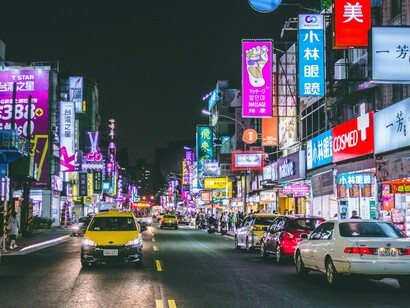
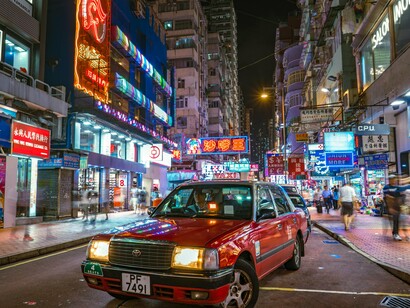
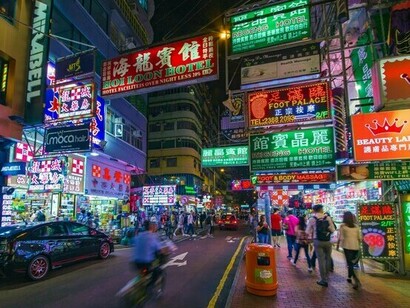
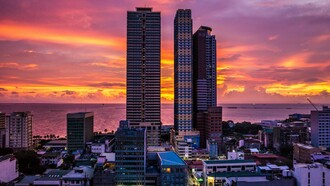
Hong Kong’s cityscape left me equally impressed. Skyscrapers stretched so high they seemed to brush the heavens. The city pulsed with energy—crowded streets, bustling transport, and people constantly in motion. After New York, it was the busiest place I had ever seen. Watching its people, I couldn’t help but think that perhaps one reason Hong Kong residents live long lives is because they never stop moving.
Even inside the University of Hong Kong, I have seen a lot of older people doing some exercises like Tai Chi and moving their bodies. In the streets of Hong Kong, I also observed a lot of older persons working, like selling fruits and vegetables. It seems that the streets of Hong Kong are a huge market where you can buy different products and enjoy shopping where people keep moving. There are many people in the bay walk who are jogging or doing yoga exercises, whether it is morning, noon, or evening.
Protests and the cry for freedom
Yet beneath the vibrance was a deeper political pulse. I watched videos of the 2019 protests, and one student’s words stayed with me: “We will fight for freedom because this is our last chance to fight for it.” Tears welled in my eyes as I listened. These young people were not merely fighting for themselves but for “the future of Hong Kong.” It made me reflect on my own country, the Philippines. How many of our students think of what they can contribute to the nation, rather than being consumed by fleeting concerns? The contrast was striking—and humbling.
My reflections extended beyond Hong Kong. I remembered watching a North Korean boy tell his story after escaping through China and Mongolia to reach South Korea. He cried at the sight of Incheon Airport’s bright lights, calling it “heaven” after years of darkness. His journey reminded me of Kazakhstan, which I visited five years after it separated from the Soviet Union. The lingering scars of communism were still visible.
These experiences convinced me that while democracy is imperfect, it offers something invaluable: freedom, dignity, and the right to be heard.
Encounters in the streets
Not all my encounters in Hong Kong were grand or political. In the middle of Central’s busy streets, I met Jose, a young man selling handmade bracelets for any price. His goal was simple but profound—to save enough to travel the world. His quiet determination moved me just as much as the sea of protesters.
A professional journey
My trip also had a professional purpose. In 2018, I joined SPAMAST (Southern Philippines Agribusiness Marine and Aquatic School of Technology), a local state college in Davao Occidental, with a vision to establish a Bachelor of Science in Social Work program. It was a challenging new role involving curriculum development, administration, and institution-building. By 2019, that vision brought me to Hong Kong to attend the International Conference on “Change & Innovation for a Better World: The Future of the Social Work Profession.” This conference was organized by the International Federation of Social Work and the University of Hongkong in which my trip was partly supported by the organizer.
The event gathered 22 countries and 700 participants, and I felt humbled to represent the Philippines and SPAMAST as Program Chairperson of the Bachelor of Science in Social Work, which allowed me to present this research paper entitled “Handling Children in Conflict with the Law: From the Journals of the Field Instruction Students.” I am grateful to the University of Hong Kong for accepting my paper as a presenter and to the Hong Kong Social Workers Association for providing bursaries that made my participation possible. Special thanks also to my friends whose support helped make the trip a reality, knowing that attending this conference is costly.
I remember that time I only had 5,000 pesos in my pocket when I reached Hongkong and that money was used for my board and lodging deposit. I already decided not to continue this trip but luckily my Dutch friend Bettine sent me an early birthday gift, which paid for my airplane ticket. In short for one day when I reached Hong Kong, I did not have money to use for my food and other needs. I decided to spend my time walking along Hong Kong, which I appreciated in this country because you can walk anywhere.
I strolled around the Hong Kong Bay and met fellow Filipinos. One of the most heart-warming moments came when I found myself lost on the way to the University of Hong Kong. With no Wi-Fi, I had to rely on the kindness of strangers. That’s when I met a kababayan (fellow Filipino; “bayan” means “nation”), Yosie Bolasa Rebosura, who helped guide me.
It reminded me of an unspoken truth: wherever we are in the world, Filipinos look out for one another. Yosie cooked some food for me. Salamat kaayo, Yosie! And before leaving, I joined in celebrating a milestone: Happy 70th Year, Hong Kong Social Workers! May you continue serving with the same passion and dedication that inspire so many.
Closing reflections
Looking back, Hong Kong in 2019 was more than a trip. It was a convergence of experiences: Pia Wurtzbach’s wax figure symbolizing Filipino pride, migrant workers filling Central with life, skyscrapers stretching to heaven, students crying for freedom, and ordinary people like Jose and Yosie reminding me of the quiet strength of human dreams and solidarity.
It was also a professional milestone, allowing me to stand on an international stage to represent the Philippines and the future of social work education.
Hong Kong will always stay with me—not just as a city, but as a reminder of resilience, freedom, solidarity, and the power of dreams to move us forward.
On a final note, I have learned that “Wherever we are in the world, Filipinos look out for one another. Whatever happens, we have each other.”