English
 Español
 Français
 Deutsch
 Italiano
 Português
Ramparts Magazine existed from 1962 to 1975. It was a glossy and often illustrated American political muckraker that captured the revolutionary zeitgeist of the era. Ramparts was perhaps best-known as one of the most respected organs of the American New Left. The New Left can perhaps best be defined as a loosely organized, mostly white student movement that advocated democracy, civil rights, and various types of university reforms, and protested against the American war in Indochina. But the term New Left was first popularized in the United States in an open letter written in 1960 by sociologist C. Wright Mills titled Letter to the New Left. He argued for a new leftist ideology that he hoped might transcend the traditional and often dogmatic (“Old Left”) focus on labor issues, into a broader focus on issues such as opposing alienation, anomie, and authoritarianism. Mills argued for a shift from traditional leftism toward the values of the counterculture, and, echoing Karl Marx, emphasized and advocated an international (rather than nationalistic) perspective on the movement.
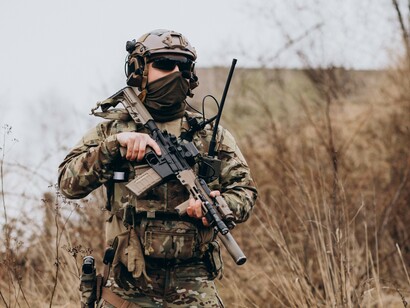
Mills also claimed that the proletariat (collectively the working-class referenced in Marxism) was no longer the revolutionary force; the new agents of revolutionary change in the decades after World War II were, Mills believed, young intellectuals such as college students, scholars, and editors of leftist academic books, journals, and muckraking publications (such as Ramparts). To the CIA and dictators the American government backed, they were terrorists. To Ramparts Magazine, guerrilla warriors were revolutionary freedom fighters. The editors of Ramparts published numerous essays that valorized guerrilla warriors around the globe, particularly in Latin America and Asia.
For example, in April 1966, Ramparts published an essay titled “The Guerrilla Priest” written by Adolfo Gilly, an Argentine journalist and correspondent for La Marcha of Montevideo, Uruguay. He chronicled his two-week stay embedded with guerrillas in Guatemala and Colombia. Gilly’s primary interest was Father Camilo Torre, a Roman Catholic Priest who hailed from a patrician Colombian family and who was an organizer and leader of the United Front of the People (Frente Unido del Pueblo). Torre dedicated his career to reconciling Marxism and Catholicism. “Every Catholic who is not a revolutionary,” Torre told Gilly when they were embedded together in Colombia, “and is not on the side of revolutionaries,” was “living in mortal sin.” Torre was also famous for saying that if Jesus were alive, he would be a guerrilla fighter. Torre was a member of the National University of Colombia, but his involvement in several student and political groups during his time at the university won him many enemies, especially from within the Colombian government and the Church.
Due to the growing pressure to back down from his liberation theology, he left academia and joined the National Liberation Army, which was comparable to the NLF in Vietnam. He served as a low-ranking member of the ELN, to whom he also provided spiritual assistance and inspiration from a Marxist-Christian point of view. He was killed in his first combat experience, when the ELN ambushed a Colombian Military patrol on February 15, 1966. After his death, he was made an official martyr of the ELN and an inspiration to many, including Gilly and Che Guevara.
In September 1967, Ramparts published an article titled “On Régis Debray” contributed by Adam Hochschild. Debray, a twenty-six-year old French journalist, was locked away in a Bolivian prison in September 1967, awaiting trial by military tribunal for allegedly fighting amongst pro-Castro Guerillas against Bolivian forces. The case had by then become an international cause célèbre: scores of writers and artists in France, Italy, and the United States had signed petitions and joined demonstrations on Debray's behalf, demanding that he be given counsel and a civil trial, and defending his right to cover the guerrilla war as a journalist. One statement, signed by journalists and photographers from Le Figaro, Le Monde, and other principal French newspapers, made the interesting point that in the world of the 1960s, “one must admit the legal existence of guerrilla correspondents, who must obviously be granted the same status as war correspondents.”
Less publicly, Charles de Gaulle and Pope Paul VI had put pressure on Bolivian authorities. Reports in the French and Latin American press informed readers that Debray was tortured after his arrest, and at one point was secretly flown to Panama for interrogation by CIA agents who wanted to know about the activities of Che Guevara, who was reported to have fought with the Bolivian guerrillas and whom Debray said he had interviewed. American intelligence would, Hochschild explained, “desperately like to know the whereabouts of the elusive Guevara.” Several reports were published that declared that an American military helicopter was seen picking up someone from the jail where Debray was taken after his arrest. And a Uruguayan journalist reported that members of the U.S. military mission attended Debray's initial court appearance in La Paz. Debray was held incommunicado for two months, and the few visitors to his prison allowed since then could see him only briefly and in the presence of Bolivian Army officers. Bolivia was ruled in 1967 by General René Barrientos Ortuño, a Bolivian military officer. He came to power after the 1964 Bolivian coup d’état that overthrew the government of Paz Estenssoro.
During his five-year rule, Barrientos and the army routinely suppressed leftist opposition to his regime, including a guerrilla group led by Guevara in 1967. Barrientos, Hochschild argued, wanted to make an example of Debray to the restless university students of La Paz, who had demonstrated in the streets against the government while Debray was in jail. Ideas can be dangerous, Hochschild declared, and Debray had a following among the Bolivian students. “When General Barrientos talked of his desire to shoot Régis Debray,” Hochschild quoted Jean-Paul Sartre’s Parisian weekly, Le Nouvel Observateur, “he wants to shoot an idea: revolution in Latin America.” Sartre, however, perhaps summed up the situation best at a Paris protest rally. “Régis Debray,” he said, “was arrested by the Bolivian authorities not for having participated in guerrilla activities, but for having written a book.” Convicted of having been part of Guevara's guerrilla group, Debray was sentenced on November 17, 1967, to thirty years in prison. He was, however, released in 1970 after the Barrientos regime was exposed to have been on the CIA’s payroll. Debray sought refuge in Chile, where he wrote The Chilean Revolution (1972) based on interviews with Salvador Allende. He, however, eventually returned to France in 1973 following the CIA-backed Augusto Pinochet coup that culminated in Allende’s death.
Hochschild’s essay was followed in the September 1967 edition of Ramparts by excerpts from Debray’s Revolution in the Revolution? (1967), which he wrote as a professor of philosophy at the University of Havana, where he first became acquainted with Guevara. Revolution in the Revolution? analyzed the tactical and strategic doctrines that had prevailed amongst militant socialist movements in Latin America in the 1960s, and acted as a handbook for guerrilla warfare that supplemented Guevara's own manual, Guerrilla Warfare (1961). Debray spared no personage, no institution, and no concept, taking on not only Russian and Chinese strategies, but also Trotsky.
The excerpts from Revolution in the Revolution? published by Ramparts as part of the “The New Guerrillas” series was followed by an essay titled “With Guatemala's Guerrillas” contributed by Eduardo Galeano, who was in charge of publications at the Universidad de la República in Montevideo. He had also traveled extensively for UNESCO and was the editor of Epaca, a Montevideo daily newspaper. He noted that American military men frequently visit the home of Mariano Sanchez, the Guatemalan Army’s local representative and the leader of the local right-wing terrorist gang comparable to Mussolini’s Blackshirts, which hunted down alleged leftists with a fury reminiscent of the recent Indonesian massacres. Under none of its former military dictatorships had Guatemala known a systematic terrorism like the one that had taken hold of the country under Julio César Méndez Montenegro’s regime.
Blacklists were compiled of suspected guerrilla collaborators and those with communist leanings, as troops and paramilitaries moved through Zacapa systematically arresting suspected insurgents and collaborators; prisoners were either killed on the spot or “disappeared” after being taken to clandestine detention camps for interrogation. In villages that the Army suspected were pro-guerrilla, the Army rounded up all of the peasant leaders and publicly executed them, threatening to kill additional civilians if the villagers did not cooperate with the authorities. In December 1967, 26-year-old Rogelia Cruz Martinez, a former “Miss Guatemala” (1959), who was known for her left-wing sympathies, was picked up and later found dead. Her body showed signs of torture, rape, and mutilation. The large majority of the so-called “communists” targeted by right-wing paramilitarists were university professors whose only offense consisted of having participated in the reform governments of Arevalo and Arbenz. Or sometimes, they were relatives of government enemies.
For instance, the brother of guerrilla commander Cesar Monies, who lived a totally apolitical life, was found dead, crushed by torture, three days after he was detained by the Army. Mario Julio Ruano Pinzon, a former sergeant in the Guatemalan military police, told Galeano that he was the sole survivor of four soldiers who witnessed the machine-gun massacre of twenty-eight political and labor leaders a year earlier in an Army warehouse. Three colonels were in charge of this job; one of them was the Minister of Defense, Colonel Arriaga Bosque. Although the right-wing terrorist gangs officially operated without anyone’s official sanction, it was, Galeano argued, fairly clear that they represented the will of the Army. The terror ensued until 1996, when the 36-year Guatemalan Civil War finally ended.
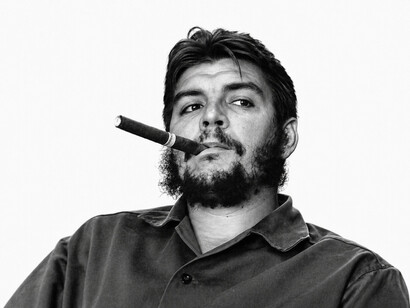
In December 1967, Ramparts published a heartfelt eulogy titled “The Legacy of Che Guevara,” contributed to the magazine ten months after his death by legendary muckraker, I.F. Stone. Stone placed Guevara in the pantheon of Latin American revolutionary heroes with Simon Bolivar and described his manual on guerrilla warfare as “not only a bible of revolutionaries, but the anti-bible of the Green Berets of Fort Bragg,g” where John F. Kennedy had initiated the training of Special Forces as the “Janissaries of the counterrevolution.” He also described the “naive hopefulness and humanitarian faith” of Castro and Guevara’s revolution as having the spirit of Giuseppe Garibaldi and nineteenth-century nationalistic revolutions.
Che’s revolution had not, Stone wrote, “heard of Hiroshima or of IBM's new Sinai, the computer.” These mass murders, Stone noted, were committed under the influence of a utopian vision that such atrocities paved the way to an earthly paradise. Stone thus confessed that he hoped that new revolutionaries would be inspired to fill the monumental void left by Guevara because, without the fear of revolutionary challenges, neither the Latin oligarchy nor Washington, he wrote, would make peaceful change possible. But Stone also believed this magnificently romantic handful of revolutionaries, who would be inspired by Guevara’s death and martyrdom, would surely underestimate the power, flexibility, and intelligence of the American colossus. “Yet when I see the follies my beloved country commits in Vietnam and elsewhere,” he concluded, “the billions we spend on ‘defense’ while hate, misery,y and despair build up to volcanic proportions in our black slums, I wonder whether Che's long-range estimates may not prove more realistic than mine.”
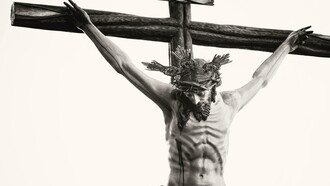
In January 1968, two months after he had been killed in Bolivia, Ramparts published excerpts from Guevara’s Memoirs of the Revolutionary War (1963), published as “Episodes of the Cuban Revolutionary War,” which he wrote after the great campaign in the Sierra Maestra of Cuba. He rewrote his rough diary notes into an unofficial and fragmentary history. The selections Ramparts published were the first time they appeared in an American magazine. The specific selections selected by Ramparts were part of a book being written by John Gerassi and detailed Guevara’s first battle, and also the intervals of deprivation, starvation, horror, and terror. The excerpts also provided readers with a sense of how globally minded Guevara and the other revolutionaries were and that they thought of themselves as making world history in real time. The illustrations of Guevara’s dead body, which were contributed by Tim Lewis, made Guevara appear to look like a crucified messiah nailed to a prone cross.
In March 1968, Ramparts published a special report titled “In Cold Blood” contributed by Michele Ray, a former model for Chanel and an amateur race car driver (as a promotional stunt for Renault, she and three other girls once drove from Tierra del Fuego to Alaska). She was also the author of The Two Shores of Hell (1968). She had also traveled to Vietnam in 1966 as a reporter for Le Nouvel Observateur and other French publications. She had been there for seven months when she was captured by the Viet Cong and detained for twenty-one days. Upon her release, she wrote several articles, probably the most significant effort up to 1968, to interpret the Viet Cong and their revolution to the French readers.
While she was in Vietnam, she earned such respect from the American soldiers she was embedded with for her willingness to enter combat zones that an American offensive operation was named after her—Operation Michele. A month after the death of Guevara, she traveled to Bolivia as a correspondent for Paris Match and spent seven weeks investigating the circumstances surrounding the guerrilla leader's death. She referred to Guevara as a martyr and as “St. Che” and was correctly convinced that “the CIA was responsible for his death.”
In May 1968, six months after the death of Guevara, who was killed by assassins in Bolivia in October 1967, Ramparts published an interview titled “Chile: We Lost a Battle” written by Edgardo Damommio, the director of the Latin American network of Inter Press Service. The interviewees were Cubans named Harry Villegas Tamayo, Leonardo Tamayo Nunez, and Daniel Alarcon Ramirez – three survivors of the original guerrillas of the Valle Grande, the fighting force led by Guevara in Bolivia. Guevara and his cadre were trapped by an ever-shrinking circle of two thousand Bolivian troops from September 26 to October 8, 1967. Guevara fell near the three Cubans, before they could break through the “strangling noose” of soldiers and flee westwards, through four hundred miles of mountain and jungle, to the Chilean border.
The men told Damommio that they chose to cross into Chile because its government offered better chances of safe conduct than any of Bolivia's other neighbors: Argentina, Paraguay, Brazil, or Peru. They also explained that the guerrillas still, even after the death of Guevara, believed in the potential of raising a peasant army to topple corrupt regimes all over Latin America. “The revolution is Latin American,” Tamayo insisted. The title of the article, “Chile: We Lost a Battle,” seemed to indicate that the interviewees were freedom fighters who had suffered a terrible setback but that the global revolution was not yet decided. Damommio’s interview with the survivors, who were bound for a plane back to Cuba, underscored the centrality of revolution to geopolitics, especially in Latin America by 1968.
In July 1968, Ramparts published a lengthy and verbose eulogy penned by Fidel Castro, followed immediately by Guevara’s Bolivian Diary. It was published almost simultaneously in France, by the French editor Francois Maspero; in Italy, by editor Feltrinelli; in the German Federal Republic, Trikont Verlag; in the U.S. by Ramparts, Ediciones Ruedo Iberico; in Chile, Revista Punto Final; and in other countries. Castro’s introduction and Guevara’s diary were all published in the magazine in July 1968, which was a solemn tribute to the martyred revolutionary.
Castro explained that the “formation of a guerrilla was a constant call to the conscience and honor of every man.” Che, he wrote, “knew how to touch on the most sensitive fibers of the revolutionaries. He based the discipline of the guerrilla on their moral conscience and on the tremendous force of his own personal example.” Guevara’s diary also contained numerous references to Régis Debray and made evident the enormous preoccupation stirred up in Guevara by the arrest and imprisonment of the revolutionary French writer whom he had made responsible for carrying out a mission in Europe, although in reality he would have preferred Debray to remain in Bolivia.
Castro wrote that since in Guevara’s diary the Cuban Revolution and its relation to the guerrilla movement around the world were repeatedly pointed out, some, Castro feared, might interpret the fact that its publication by Ramparts constituted an act of provocation that would supply an argument to the enemies of the Revolution—“the Yankee imperialists and their cohorts, the Latin American oligarchies—for redoubling their plans for blockade, isolation of and aggression toward Cuba.” For those who judged the facts in this way it was, Castro wrote, well to remember “that Yankee imperialism” had “never needed pretexts to perpetrate its villainy in any part of the world and that its efforts to smash the Cuban Revolution began with the first revolutionary law” made in Cuba; for the obvious and well-known fact was, Castro declared, “that imperialism” was the gendarme of the world, systematic promoter of counterrevolution and protector of the most backward and inhuman social structures in the world.” Solidarity with the revolutionary movement thus, he feared, “might be used as a pretext but shall never be the cause of Yankee aggression.” To cease solidarity with the revolutionary movement, he concluded, “did not mean to deny a pretext but actually to show solidarity with Yankee imperialism and its policy of domination and enslavement of the world.”
The rest of the July 1968 edition of the magazine was dedicated to Guevara’s diary, which began in November 1966 and ended on October 7, 1967, one day before he was captured and two days before he was killed. The editors provided monthly summaries highlighting the most important moments. Most of the diary, however, depicted bedraggled guerrillas starving, suffering from disease, but fully dedicated to world revolution. The diary also contained meticulously drawn maps and images of Guevara and other guerrillas to illustrate the text. It was especially striking that Ramparts seemed unabashed in its apostle-like support of the martyred Guevara, especially considering that the magazine routinely criticized American militant groups such as the Weathermen for adopting guerrilla tactics in later editions of the magazine.
In December 1968, Ramparts published an essay written by Dugald Stermer titled “The Agit Pop Art of Cuba” about guerrilla art posters published by The Organization of Solidarity with Asia, Africa, and Latin America, which was established following the Tricontinental Conference held in Havana, Cuba, in January 1966. OSPAAAL was formed to promote “solidarity with the Third World people’s struggles, claims and most precious desires.” From its foundation until the mid-1980s, OSPAAAL produced brightly colored propaganda posters promoting its cause. These posters were intended to be internationalist, and usually had their message written in Spanish, English, French, and Arabic. As opposed to being put up on walls around Cuba, these posters were instead folded up and stapled into copies of the leftist and internationalist magazine Tricontinental, so that they could be distributed internationally.
The posters were reminiscent of Spanish Civil War posters produced by revolutionaries in the 1930s, but with Che Guevara, African Americans, Vietnamese peasants, South Africans, et cetera, struggling against their oppressors; all of which helped underscore how global the guerrilla movement was in the late 1960s. The theme of guerrilla artwork continued in the October 1969 edition of Ramparts. All of the art in this particular edition was produced by Jacob Landau. In March 1971, Ramparts also published a pictorial essay titled “Art: The Walls Belong to the People” depicting pro-Chicano, La Raza Posters, “Free Huey” graffiti, and sundry other guerrilla artwork from around the world.
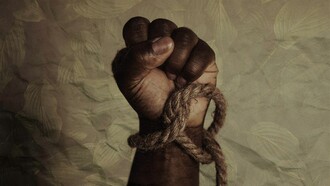
Ramparts was an advocate of guerrilla warriors as freedom fighters courageously risking their lives and limbs to topple corrupt regimes around the world, including inside the American Empire. Ramparts also openly supported the Black Panther Party as the vanguard of the world revolution, providing luminaries of that organization, including Huey Newton, Bobby Seale, Eldridge Cleaver, and Angela Davis, a platform with which to communicate with other would-be revolutionaries in the U.S. and around the globe.