English
 Español
 Français
 Deutsch
 Italiano
 Português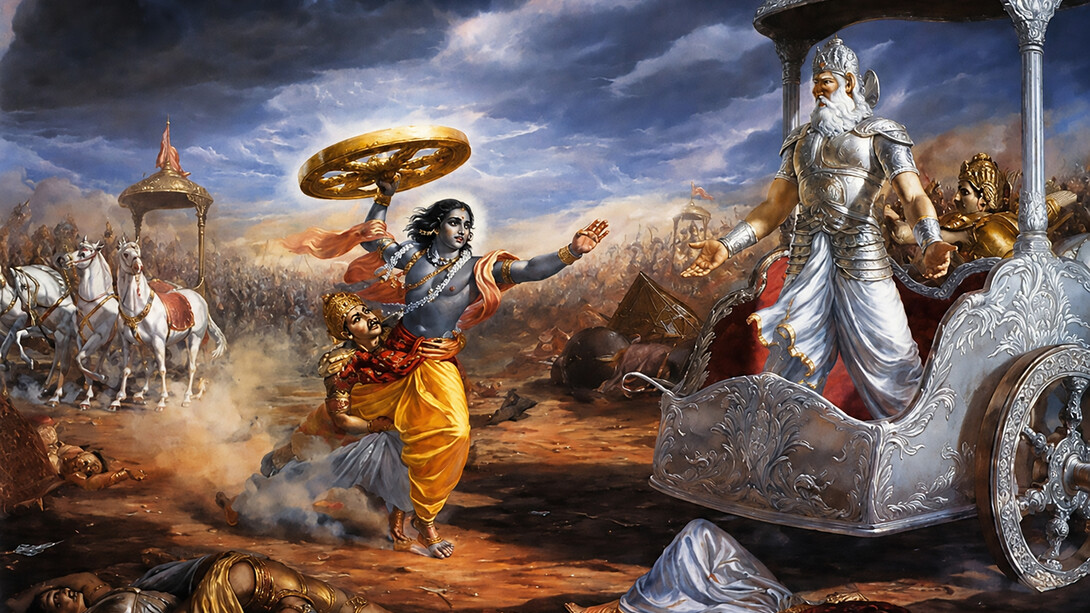
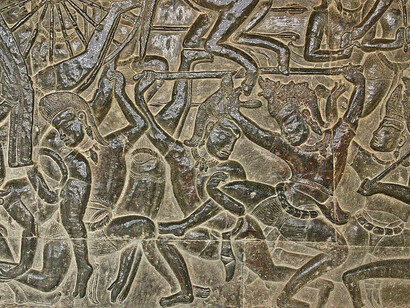
The Mahabharata is not merely an epic; it is a civilisational archive that encodes philosophy, ethics, politics, kinship structures, and the inner dilemmas of human existence. Attributed to Vyasa, this vast narrative unfolds around the Kurukshetra war and the lineage of the Kuru dynasty. Each character enters the narrative with a distinct origin, psychological framework, and dharmic purpose. Understanding them in depth allows one to decode not only the past but also the ethical ambiguities of the present age.
Major lineages and their origins
The Kuru dynasty
At the heart of the Mahabharata lies the Kuru lineage, originating from King Shantanu. His union with Ganga gave birth to Bhishma, one of the most complex figures in the epic. Bhishma’s vow of celibacy ensured the continuation of the Kuru line but also set the stage for future conflict. His purpose was the preservation of the throne, yet his rigid adherence to duty often led to moral paralysis.
Shantanu later married Satyavati, whose lineage introduced Vyasa into the royal fold. Through Vyasa’s intervention, the heirs Dhritarashtra, Pandu, and Vidura were born.
The Pandavas: embodiments of dharma in conflict
The five Pandavas—Yudhishthira, Bhima, Arjuna, Nakula, and Sahadeva—were born through divine intervention to Kunti and Madri.
Yudhishthira, son of Dharma, represented truth but struggled with indecision.
Bhima, son of Vayu, embodied strength and raw emotion.
Arjuna, son of Indra, symbolised skill, focus, and spiritual inquiry.
Nakula and Sahadeva, sons of the Ashwini twins, represented beauty, knowledge, and balance.
Their purpose was to restore dharma, yet their journey reveals that righteousness is rarely straightforward. Their exile, humiliation, and eventual war demonstrate that adherence to dharma often involves suffering.
The Kauravas: power, ego, and political assertion
The hundred sons of Dhritarashtra, led by Duryodhana, represent ambition and entitlement. Duryodhana’s ally Karna is one of the most tragic figures—born to Kunti before marriage, yet raised as a charioteer’s son.
Duryodhana: His purpose was to assert his claim to the throne, driven by insecurity and jealousy.
Karna: A symbol of loyalty and injustice, torn between truth and gratitude.
Shakuni: The strategist who entered the narrative with the purpose of avenging his lineage through manipulation.
The Kauravas were not inherently evil; rather, they illustrate how unchecked ego and flawed mentorship distort dharma.
Central feminine forces
Draupadi
Draupadi emerges from fire, symbolising Shakti and destiny. Married to all five Pandavas, her humiliation in the royal court becomes the moral turning point of the epic. Her purpose is catalytic—she transforms passive injustice into active resistance.
Kunti
Kunti represents resilience and sacrifice. Her decisions, especially abandoning Karna, carry long-term consequences, reflecting the complexity of maternal dharma.
Gandhari
Gandhari blindfolded herself to share her husband’s condition, symbolising loyalty but also silent complicity. Her restrained power later manifests as a curse upon Krishna’s lineage.
Krishna: the axis of dharma
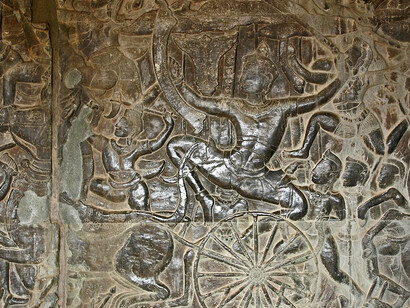
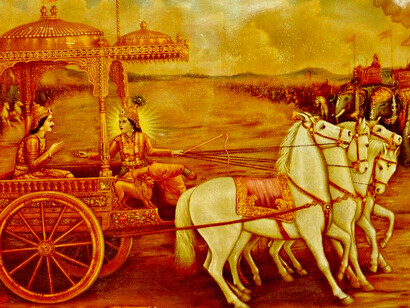
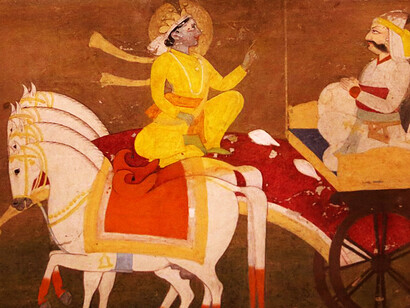
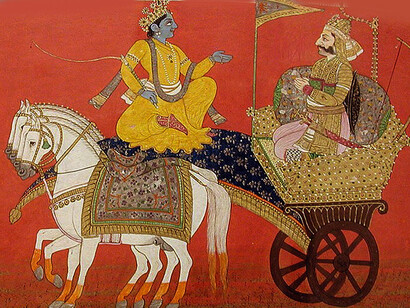
Krishna is not merely a participant but the philosophical core of the Mahabharata. As Arjuna’s charioteer, he delivers the Bhagavad Gita, redefining action, duty, and detachment.
Krishna’s purpose is the restoration of cosmic balance. He operates beyond conventional morality, demonstrating that dharma sometimes requires strategic intervention rather than rigid idealism.
Other key figures and their roles
Dronacharya: represents knowledge bound by obligation.
Ashwatthama: embodies vengeance and the consequences of uncontrolled rage.
Kripacharya: symbolises neutrality and survival.
Abhimanyu: represents youthful valour and incomplete knowledge.
Ghatotkacha: represents the integration of tribal and non-mainstream forces into the larger narrative.
Each character enters from different social, geographical, and metaphysical backgrounds, showing that the Mahabharata is not a linear story but a confluence of diverse worlds.
Why the Mahabharata remains essential
The Mahabharata is crucial because it does not offer simplistic binaries of good versus evil. Instead, it presents layered ethical dilemmas:
Dharma is contextual: Actions must be evaluated within circumstances, not rigid rules.
Power and responsibility: Leadership demands moral clarity, which many characters fail to uphold.
Consequences of silence: Figures like Bhishma and Gandhari show that inaction can be as destructive as wrongdoing.
Interplay of fate and free will: While destiny plays a role, human choices shape outcomes.
Modern teachings for the present age (Kali Yuga)
In today’s socio-cultural environment, the Mahabharata offers practical insights:
Ethical decision-making: in professional and personal life, dilemmas often resemble those faced by Arjuna. The teaching is not to avoid conflict but to act with awareness and responsibility.
Emotional intelligence: characters like Karna and Duryodhana demonstrate how unresolved emotions, such as rejection and jealousy, can lead to destructive paths. Modern psychology aligns with this observation.
Gender and power: Draupadi’s narrative highlights issues of dignity, consent, and justice, making it relevant to discussions on gender equity today.
Leadership and governance: the failures of Dhritarashtra underline the dangers of biased leadership. Transparent and accountable governance becomes essential.
Spiritual detachment: Krishna’s teachings emphasise performing one’s duty without attachment to outcomes—a principle applicable in high-pressure modern environments.
Conclusion
The Mahabharata is not a relic of the past; it is an active framework for understanding human nature. Its characters are not distant mythological figures but archetypes that continue to manifest in contemporary society. By studying their origins, intentions, and consequences, one gains insight into the complexities of dharma, the inevitability of conflict, and the necessity of conscious action.
To engage with the Mahabharata is to engage with oneself—one’s choices, contradictions, and capacity for transformation.
References
Debroy, B. The Mahabharata (10-volume translation).
Easwaran, E. (Trans.). The Bhagavad Gita.
Fitzgerald, J. L. The Mahabharata: A Literary Study.
Hiltebeitel, A. Rethinking the Mahabharata.
Lal, P. The Mahabharata of Vyasa.
Thapar, R. Cultural Pasts: Essays in Early Indian History.
Vyasa. Mahabharata. Critical Edition. Bhandarkar Oriental Research Institute, Pune.