English
 Español
 Français
 Deutsch
 Italiano
 Português

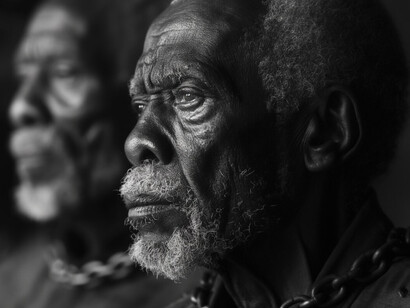
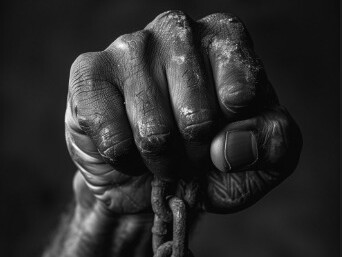
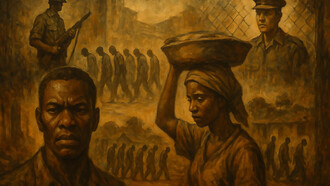
The legal, though immoral, system of slavery is deeply woven into the cultural fabric of the United States. Slavery was not simply “a Southern thing,” and anecdotes such as “my family did not own slaves, or arrived after slavery ended “are meaningless. “We the people,” the government of the United States, adopted laws, policies, and values that promoted and sustained the system of enslavement. From the Constitutional Convention 1of 787, the Three-fifths Compromise, to the 1850 Fugitive Slave law, the government of the United States made slavery a national institution.
The economic benefits of slavery for the United States
The enslavement of human beings as chattel was essential to the country’s economic growth, leading up to the Civil War. According to the National Museum of American History, “ Enslaved people’s work formed an economic engine producing half of all U.S. exports and providing much of the financial capital and raw materials to spark industrialization.”
While wealth, opportunity, and prosperity were created in the South, enslavement contributed to both regional and national growth. Northern banks, the textile industry, manufacturing, insurance, finance, and shipping also benefited. The development of United States capitalism is linked to the slavery system.
Slavery and classism
A crucial legacy of the slavery system is its connection to classism. The slavery system created a large underclass of economically, socially, and politically marginalized poor whites. While the elite planters in the South became wealthy due to the inhumanity of enslavement, other groups of whites, i.e., yeoman and tenant farmers and poor whites, fared poorly due to the system. Author Keri Leigh Merritt ( Masterless Men: Poor Whites and Slavery in the Antebellum South, 2017) documented the socio-economic struggles suffered by non-slaveholding whites in the slave society. This class of whites was shut out of the most profitable agricultural work, experienced unemployment, were illiterate, criminalized, and stereotyped due to their lower social class.
The promise of whiteness
Whiteness promises the essential gift of freedom in two aspects to those who possess it. First, whiteness promises the hallmarks of American democracy -- freedom of speech, movement, decision, and opportunity to pursue the American dream of life, liberty. and the pursuit of happiness. Second, an essential aspect of the promise of whiteness is its assurance of “inequality” in terms of freedom, rights, and opportunities to those who are not white. This privilege is supposed to provide unequal access and opportunities for safety and economic security.
The system of slavery denied poor whites the opportunity to pursue the American dream and forced them to compete with free labor, preventing economic security. Slave ownership was something to aspire to, to become part of the elite class; however, realistically unattainable for whites at the bottom of the social hierarchy. While these whites received no economic or material benefit from the enslavement of other human beings. The social concept of “whiteness” was key to their accepting, to a great extent, the dehumanization of others as well as their own exploitation.
While the social construct of whiteness is propagated to its adherents to offer social, political, and economic advantage, its essential element provides the desired psychological effect, which gives a sense of identity and belonging with those of the elite class. For the yeoman farmer or the poor white, owning a slave would boost their status, sense of self-worth, and esteem.
According to Bireda (2021), the true power of whiteness lies in meeting the emotional needs of those who think they have been degraded and oppressed by their own lower social status. A sense of shame, inferiority, and anxiety can occur as a result of being marginalized due to social status. Historically, the construct of whiteness has been a powerful antidote to feelings of envy, anger, and resentment toward the elite. White racial belonging provides an illusion of opportunity for whites of all classes to become billionaires, to become one of the elite classes. Attachment to whiteness provides whites who do not belong to the elite class a sense of belonging, self-worth, hope, and control.
During Reconstruction, poor whites did get some material reprieve; however, it was the psychological condition of “whiteness” that gave them the greatest sense of freedom and connection to the American dream. The Black Codes enforced upon the newly freed slaves meant that poor whites were no longer at the bottom of the social hierarchy; a racial hierarchy replaced the social hierarchy.
Racism and classism
Racism is a tool utilized by the elite to prevent “common” whites from becoming aware and critically analyzing their position in society. Whiteness was first used to prevent multiracial rebellions following Bacon’s rebellion in the late 1600’s. Many whites living during the enslavement period were the descendants of those who had suffered marginalization in Europe; having a superior status over Africans provided a sense of self-worth and esteem. The legacy of slavery and the connection between racism and classism continue; whites attached to the psychological delusion of superiority attached to white skin are unable to recognize the similarities between themselves, blacks, and browns facing the same difficulties.
The legacy of slavery, i.e., the mythical narratives of black inferiority and white superiority, has become enshrined in the culture of the United States. This legacy continues to make the espoused democratic creed a fallacy. Enslavement based upon skin color created a system of racism that cloaked the oppression of classism. Unfortunately, the psychological delusion of superiority based upon “whiteness” prevented and continues to prevent class consciousness among whites and particularly unity with Blacks of the same social classes.