English
 Español
 Français
 Deutsch
 Italiano
 Português
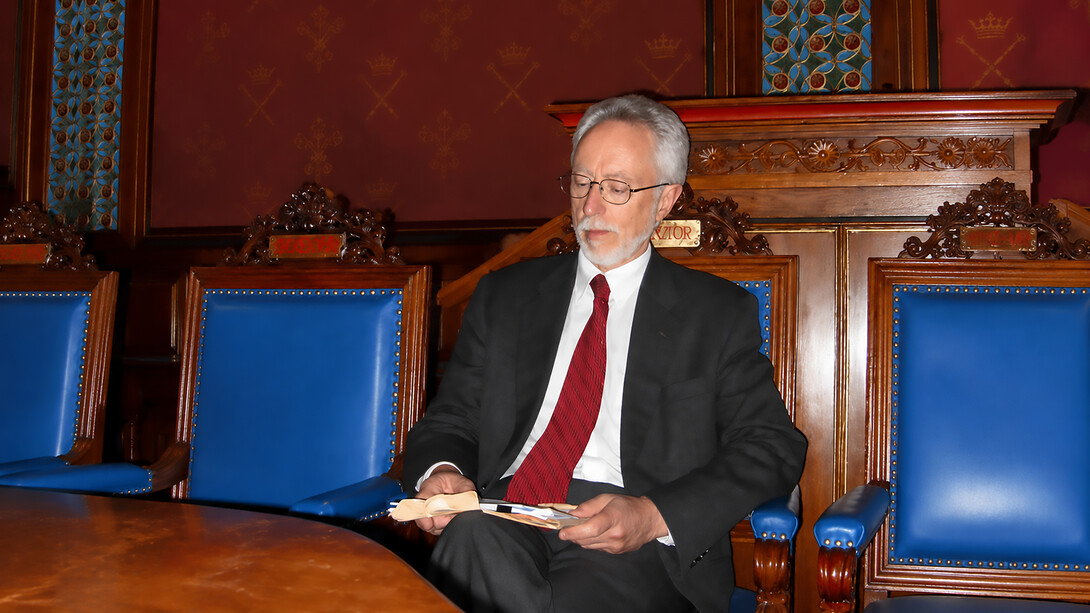
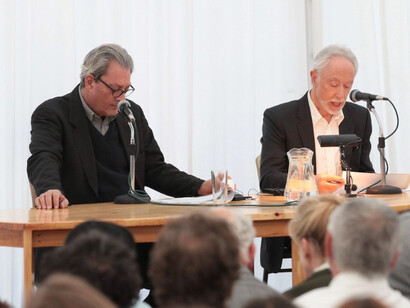
A bookshop owner once told me that JM Coetzee opened her bookshop. At the dinner held in his honour, he didn’t utter a single word.
That stayed with me, and I laughed not because it seemed rude or eccentric, but because it felt in character. There is something about his silence that mirrors his writing: austere, disquieting, and yet complex with depth. His silence is not just a personal quirk; it’s a literary and philosophical stance.
In a country where words were weaponised by apartheid propaganda and reconciliation rhetoric, Coetzee’s reticence feels like a refusal to participate in the corruption of language itself. He writes around the unspeakable, forcing the reader to confront the voids where meaning should be.
To me, he seems like a writer that speaks most when saying the least. A writer of absence, exile, and repression. I’ve always found his work exquisite – sterile, stark, beautiful, and violent.
His prose isn’t merely minimalist; it’s anti-cathartic. Where other writers might luxuriate in metaphor or emotional release, Coetzee strips narrative down to its core, exposing the raw nerve of violence without anaesthesia. His sterility rebukes the comforting arcs of redemption and the “rainbow nation” mythologies that followed ’94.
I first encountered Coetzee as a young man searching for intellectual awakening. Post ‘94, this was a country bloated with contradiction and optimism. I had read My Traitor’s Heart by Rian Malan and found it lacking somehow. Not because it wasn’t great; it really was. There was something in its liberal tone that felt performative, arrogant, and self-righteous. But with Coetzee, I felt I was reading someone unwilling to be redeemed. Someone writing not for catharsis, but out of a deep and quiet despair. Malan’s confessional bravado demanded absolution; Coetzee’s work refuses it. His white characters gnaw at their guilt like a bone, but it never nourishes them. There’s no Fanonian purge, no moment of clarity. Just the slow decay of complicity.
He struck me then, and still does now, as a misérabilist, if such a word exists.
An observer of the defeated. His fascination with squalor, with spiritual ruin, with violence both intimate and structural, is deeply unsettling and illuminating. Unlike Dostoevsky, where suffering is sacred, Coetzee’s misery is petty, banal, and utterly meaningless. His characters don’t transcend their pain; they’re corroded by it.
I sometimes think he loves dogs more than humans, or at least trusts them more. In Disgrace and The Lives of Animals, the creatures are the only honest beings, incapable of hypocrisy, untouched by ideology. The human characters perform their guilt, their politics, their pain; the animals simply are. His characters crawl, hide, weep, starve, and resign. They are not heroes. They are remnants.
But through these stories, he offered me, this ordinary Black South African, born in the early 1980s, an understanding of our history that no schoolbook ever did. His work is a negative image of the “Great African Novel”, without heroes or victories, just the slow erosion of every delusion we cling to. Where Chinua Achebe sought to rebuild, Coetzee only dissects.
He looked into the interior lives of the coloniser and the colonised, the jailer and the jailed. He looked at the slow erosion of the white South African psyche, not to elicit sympathy, but to expose its decay. At the same time, he wrote with clarity about those whose bodies and souls were crushed under the boot of apartheid and those whose pain, somehow, went unspoken even in liberation.
In The Life and Times of Michael K, Disgrace, and Age of Iron, I found literature that grappled with exile, rage, beauty, fear, and resignation. Not as themes, but as lived, psychological truths. These novels didn’t offer hope or even moral resolution. They offered witness. That felt like enough. Sometimes more than enough. Coetzee’s novels end not with catharsis but with exhaustion. David Lurie is feeding dogs; Mrs Curren’s ashes are scattered to the wind. These aren’t endings but suspensions. The work refuses to console.
His black characters are often silent, unknowable, receding into the background. Perhaps this has rightly brought criticism. But I wonder if there is a reading, perhaps even a deliberate one, in which that silence is not an absence but perhaps a refusal to be interpreted through the white gaze. Toni Morrison renders black interiority in full; Coetzee renders it opaque. It’s a risky choice, but it mirrors the reality of a world where Black pain is either exploited or ignored. His silence asks: Why must the oppressed explain themselves to their oppressors?
Friday in Foe has no tongue, no story; he is a void that swallows colonial narratives whole. Coetzee denies the liberal fantasy that suffering must be understood to matter.
His white protagonists don’t understand blackness, and neither do many of us. We, like them, are forced to sit with the failure of understanding. There is no narrative closure. Never any redemption. This is not a flaw in the work, but it is the work. In a country struggling with misrecognition and distortion, the inability to grasp the ‘other’ is the most honest gesture a novel can make.
Coetzee has never been a writer of the people. He never joined the cultural frontlines. He never positioned himself as a voice of resistance. Some have taken this as a moral failure. Others have accused him of aloofness, of cowardice, of privilege. Maybe. But I think he understood something crucial: that literature doesn’t need to shout to be radical. His refusal to moralise, his resistance to clarity, is itself a political stance. It demands of us something harder than outrage. It asks us to think.
People often wonder, what were Coetzee’s politics? Was he a critic of apartheid or just a reluctant bystander? Did he ever truly oppose the regime? The questions are valid, especially when weighed against his infamous silence and his later decision to take Australian citizenship. For some, that move confirmed their suspicions that he was always an outsider, a coward maybe and someone too self-centred to get his hands dirty.
But I think those readings miss something essential. Coetzee’s refusal to take a position may well have been his most honest political gesture. His writing is devoid of heroism, full of doubt and interior. He didn't sermonise. He interrogated. Unlike many liberal writers of his time, he didn’t reach for moral superiority or cheap redemption. He gave us the internal turmoil and contradictions of whiteness, the poisoned conscience of the “benevolent oppressor", and the vast, unknowable landscape of Black suffering, all without claiming ownership or authority. He is the anti-Fanon: where Fanon demanded revolutionary catharsis, Coetzee offers only the cycle of shame without absolution. His white characters don’t become better; they just endure.
Reading him as a Black South African was, and remains, a strange experience. Sometimes I feel implicated in his world, other times excluded from it. But always, I feel something essential being exchanged. Coetzee did not write for me, yet somehow he wrote to me. Or rather, to anyone trying to understand the brutal enmeshment of morality and violence, of complicity and despair.
His later works, particularly the Jesus trilogy, puzzled me. They are allegorical, estranged from realism, but oddly timeless. At first, I found these extremely frustrating. There is a character in The Schooldays of Jesus who is so infuriatingly unreadable that I felt the author was taunting me. But I could not stop reading. These novels are unlike anything else in contemporary fiction. Bizarre, opaque, and strange, yet they flow with philosophical questions. It is as though Coetzee no longer sought to confront history, or even the present, but to write beyond it.
In abandoning South Africa as a setting, he didn’t abandon its questions; he universalised them. The Jesus books are parables of displacement, of language’s failure, of the self as a fugitive. They’re Coetzee’s final rebellion: a refusal to be any nation’s novelist.
In recent years, he has shifted again, towards Argentina, towards Spanish, and towards translation. He publishes first in other languages. He reads and reimagines and appraises Latin American literature. One could interpret this as another form of exile or exclusion. Or perhaps a rebirth? This isn’t betrayal; it’s consistency. A writer who spent his career dismantling the idea of “home” was never going to retire as a national treasure. His late style is the logical end of a lifetime of erasure: of borders, of identities, of the very notion that art must belong somewhere.
His latest works, especially The Pole and Other Stories, are quieter, looser, but still profound. To me anyway. In them, I find ageing, irrelevance, obsession, and decay rendered with clarity. The fire of earlier novels has been exhausted, but the mind remains sharp. Even in his twilight, Coetzee refuses the grand gesture. These stories aren’t summations; they’re shrugs. The work of a man who knows that no narrative can neatly tie life’s mess.
I see traces of Coetzee’s influence in the distinct style and sharp intellect of Damon Galgut. Galgut inherits Coetzee’s surgical precision but also his ambivalence in the understanding that the most honest literature often answers with silence.
I suspect he will slip away quietly, as he always has. No grand statements, no public farewell. That would be fitting. South Africa has never quite known what to do with Coetzee. We fail to acclaim him, or choose not to, while celebrating the likes of Elon Musk. But perhaps that’s the point: Coetzee’s legacy isn’t in statues or speeches, but in the uncomfortable space he carved out.
I believe Coetzee gave us something rare…a brutal psychological map of our damaged moral landscape. He gave us a mirror and did not look away at what it reflected. His greatest betrayal may also be his greatest gift: he left because he knew no country, no language, no story could ever be enough. And in that refusal, he wrote the only honest literature this wounded world deserves.
I still do not know why he speaks to me so deeply. Perhaps because his work inhabits the very space I often find myself in: between rage and resignation, between the hunger for justice and the feeling of knowing it may never come.
His books do not tell me what to think or feel. They ask that I witness. They remind me that complexity is not something to be solved but to be lived with.
Long live John Maxwell Coetzee.