English
 Español
 Français
 Deutsch
 Italiano
 Português
What is national interest, who defines it, and how? These are just some of the questions arising as various countries reassess their positions following the release of the United States’ latest National Security Strategy (NSS), unveiled by President Donald Trump last November. National interest, as defined by classical authors, seeks to ensure the security of the state, protect its sovereignty, borders, inhabitants, culture, and traditions, while also identifying threats and projecting its power in an international world often described as anarchic. This is due to the absence of a global central government to enforce international law.
Today, we are witnessing this global disorder, where international law and the United Nations Charter are not respected, treaties are violated, and the use of force is imposed to change governments, subdue countries, assassinate officials, or kidnap heads of state.
In the first two decades of this century, the international order seemed stable, and globalization was consolidating without major setbacks. However, in 2014, Russia occupied Crimea, and partial economic sanctions were applied, but it was not assumed that it could alter the international order. The following year, in the NSS under President Barack Obama, Russian aggression was identified as a threat to the existing order, noting that it must be strengthened based on universal norms and values—that is, by reaffirming principles of international law. Furthermore, in its assessments, it characterized climate change for the first time as a threat to national security.
In 2017, under Donald Trump’s first presidency, the new strategic document removed climate change and identified China and Russia as competing powers capable of threatening U.S. global hegemony. In 2021, President Joe Biden reaffirmed in his NSS the commitment to NATO and to democracies, identifying China as the primary rival in the technological and military spheres. In his second term, President Trump unveiled his strategy, clearly identifying China as the primary threat to his hegemony and determining that the Western Hemisphere must help contain China’s global expansion by proclaiming that the American continent is for the Americans, reiterating the doctrine of President James Monroe proclaimed in 1823 and which Trump called the “Donroe” doctrine, to include his name.
For the 27 countries of the European Union, redefining the collective national interest appears to be a priority that must, in turn, align with each of those states’ individual definitions of their own national interest. The urgency seems to lie in the growing rift between the countries that make up NATO and its main supporter, the United States. We do not yet know how this equation will be resolved, but what we have heard are President Trump’s statements labeling the Atlantic Alliance a “paper tiger”—a phrase repeated on several occasions in the last century by Chinese leader Mao Zedong to refer to “American imperialism” and its internal weaknesses.
It is not easy for Washington to withdraw from NATO, as this requires a two-thirds majority in the Senate. Furthermore, it would leave European countries without the nuclear umbrella that has protected them since the end of World War II, with the exception of France and the United Kingdom, which possess limited nuclear arsenals.
In any case, it makes more and more sense for the European Union to move quickly toward a common, self-sufficient defense policy and army, and to put an end once and for all to its dependence on the U.S. military industry. To achieve this, it would be necessary to move toward the creation of a federal European Union, which means that each country would have to relinquish another portion of its individual sovereignty by transferring more powers to a central body, something that seems highly unlikely to happen today. The heterogeneity of political systems—where republics coexist with parliamentary monarchies, alongside cultural and linguistic differences, among others—presents a major challenge.
And how is the national interest defined in Russia, China, India, Japan, or Israel? The same principle applies to all: maintaining security and sovereignty, as well as projecting their power on the international stage. Moscow asserted this by perceiving a threat from NATO's progressive eastward expansion, a policy initiated under the presidency of Bill Clinton in 1999, when the Alliance extended to Poland, Hungary, and the Czech Republic. At the time, the opinions of prominent politicians and experts who did not recommend this expansion—such as Henry Kissinger and George Kennan—were not heeded.
In 2004, Bulgaria, Slovakia, Slovenia, Estonia, Latvia, Lithuania, and Romania joined. Montenegro joined in 2017, North Macedonia in 2020, and Finland and Sweden in 2024. All these countries redefined their national interests based on a perception of potential aggression from Russia. For its part, Moscow perceived this expansion toward its borders as a threat to its security, and when Ukraine, in 2014, expressed its interest in joining NATO following the annexation of Crimea, Russia invaded it in a war that has set in motion a reconfiguration of the European international order, at the very least. In the case of Israel, a country that enjoys unlimited protection from the United States and resolute support from Western Europe, it decided to take the initiative and, together with the United States, attacked Iran. Tel Aviv is also bombing cities in Lebanon and occupying the southern part of the country to eliminate the threat to its security posed by the Shiite group Hezbollah.
For its part, China has defined its national interest based on its five principles of peaceful coexistence, with the exception that it annexed Tibet in 1950 and invaded Vietnam in 1979 in retaliation for the Vietnamese invasion of Pol Pot’s Cambodia. Taiwan is considered Chinese territory by Beijing and has been recognized as such by Western powers, but in recent years, the United States has highlighted the island’s importance due to its high-tech capabilities and strategic location in the Asia-Pacific region.
Japan, taking advantage of the growing rivalry between Washington and Beijing, is bolstering its military capabilities, which, given its militaristic past, causes concern not only in China but also in both Koreas—which were Japanese colonies of grim memory—as well as the Philippines and other countries. India is a world apart, aware that it is destined in the medium term to become one of the world’s major economies, with nuclear, technological, and military power. It maintains a careful balance with the major powers and unresolved territorial disputes with China.
Africa is a continent that continues to seek its path and finds it difficult to free itself from its colonial past, marked by exploitation, abuses, and humiliations that defined its borders based on the interests of European colonial powers. The national interest of each of these nations is shaped by its environment and history. South Africa, with a long history of struggle for independence and against apartheid, had a leader like Nelson Mandela, who, like Lumumba, Nkrumah, Nyrere, Nasser, and so many others, has not succeeded in unifying a continent where civil wars, coups d’état, and now climate change are exacerbating the economic situation of millions of people whose only option for safety is to emigrate.
Latin America possesses immense wealth in natural and human resources, yet it is plagued by great inequality and widespread urban poverty in cities as well as in rural areas. From Mexico southward, it is a zone free of nuclear weapons and armed conflict. No country in the region is a developed nation according to European standards. Regional national interests are weak, and in recent years, ideology has taken precedence over pragmatism and cooperation. The firm hand of the United States is strongly pressuring countries to reduce or close off spaces to China’s presence in sectors considered strategic. In other words, Washington demands that part of its strategic interests or national interests also be those of Latin American countries.
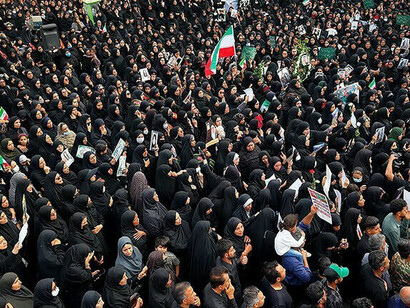
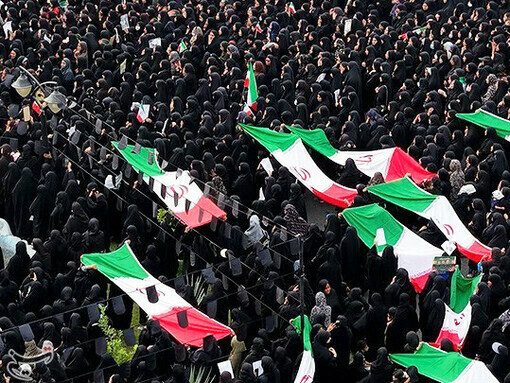
Diplomacy today is drowned out by the sound of bombs and shrapnel in Ukraine, Iran, Yemen, and Lebanon, among other places. Their noise and effects are felt across the globe, as are the consequences of the closure of the Strait of Hormuz, which has driven up energy prices, triggering global inflation due to the multiplier effect on the economy caused by rising oil prices. When treaties and the United Nations Charter are no longer respected, and bullets fly, international law is the first victim, along with human lives. Then come the economic effects that may exert pressure to end the conflicts. Appeals and voices of reason are of no use when leaders are blinded by power and the desire to impose conditions.
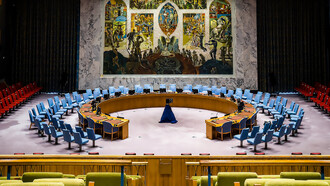
The Security Council, which is the highest body established by nations to resolve conflicts, has long been paralyzed by the veto power held by the five countries that maintain a monopoly on its use. Since it came into effect in 1945, it was used for the first time the following year, and as of last year, it has been applied 282 times, with Russia (129 times) and the United States (89 times) having used it the most—that is, 77.3%. On 51 occasions, Washington’s veto power has been used in favor of Israel. That is the reality. Countries have interests, allies, enemies, alliances, rivals, and accomplices in the international arena, but no friend or enemy lasts forever, as history has shown.
The war waged by Israel and the United States against Iran was declared irrelevant by NATO countries, which have neither committed to nor participated in it. The main beneficiaries are China and Russia, which are observing the United States’ military and political attrition and the public backlash spreading across the globe. Moscow, internationally isolated, is selling oil again, and Europeans will wonder when Russian gas will once again reach their businesses and homes. The question is what kind of international order is taking shape under the current leaderships. Unchecked military spending is spreading across the globe; everyone believes it is better to be prepared for any eventuality. Meanwhile, the voices of small countries go unheard.
The United Nations must be reformed, as soon as possible, to ensure greater democratization within its structure and end the monopoly of the five countries that have proven incapable of fulfilling the fundamental task for which it was created: preserving international peace and security. The election of a new Secretary-General for the organization, which will take place this year and in which Latin America should play a leading role with a woman at the helm for the first time, could offer a path to profound change in the face of the failures we are witnessing today.