English
 Español
 Français
 Deutsch
 Italiano
 Português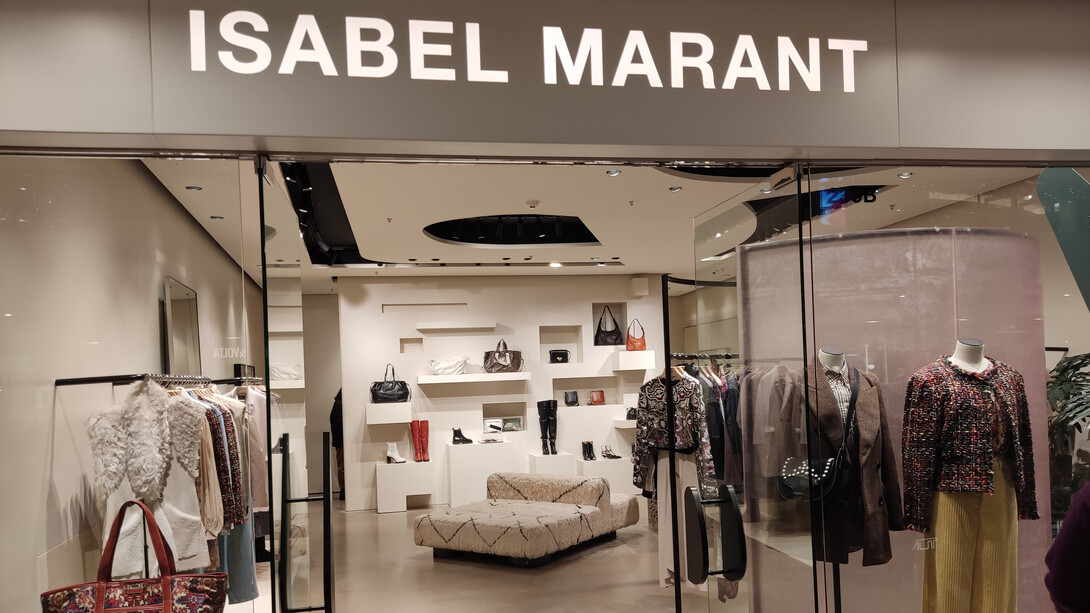
Few brands encapsulate the DNA of Parisian nonchalance as effectively as Isabel Marant. Known since the 1990s for her ability to shape what is now globally recognizable as “French girl style,” Marant has consistently cultivated an aesthetic of wearable cool—clothes that resist theatricality yet speak volumes about lifestyle, identity, and self-confidence.
The Fall/Winter 2025–2026 show at Paris Fashion Week marked not only another chapter in the house’s continuous dialogue with modernity but also an affirmation of Kim Bekker’s role as artistic director, a position that allows her to crystallize Marant’s legacy while simultaneously refreshing it. Bekker’s leadership demonstrates how a fashion house rooted in authenticity can evolve, adapt, and propose new possibilities for women without betraying its core.
Paris fashion week atmosphere: setting the scene
The runway setting was stripped-back yet atmospheric—a nod to Marant’s consistent refusal of overblown scenography. This minimalism placed the clothes at the center of the spectacle. The lighting was precise, with warm undertones evoking intimacy rather than distance. It was less about monumental scale and more about immediacy, as if the models were walking out of the Marais and into the show.
This intimacy echoes the way Marant designs: not for abstract fantasy, but for a woman you can imagine—one who moves through life with energy, mixing practicality with seduction. Against this backdrop, the FW25/26 collection unfolded as a narrative of balance—between structure and softness, volume and precision, nostalgia and renewal.
Kim Bekker: a subtle but radical hand
Kim Bekker’s appointment as artistic director has been significant. A Dutch designer who had already worked closely with Isabel Marant, Bekker has proven to be a careful custodian of the brand’s spirit while injecting her personal touch. Her vision honors the codes of the house—masculine-feminine interplay, Parisian cool, and a love for everyday wearability—yet her sensibility emphasizes a sharper, almost architectural control.
Where Marant’s language can sometimes lean toward spontaneity, Bekker translates it into something slightly more considered, drawing from her European design training and her ability to pare things back to essentials. She strips away excess, yet she heightens proportion, detail, and construction. The result is not a rupture but a quiet recalibration—a shift that allows Marant to feel modern while staying true to itself.
The collection: Parisian armor for a global era
The Fall/Winter 2025–2026 collection was a testament to the dualities that define contemporary fashion: functionality versus fantasy and heritage versus reinvention.
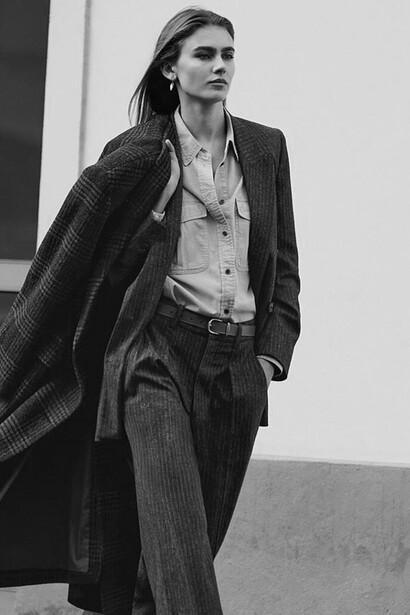
Tailoring as Empowerment, Bekker opened with structured tailoring: blazers cut generously at the shoulders, trousers that straddled the line between slouch and elegance, and coats with sculptural lapels. This tailoring didn’t erase femininity—it expanded it, allowing women to occupy space without apology. The message was clear: clothing as armor, but armor that moves, dances, and breathes.
Knitwear and Textures of Comfort, Marant has always excelled at knitwear, and this season was no exception. Bekker explored chunky wool, elongated ribbing, and asymmetrical layering. Sweaters slouched off shoulders or wrapped around the body like protective shields. There was something tribal yet contemporary in the way patterns and textures clashed, recalling the bohemian Marant spirit but infused with a modern rhythm.
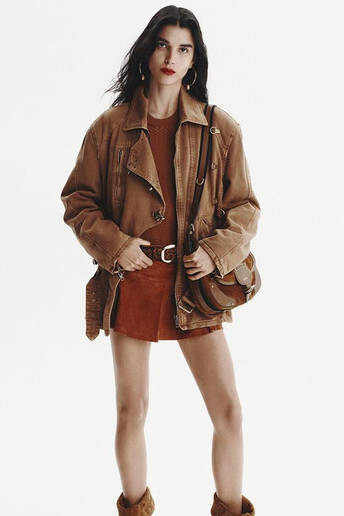
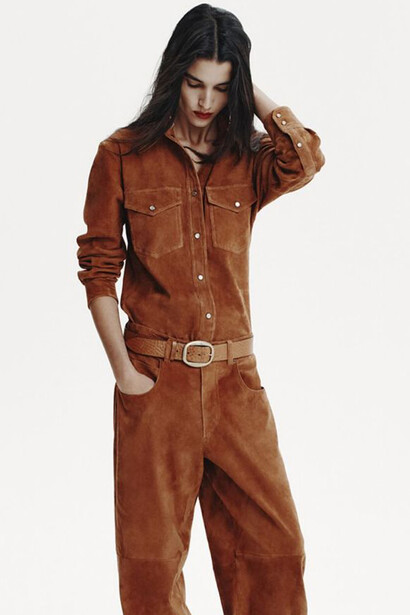
Denim, Revisited, a cornerstone of the Marant wardrobe, denim reappeared in exaggerated silhouettes: wide-legged jeans, acid washes, and sculpted skirts. Bekker modernized denim with sharp seams and unexpected cuts, proving that even the most familiar fabric can feel new when approached with architectural rigor.
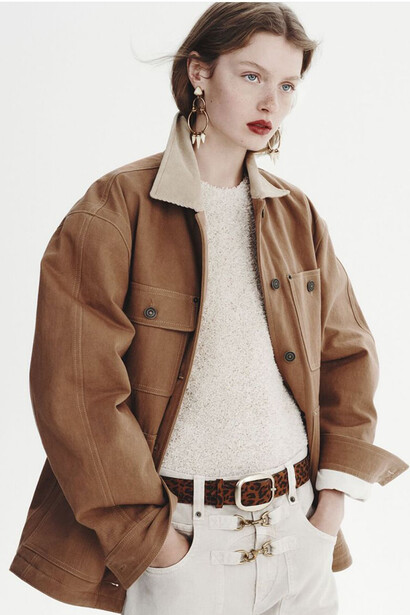
Outerwear as a Statement: The outerwear pieces stood out—oversized shearling jackets, belted trenches, and cocoon-like capes. These were not mere winter garments but statements of urban presence, suggesting protection against both the cold and the turbulence of modern life.
Accessories and Attitude: Accessories reinforced the narrative: fringed belts, slouch boots, and sculptural jewelry. There was a tactile immediacy to these pieces—nothing looked overdesigned, but everything contributed to the mood of practical elegance.
The Bekker effect: reframing femininity
Kim Bekker’s work at Isabel Marant speaks to a contemporary understanding of femininity: multiplicity rather than singularity. Gone is the idea that a woman must choose between softness and strength, utility and beauty. Instead, Bekker’s Marant woman inhabits all these spaces at once.
In interviews, Bekker has suggested that her approach is not about spectacle but about honesty. This honesty resonates strongly in a cultural moment where fashion is scrutinized for authenticity. She designs not just for the runway but for the rhythm of real life—an idea that echoes Isabel Marant’s founding ethos.
Parisian cool, global reach
The term “Parisian cool” has often been romanticized, but what Bekker and Marant together achieve is its democratization. The woman wearing these clothes could live in Tokyo, New York, Lagos, or São Paulo. The essence is not location but attitude: an effortless balance of chic and casual, of investment and spontaneity.
By embracing a global audience while remaining true to Paris, Marant under Bekker demonstrates that Parisian fashion is no longer about exclusivity but about fluid universality.
Critical reception and industry context
At Paris Fashion Week, critics praised the collection’s restraint. While some houses turned to maximalism or digital theatrics, Marant’s show was lauded for its clarity of purpose. Fashion journalists highlighted the wearability of the garments, noting that in an era when consumers crave longevity, Marant’s FW25/26 offered timelessness with a twist.
The collection also reflects larger industry shifts: the blurring of gender codes, the demand for sustainable wardrobe staples, and the appetite for authenticity over spectacle. Bekker’s direction aligns with this movement without feeling reductive—it is neither overly nostalgic nor trend-chasing but rooted in a deep understanding of how women live today.
Runway look highlights: a fashion review
Here’s a close-up on some standout moments from the collection, bringing the creative flair of Kim Bekker’s direction to life:
The “She’s-Come-Undone” leather & lace combo
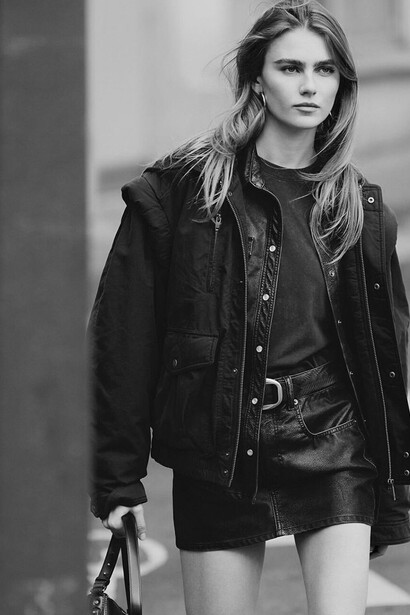
A centerpiece look featured structured black leather—perhaps a trench or blazer—paired with trailing tartan hems, black lace tights, jet beading, and oversized safety-pin brooches adorned with charms. Vintage-inspired buckle-backed vests layered over pinstriped tailoring created a raw, undone aura that was both rebellious and elegant.
Grunge meets tailoring: fishnets, plaid, and pinstripe
Look for ensembles combining fishnet and floral lace layers with plaid miniskirts and pinstriped shorts or vests. The intentional “clash” of textures and prints—fishnets, lace, mixed plaids, and pinstripes—gave the collection a gritty yet chic mood.
Power shoulders & cinched waists
Tailoring took a bold turn with sculptural jackets featuring exaggerated shoulders and defined waists. Some jackets came with adjustable buttons, allowing them to be tailored in real time to complement underlying pieces. The overall silhouette was leg-lengthening and commanding—a signature Marant formula.
Hardware-focused leather pieces
Leather made its mark through buckled micro-minis, grommet-detailed trench coats, and pullover sweaters with piercing-like cutouts. These gritty textures were enriched by brooches, chains, and eyelets, reinforcing the collection’s punk-meets-glamour undercurrent.
The power of mini: tartan, lace & leggy silhouettes
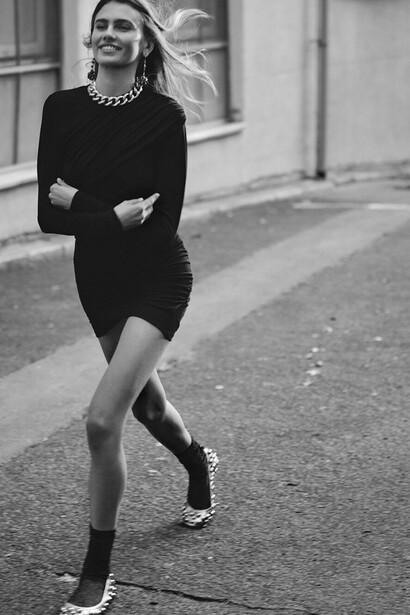
Mini lengths reigned supreme: tartan silk miniskirts, deconstructed pinstripe hot pants, and high-cut lace dresses walked the line between vulnerability and confidence. Paired with sheer layers and sturdy outerwear, these pieces radiated bold youthfulness.
Accessories that assert attitude
Details popped: safety-pin brooches, jet beadings, oversized studs, and hardware-laden belts. Beaded keffiyeh-style scarves, dangly chains, and wide or chain-linked belts added layers of punk rebellion and textural interest to tailored setups.
Evening statement pieces
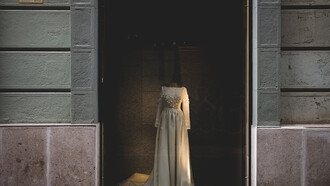
Velvety eveningwear featured sparkling embellishments—think off-shoulder blue velvet styles with crystal details—and sheer lace cocktail dresses revealing a controlled glamour. These looks were seductive without being overt, matching the “strong-woman” ethos of the collection.
Men’s looks with feminine flourishes
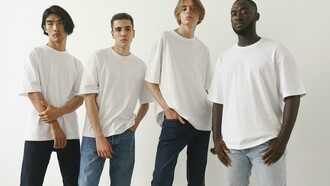
Marant also blurred gender bounds: male models wore brooch-adorned blazers, mismatched shoes, flowing polka-dot scarves, and silver embroidery. As one commentator from Mille World noted, Seonghwa from ATEEZ wore a shouldered black blazer with a brooch, layered over a high-collared shirt and shiny top, topped off with black-and-white heels—challenging gender norms through style.
Why these looks matter
Rebellion meets refinement: the collection’s balance of punk grit and polished tailoring mirrors Bekker’s vision of strength through contrast.
Tactile storytelling: texture becomes language—leather, lace, hardware, and plaid speak to identity, confidence, and attitude.
Leggy power: miniatures paired with strong tailoring send a message: presence is about the ease with which one occupies space.
Accessories with substance: brooches, belts, and chains aren’t afterthoughts—they’re bold declarations.
Gender fluidity: Marant’s take on menswear subtly critiques and redefines masculinity within fashion.
The future of Isabel Marant
Isabel Marant’s Fall/Winter 2025–2026 collection, under Kim Bekker’s artistic direction, signals both continuity and transformation. The DNA of the brand—bohemian ease, Parisian chic, everyday wearability—remains intact. Yet Bekker has sharpened its edges, refined its construction, and clarified its message.
The result is a collection that doesn’t shout but resonates. It acknowledges the weight of tradition while stepping boldly into the future. Isabel Marant has always been about dressing real women, and with Bekker at the helm, the brand continues to ensure that those women feel both seen and empowered.
In a season where many houses wrestled with questions of identity, Isabel Marant offered an answer: fashion can evolve without losing itself.