English
 Español
 Français
 Deutsch
 Italiano
 Português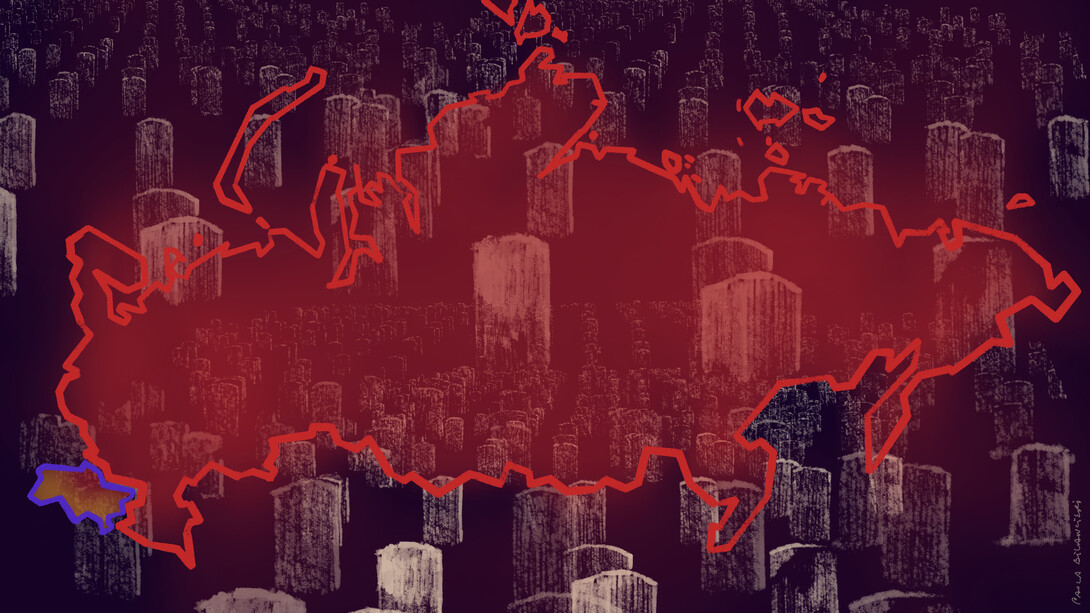
On 24 February 2022, Russia launched a full-scale invasion of Ukraine, which many consider the largest conflict in Europe since World War II. The invasion—called by Russian President Vladimir Putin a “special military operation”—was intended to support the Russian-backed breakaway republics of Donetsk and Luhansk and to challenge Ukraine’s legitimacy as a state.
According to Putin’s initial statements, the operation would take only a couple of weeks to succeed. More than four years later, the invasion has failed to subjugate the Ukrainian government, and victory remains as elusive as ever. The material cost for both countries, however, has been tremendous.
Russia has also faced near-universal condemnation for its actions. The United Nations General Assembly passed a resolution condemning the invasion and demanding full Russian withdrawal. The International Court of Justice called for Russia to halt military operations, and the Council of Europe expelled Russia from its membership.
Meanwhile, the International Criminal Court (ICC) is investigating Russia for crimes against humanity, war crimes, genocide against Ukrainians, and the abduction of Ukrainian children. In a particularly shameful development for a major power, the ICC has issued arrest warrants for Vladimir Putin and other high-ranking Russian officials.
Russia’s material losses have been detailed in a 2026 report by the Center for Strategic and International Studies in Washington, D.C., co-authored by Seth G. Jones and Riley McCabe, titled Russia’s Grinding War in Ukraine.
According to this report, since February 2022, Russian forces have suffered nearly 1.2 million casualties, including those killed, wounded, and missing. The number of those killed is estimated at 325,000. No other world power has suffered anywhere near these levels of casualties or fatalities in any war since World War II.
Russian fatalities in Ukraine are more than 17 times greater than Soviet fatalities in Afghanistan at the time of the Soviet invasion of that country, and more than five times greater than all Russian and Soviet war deaths combined since World War II. To make matters worse, Russian forces have significantly slowed their advance, gaining less than 1.5 percent of Ukrainian territory since the start of 2024.
Although the war in Iran has provided Russia with an unexpected economic boost—largely due to rising oil prices—this is likely to be a temporary situation with limited long-term impact on an economy already under considerable strain.
Russian manufacturing has declined, consumer purchasing power has fallen, inflation is high, and the country faces a labor shortage. In 2025, economic growth slowed to 0.6 percent, and Russia lags behind in emerging technologies such as AI. It has no companies in the world’s top 100 technology firms as measured by market capitalization.
Although the Russian economy has held up better than many expected following Western sanctions, it is showing clear signs of stress: manufacturing has declined, long-term productivity looks bleak, foreign investment is weak, and the country is unable to borrow in international markets.
China has become Russia’s economic lifeline. China–Russia trade reached nearly $250 billion in 2024, up from $190 billion in 2022, and China has been Russia’s top trading partner since 2014. Russia exports large quantities of oil to China—crucial during crises such as the U.S. and Israeli invasion of Iran and Iran’s control of the Strait of Hormuz. The Strait is vital for global energy, with 20–30 percent of global oil and liquefied natural gas (LNG) passing through it daily.
China, for its part, has increased its exports to Russia of “high-priority” items, including computer chips, machine tools, radars, and sensors needed to sustain Russia’s war effort. These exports have helped Russia triple its production of Iskander-M ballistic missiles, which it has used to attack Ukrainian cities.
Because Russia’s manufacturing exports and high-technology goods are limited, the country has little chance of reintegrating into the global trade and financial system. Although Russia possesses a large nuclear arsenal, it does not qualify as a great power in economic or science-and-technology terms.
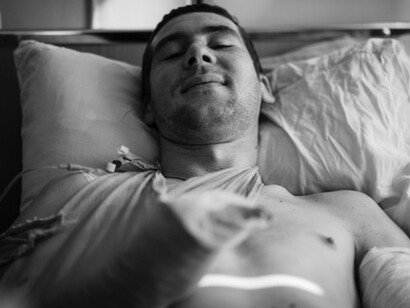
Beyond its weak economy, Russia’s second major vulnerability is the enormous number of soldiers killed and maimed during the war. In addition, large numbers of young professionals and technicians have left the country, unwilling to participate in a war they do not believe in.
Although Russia has far more soldiers than Ukraine, Russian officials never expected the kind of heroic resistance Ukraine has mounted. Russian soldiers who refuse to go to the front face severe punishment from their commanders.
According to Simon Ostrovsky, a special correspondent for the U.S. television program PBS News, almost 12,000 complaints have been filed accusing commanders of corruption and violence against their own soldiers.
Ostrovsky reports that hundreds of videos circulating on Russian social media reveal brutal punishments by superior officers extorting money from their men. Those who refuse to hand over money are locked in cages, electrocuted, or sexually assaulted. Survivors must pay enormous sums to be declared unfit for service, or they are forced into battle regardless of their physical condition.
This is happening as military cemeteries in Russia run out of space to bury the dead, while authorities obscure the scale of losses by removing cemeteries from maps. Some soldiers report having to surrender more than 80 percent of their salary simply to stay alive. It is a dismal portrait of a war that is corroding Russia’s soul and will have consequences for many years to come.