English
 Español
 Français
 Deutsch
 Italiano
 Português
Ominous days
The Trump administration wants to increase war spending to an astounding 1.5 trillion dollars a year. At the same time, Chinese leader Xi Jinping has announced his intention to replace the dollar with gold and not simply the Chinese yuan as a global reserve currency. China as a global trade leader in 2025: China exported $385 billion and imported $244 billion with a positive trade balance of $114 billion.
Working with the BRICS group of 11 nations, Brazil, China, Egypt, Ethiopia, India, Indonesia, Iran, the Russian Federation, Saudi Arabia, South Africa, and the United Arab Emirates has become a way to move against the dollar using gold without risking the potential instability and uncertainty of the Chinese yuan.
Gold has become a preferred choice as opposed to U.S. treasuries. This preference has become standard business for central bankers to increase gold reserves as opposed to U.S. dollars, as the U.S. dollar is gradually devalued by increasing arbitrary and extortionate U.S. taxes on trading partners. Large gold holdings by China make trading in gold as opposed to dollars has become smart business globally, as opposed to taking risks on the Renembi.
China is also replacing the dollar starting now with tools like the Cross-Border Inter-payment System (CIPS). China is immediately making trades using local currency instead of the dollar in global trade, using the U.S. Swift system that had been the basis for global trade for oil and other fossil fuels. Currently, globally, the dollar is still king, but the long-term challenge is real with the U.S. position as debtor, with more nations increasing and prudently gradually avoiding the dollar and taking larger positions in gold.
Many tens of billions of dollars in gold are being replaced by large holders like China, Japan, and India. China, for example, has sold 130 billion dollars in U.S. treasuries with gold holdings expanded. The dollar's share of global reserves in the last 20 years has dropped from about 70% to 58%.
Mark Carney's connection with international trade groups
Led by Mark Carney of Canada, there are new free trade agreements developing economic relationships between dozens of nations in east and west raging from CBTTP that includes Australia, Brunei, Canada, Chile, Japan, Malaysia, Mexico, New Zealand, and Great Britain. The EU and others will establish new, non-dollar economic relationships and trade like India. The world is not standing still in the consequences of U.S. neo-imperialism and threats. It is not just China and the BRICS that find trade relations that will not need the dollar. And its market value. Trump’s economic policy is likely to dramatically weaken the US dollar and the U.S. economy.
U.S. debt
American fiscal profligacy in the post World War II period was not the habit of all administrations. The most fiscally responsive was the Clinton administration.
While President Clinton had a personal reputation as a risk-taking womanizer in monetary matters, Bill Clinton was remarkably sound in fiscal matters. The final four budgets for fiscal years 1998-2001 were not only balanced but produced surpluses.
This is in contrast with Donald Trump’s budget in 2025, which had a $1.78 trillion budget in 2025. Biden added $4.3 trillion ($2.1 trillion was COVID relief) in his term in office. Trump added $8.4 trillion in Trump’s (3.6 trillion for COVID relief).
The total debt is now $38.5 trillion and rising rapidly, according to economists.
The 2025 budget was 7.01 trillion, with 14 percent spent on paying for public debt.
But the increasingly pressing question will be the decreasing value internationally of U.S. debt and the increasing cost to the treasury of debt payment.
January 23, 2026:
30-Year Treasury Bond Yield: Approximately4.84% - 4.86%.
1-Year Treasury Note Yield: Approximately3.51% - 3.53%.
January 20, 2020:
30-Year Treasury Bond Yielded around 2-1/8% (2.125%) based on January.
1-Year Treasury Note Yielded approximately 1-5/8% (1.625%).
The treasury cost of U.S. debt, both long and short term, has more than doubled and continues to rise.
What this can mean is embracing a combination of short term 1 year Treasury notes and even shorter 4, 8, 13, 17, 26, weeks. These are sold at a discount and are redeemed at par. For example, a $1,000 note is redeemed for $1,000 but is sold to a buyer at a discount. This might be a $10 discount, or it can be much larger. The level of the discount is small, but how small remained to be seen, for example, the value of 4 week U.S. paper may be considered a risky business.
The U.S. may be forced to make a huge number of small and large value 4-week loans at relatively low interest. If the U.S. Treasury reduces borrowing and eases taxes, the value of the dollar will gradually improve, and the United States will again be in the position of fiscal sanity and probity. The conduct of the Trump and Biden operations has been the wiliness of enormously expand the debt and reduce the value of the dollar.
We are increasingly failing to put our fiscal house in order. One of the consequences is the potential for the dollar to lose its international reserve status. This is happening now as more trade is made in non-dollar terms, which, as this advances, will threaten to make the dollar not the basis for financial trade but just another unprivileged debtor for whom can only achieve hard money loans at high interest.
One of the choices of a collapsing dollar is the future willingness of the Fed to print money, particularly if the level of interest rates continues to increase. This, of course, will be enormously inflationary and self-destructive in the long run. The Trump administration, for example, has attempted to force the Fed into lowering interest rates to stimulate the economy. Increasing debt by decreasing interest rates is foolish. For both Democrats and Republicans, fiscal probity is essential to prevent catastrophic economic collapse over time. The easier and equally damaging course is for the Fed to create money and flood the market with capital as the value of the dollar declines.
Alternative pathways
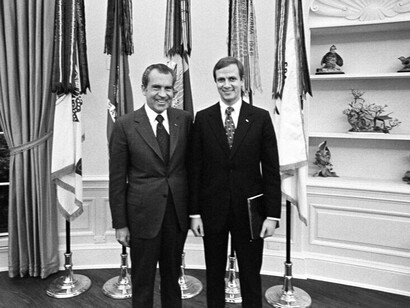
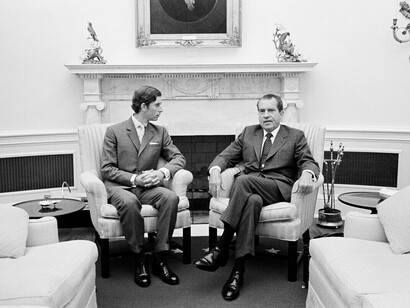
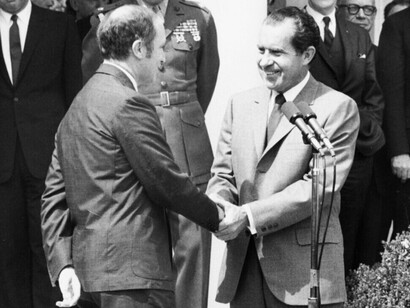
The fundamental question is what we spend our efforts on. Richard Nixon, for example, made the fundamental choice in removing the dollar from the gold standard on August 15, 1971.
This was the result of rising inflation from the Vietnam war which embraced both guns and butter. At the same time, there was a massive international run on gold reserves. Reserve gold had a rising value compared to mere dollars, which are pieces of paper. Gold or silver has international global value. A pound of gold or silver has an intentional value. market value. The paper dollar is less desirable than a pound of gold.
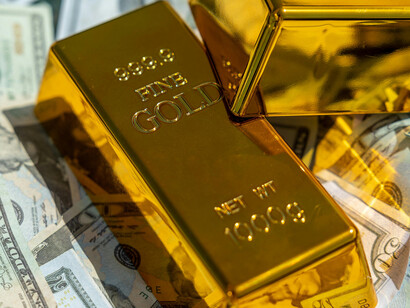
Today, a pound of gold is valued at the spot price of $71,780 in January 2026. In January 2024, the value of gold was $24,500. That tells us a lot.
We are experiencing the rapid collapse of the value of the dollar compared to gold. This is the reality that Americans now experience. The administration pretends all is well by pumping more capital into the stock market as the rich become richer, at least for a while.
The dollar now is only supported and valued by the full faith and credit of the dollar itself and the wealth and economic performance of the United States.
What was once good as gold is now a sad state of affairs as the rich get richer and a collapse looms.