English
 Español
 Français
 Deutsch
 Italiano
 Português
“Shadow Sovereignty” investigates the dark transition from national armies to unaccountable private contractors. By analysing DynCorp International’s history—from sex trafficking in Bosnia to financial fraud in Iraq—the article exposes how "disaster capitalism" creates a global elite operating above the law, threatening both human rights and national sovereignty.
The problem with these shadow armies is not their efficiency, but that they operate in a grey zone where bullets are not subject to accountability, and blood does not adhere to international laws.
(Jeremy Scahill)
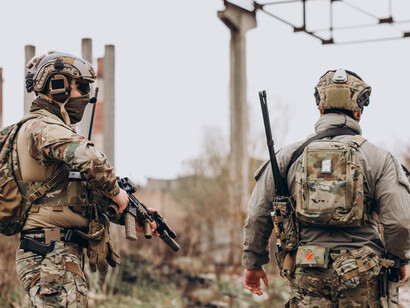
Since the end of the Cold War, a new breed of global power has emerged. These are not traditional national armies but "private security contractors"—modern mercenaries operating under corporate logos. At the apex of this industry sits DynCorp International (now operating under the Amentum umbrella). Its notoriety stems not just from multi-billion dollar contracts but also from a harrowing record of violations stretching from Eastern Europe to the heart of the Middle East, operating in what many scholars call a "legal black hole".
Bosnia: the moral abyss and the whistleblower
In the late 1990s, while serving as a UN contractor in post-war Bosnia, DynCorp became central to one of the most heinous ethical collapses in military history. Kathryn Bolkovac, a U.S. police officer working for the firm, risked everything to expose her colleagues’ involvement in human trafficking and forced prostitution.
As documented in The Guardian’s investigative report on Bolkovac, the internal culture of the company allowed for a form of "modern slavery". Young girls were purchased from trafficking rings for sexual exploitation, often with the tacit knowledge of supervisors. The most chilling aspect was the absolute immunity granted to the perpetrators. Due to legal loopholes regarding extraterritorial jurisdiction, not a single DynCorp employee faced criminal prosecution; instead, Bolkovac was fired for her whistleblowing—a story later dramatised in The Whistleblower.
From DynCorp to Epstein: the architecture of immunity
The DynCorp scandals serve as a grim precursor to the more contemporary Jeffrey Epstein case. Both narratives reveal a "Shadow Network" where powerful entities operate beyond the reach of the law. Just as Epstein utilised political influence to facilitate a global trafficking ring, companies like DynCorp have leveraged their status as "indispensable government contractors" to shield their personnel.
The parallels—targeting vulnerable minors, the use of "safe houses", and systemic bureaucratic protection—suggest a disturbing blueprint for elite criminality. This phenomenon aligns with Naomi Klein’s concept of The Shock Doctrine, where "disaster capitalism" thrives by exploiting crises to dismantle public oversight and privatise state functions, including the monopoly on violence.
Iraq: the black hole of reconstruction
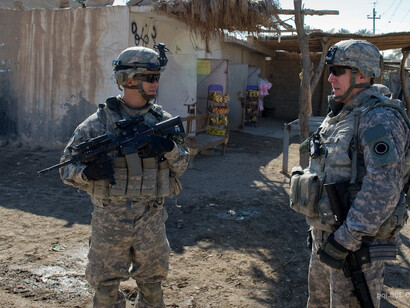
In 2003, DynCorp entered Iraq with massive contracts for police training and infrastructure management. This role became a financial "black hole" for American and Iraqi resources alike. The Special Inspector General for Iraq Reconstruction (SIGIR) highlighted billions of dollars in wasted taxpayer funds and failed projects.
The culture of impunity extended to financial fraud. As recently as 2020, the company agreed to a settlement of over $20 million with the U.S. Department of Justice to resolve allegations of false claims and inflated labour costs. This history of overbilling and phantom services reinforces the image of a "private empire" that prioritises profit over human lives and national stability.
Privatising chaos: a threat to global sovereignty
This analysis reveals that the "enslavement of nations" is not always a visible military occupation; it is a process facilitated by the documented corruption of the military-industrial complex. By shifting the state's monopoly on violence to unaccountable private actors, the path is cleared for an "Empire of Chaos".
Politicised exploitation: utilising trafficking and blackmail as mechanisms for controlling local and international officials.
Systemic immunity: the "protective shield" covering contractors confirms a power stratum that views legal systems as mere suggestions.
Conclusion: corporations above the law
DynCorp remains a stark testament to how war has been transformed into a business devoid of accountability. From the victims in Bosnia to the looted coffers in Iraq, the legacy of privatised security serves as a warning: when sovereignty is sold to the highest bidder, justice is the first casualty. The "Smiling Prisoner" of the digital age must wake up to the reality that while they scroll, the very architecture of global security is being sold to entities that answer to no one but their shareholders.
What emerges from this trajectory is not merely corruption but a reconfiguration of power itself. Private military contractors increasingly function as quasi-sovereign actors, operating across borders with minimal transparency and limited democratic scrutiny. Their presence reshapes conflict zones into marketplaces, where instability becomes profitable and prolonged disorder ensures continued demand. In such an environment, peace is no longer an objective but a liability.
Moreover, the legal ambiguity surrounding these actors exposes a fundamental weakness in international law. Existing frameworks, designed for nation-states, struggle to regulate corporations that operate transnationally yet remain tethered to no single jurisdiction. This creates a vacuum in which responsibility is endlessly deferred—between governments, subcontractors, and international bodies—until accountability disappears altogether.
If this model continues to expand unchecked, the consequences will extend far beyond isolated scandals. It risks institutionalising a system where violence is privatised, oversight is diluted, and ethical boundaries are subordinated to profit margins. In this emerging order, sovereignty is no longer a fixed principle but a negotiable commodity, traded quietly in contracts and shielded behind corporate anonymity.