English
 Español
 Français
 Deutsch
 Italiano
 Português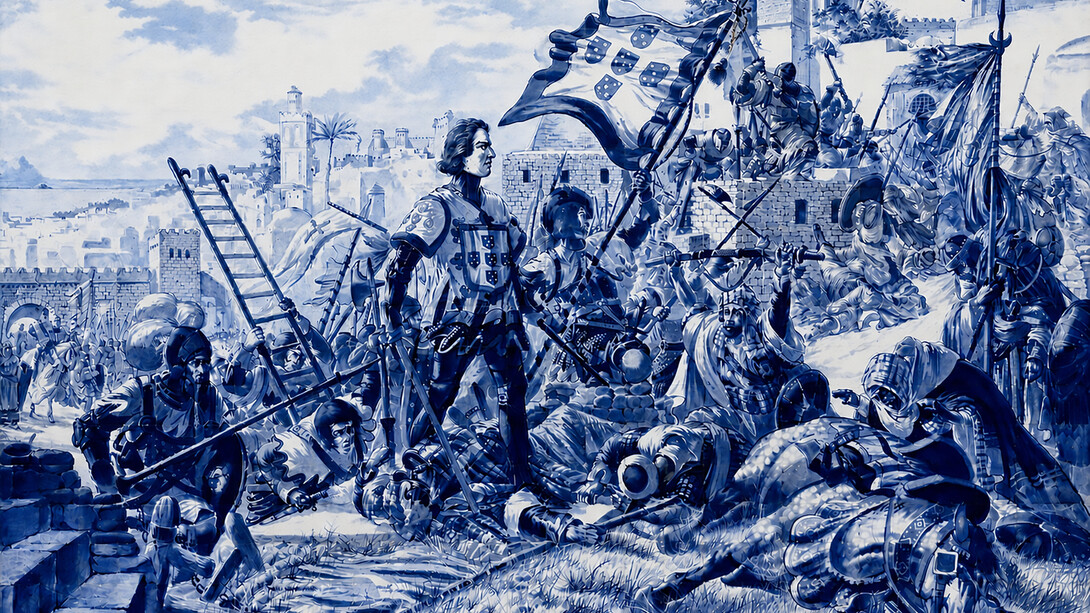
In the scientific field, the term “bifurcation” was first used by Henri Poincaré, but in the second half of the 20th century, the concept and theory of bifurcation came to be associated with the chemist and Nobel laureate Ilya Prigogine. Prigogine’s theory of bifurcation is based on the following ideas: the fundamental indeterminacy of reality and the consequent insistence on not considering chance, chaos, and disorder as pure negativity outside the scientific realm; complex systems create forms of self-organization that produce unpredictable changes and transitions (dissipative structures); in situations out of equilibrium (entropy, second law of thermodynamics), disorder prevails over order, and systems can enter moments of bifurcation in which small changes can produce enormous and unpredictable consequences.
Initially formulated in chemistry, the theory of bifurcation has sparked interest in philosophy, art, sociology, etc. The sociologist Immanuel Wallerstein was one of those most drawn to Prigogine’s theory and who explored it most deeply in the field of sociology. According to him, the modern world system has been accumulating contradictions; its development since the 16th century is based on certain long-term premises and trends that, one by one, have disappeared or been called into question. The world system is currently facing a structural crisis that constitutes a bifurcation point, a period of chaotic transition marked by great political and economic volatility.
According to Wallerstein, this transition could last until 2050, and what follows could be something more authoritarian and hierarchical or more democratic and egalitarian. I am convinced that history has accelerated in recent times and that new factors of unpredictability have emerged, above all three: the imminent ecological collapse, the development of artificial intelligence, and the emergence of an extremist Judeo-Christian Zionism. Unpredictability is greater than ever. Any decision involving calculated risk could result in incalculable risk. Is the world—conceived as the modern world system—entering a moment of bifurcation? Is the war in Iran the manifestation of that moment? If so, any action by any of the major players (Israel, the U.S., and Iran) or their allies, however calculated it may be, could have incalculable consequences:
A new world war (which for some has already begun)? A war that is more military than economic, or more economic than military? The end of the modern world system based on the vitality of modern capitalism and the hegemony of the West (successively: city-states of Italy, Portugal, Spain, the Netherlands, France, the United Kingdom, and the US)? A new period of rival hyper-nationalisms or religious wars between extremist movements (Jewish-Christian Zionist fundamentalism versus Islamic fundamentalism)? The acceleration of ecological collapse and the resulting massive displacement of populations (environmental refugees)? A new political conflict between the politics of life and the politics of death, replacing the modern conflict between left and right? The revolution of the sub-humans and sub-proletarians of the cyber-automated world, led by repentant insiders who know better than anyone the vulnerabilities of a power that presents itself as invulnerable.
If, for a moment, we can divert our attention from the media facade temporarily composed of Benjamin Netanyahu and Donald Trump, it will be possible to focus our efforts on the search for a possible new balance between fear and hope, perhaps only viable post-bifurcation. And for that, a little history may help.
A story of two straits
During the Middle Ages (13th, 14th, and 15th centuries), the Mediterranean was the commercial hub connecting the East with the West—the Levant trade. The Indian Ocean was then dominated by the peoples of the region and, since the 8th century, by Muslim Arabs. Mediterranean trade took place between Christian merchants (primarily from the Italian city-states of Venice and Genoa) and Muslim merchants (from the Eastern Mediterranean and North Africa) and extended into the Atlantic Ocean to reach Northwestern Europe (the northwest of what is now Spain, southwest England, and Flanders, with Bruges as the final destination). In the 13th century, the banking houses of Florence had 80 branches across Europe that functioned simultaneously as financial institutions and maritime transit insurers.
Everything was traded, and some products were particularly important. Since ancient times, tin from northwestern Spain and southwestern England had been essential for producing bronze, the quintessential durable metal of the era. Throughout the Middle Ages, pepper, coming from the East, held an importance that is hard to imagine today. It was such an important spice that it was frequently used as currency to pay customs duties, taxes, and debts between states. In the triangle between the Seine and Rhine rivers and the North Sea, the most precious goods were textiles. The galleys of Flanders linked the Mediterranean to the North Sea1.
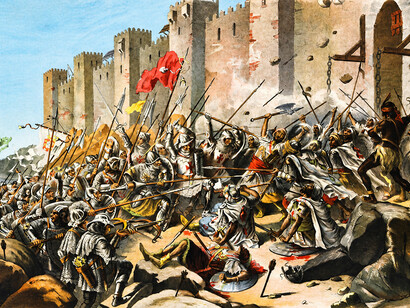
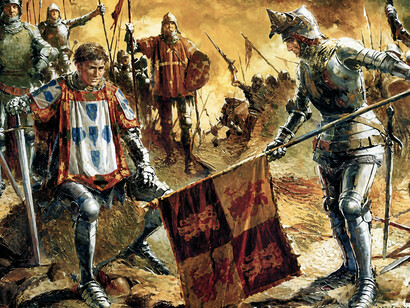
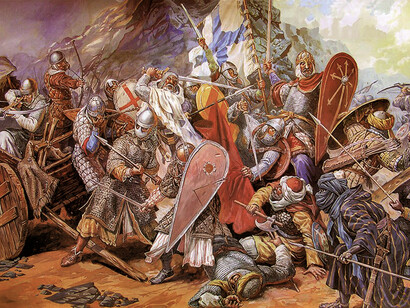
It so happened that, just as today, trade and war went hand in hand, and the Strait of Ceuta (now Gibraltar) was a key flashpoint for conflict. Muslim merchants (and others) engaged in privateering and piracy and frequently blockaded the strait, preventing Christian ships from passing or demanding heavy tolls to allow passage, which contributed to rising prices for goods. Some goods became so expensive that they disappeared from the market. It was to put an end to these blockades and the insecurity that the Portuguese conquered Ceuta in 1415. According to chroniclers of the time, at the time of the conquest of Ceuta, 12 pounds of pepper, a typical product of Levantine trade, came to cost 32 shillings. In the three decades following the conquest, the price fell successively to 16, 13, and 9 shillings2. 1415 marks the beginning of Europe’s colonial expansion (discoveries, explorations, and invasions, occupations) and the emergence of a world economy dominated by the West. With the capture of Ceuta, trade in the Mediterranean and the North Atlantic opened up, along with expansion toward the West, beginning with the archipelagos of the Azores, Madeira, and the Canary Islands.
One should not think that the goal was unrestricted free trade. The aim was to create new monopolies and exclusive navigation zones, the mare clausum [closed sea] that the Treaty of Tordesillas (1494) would enshrine. It was not until the 17th century that the mare clausum would be replaced by the mare liberum [open sea]. And this occurred as the bourgeoisies of Northern Europe consolidated their dominance of world trade and turned colonialism into one of the pillars of the primitive accumulation necessary for the development of industrial capitalism, a historical process that would reach its climax at the Berlin Conference (1884–95).
Less than a century after the conquest of Ceuta in 1507, the Portuguese conquered the Strait of Hormuz and built a fortress on the island of Hormuz off the coast of what is now Iran. The objective was to control trade between India and Europe that passed through the Persian Gulf (or Arabian Gulf). On December 4, 1513, Afonso de Albuquerque, Viceroy of India since 1509, wrote from Cananor to the King of Portugal, Manuel I, a letter revealing Portuguese control of the strait:
Along this entire coast, I was asked for insurance for ships from Malacca, and I granted it to all of them, as well as to ships and ports in Ormuz, on the condition that the horses be brought to Goa, so that it may be established along this entire coast that no horses from Arabia or Persia may enter any port other than Goa. And I believe they will do so, given the favorable report that last year’s ships brought back3.
Portuguese rule lasted until 1622 and was replaced for a long time by direct or indirect rule by the United Kingdom (through alliances with the sultanates). During the 19th century and until 1921 (and later during World War II), the United Kingdom and Russia vied for supremacy over Iran. This is without forgetting Kaiser Wilhelm II of Germany, with his project for the railway line between Berlin and Baghdad, construction of which began in 1888. This railway line was to be part of the Trans-Eurasian Axis connecting Hamburg to Basra on the Persian Gulf via Prague, Budapest, Constantinople (now Istanbul), and Alexandretta (now İskenderun).
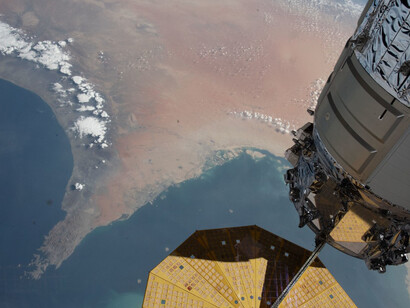
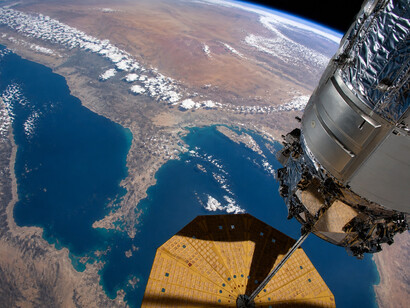
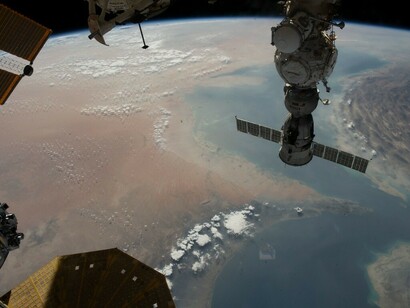
It was the first version of the “Drang nach Osten,” the eastward expansion of German imperialism. One of the Kaiser’s advisors, Paul Rohrbach, argued that the British Empire could be fatally weakened in the Middle East. The second version of the “Drang nach Osten” would be led by Hitler, targeting in this case the Slavic peoples and, above all, Russia. After World War II, the struggle for supremacy over Iran came to be dominated by the U.S. As we know, the Strait of Hormuz is now part of Iran and is currently under a U.S. blockade.
The beginning and the end?
The Strait of Gibraltar (then called the Strait of Ceuta) in the early 15th century and the Strait of Hormuz today bear a striking resemblance. The Muslim Arabs’ control of the Strait of Ceuta was not intended to prevent trade, but merely to alter the terms of trade in their favor. We can say, that the same is true of the Muslim Persians in their claim to control the Strait of Hormuz. The retaliatory blockade by the US was intended solely to eliminate the commercial advantages that Iran sought to gain from its control of the strait.
The apparent similarity between the two situations hides a profound difference. Iran, like the Persian Gulf countries, has every interest in the freedom of trade through the strait. The control that Iran now seeks is merely a response to the bombings and threat of invasion by the US and Israel. As the French writer Jean Rolin would say, it is an “asymmetric tactic” to circumvent the aggressors’ overwhelming military superiority. Jean Rolin published a novel in 2013 titled Ormuz.4. In this novel, there is a wealth of information about the nature and significance of the strait. Two different worlds, the Arab and the Persian, the same religion: two different ways of being Muslim. Based on this wealth of information, the writer argues that Iran can resort to what he calls “asymmetric tactics”—tactics capable of circumventing the adversary’s military and technological superiority. This is what is happening. In light of this, it is necessary to highlight the differences between 15th-century Gibraltar and 21st-century Ormuz.
The significance of Gibraltar
The control of the Strait of Ceuta by the Portuguese and the West in general was not merely a temporary development serving Christian merchants. It marked the beginning of the decline of Arab/Muslim dominance in the Mediterranean and in Levantine trade, a decline that would be consummated with the fall of Al-Andalus in 1492. It was, on the other hand, the inaugural moment for a new historical period dominated by the West: the modern world system. It was one of the first manifestations of a new center of world power that had two factors in its favor: the emerging European bourgeoisie and modern science.
In the long term, the opening of the Strait benefited the Mediterranean states or those of the Iberian Peninsula less than the countries of Northern Europe. Capitalism was then emerging as a global system—a world economy—that was highly dynamic but also highly contradictory, subject to recurring crises. In turn, the defeat of Islam in Ceuta signified confidence in a new system of experimental knowledge and empirical observation that drew upon the best cartographers, astronomers, astrologers, physicians, and scientists in general—almost all of whom were Jewish—to deepen the knowledge that would ensure dominion over the seas. It is no coincidence that Prince Henry was appointed governor of Ceuta in 1416, shortly after the conquest. Prince Henry was the founder of the Sagres Nautical School and the great architect of Portuguese maritime expansion. Gomes Eanes de Azurara, who, like Luis (Alvise) Cadamosto, was very close to the Prince and wrote the chronicles of the first phase of Portuguese colonial expansion, states that the Prince spent nights on end without sleep studying astronomy and geography.
It is hard to imagine today that as late as the early 18th century, one of the most coveted prizes in Europe at the time was awarded to whoever discovered the most accurate method of determining longitude, a fundamental piece of information for guiding navigation on the high seas. A 1714 act of the House of Commons of the United Kingdom offered a prize to whoever discovered the most accurate method of determining longitude: 10,000 pounds sterling to anyone who could provide longitude observations accurate to within 1 degree; 20,000 to anyone who could determine it with an accuracy of half a degree; and 15,000 for an intermediate level of accuracy. The evaluation committee included Isaac Newton and several members of the Royal Society. France offered similar prizes. It was not until 1765 that it became possible to determine longitude with negligible errors.
If one wishes, there was also a third factor in the construction of the modern era: religion—initially Catholicism, and later both Catholicism and Protestantism. Throughout the Middle Ages, since the Crusades, the Catholic Church had been an important unifying factor among the various Christian states of Europe and among their elites. This momentum, combined with economic advantages, allowed rivalries to remain functional to the development of capitalism.
The significance of Hormuz
The Strait of Hormuz is perhaps as important today as the Strait of Gibraltar was at the end of the Middle Ages. All oil produced in the Middle East (with the exception of Egypt and Turkey) is produced in the Persian Gulf and accounts for between 20% and 30% of global production. All of it passes through the strait, not to mention petroleum products, fertilizers, aluminum, etc. But the context in which the conflict in the Strait of Hormuz occurs today is radically different from what happened in Ceuta (Gibraltar) in the early 15th century. Unlike what happened then, the dynamism of global capitalism has shifted to the East. Iran is not alone. It is accompanied by Russia and the world’s great factory, China.
In turn, the struggle for knowledge that can translate into geostrategic advantage is also different. The rivalry to determine longitude took place among European countries, while the rivalry for technological advancement today, especially in the field of artificial intelligence, occurs between the United States and China.
Furthermore, the very military superiority of the U.S. is questionable. The U.S. has a strong military presence in the Middle East, and its most important military bases are located in the Persian Gulf: Bahrain, Kuwait, Qatar, the UAE, and Saudi Arabia. Reliable information shows that this entire display of military might was, after all, an easy and fragile target. The drones and missiles launched by Iran reduced these bases to ruins or rendered them inoperable, which immediately led some of the countries hosting the bases to rethink their strategy for new alliances, no longer centered exclusively on the U.S.
If the hypothesis of a turning point is confirmed, after the Strait of Hormuz, the world will be different. Iran is not Venezuela, and therefore the “easy victories” Donald Trump speaks of may result in bitter defeats. If Iran has not yet defeated the West, it has at least shown that it can be defeated. And that is irreversible.
References
1 In a text of this kind, there is no room for lengthy bibliographical citations, as the literature on this subject is vast. I recommend, in particular, Jaime Cortesão (in addition to his monumental work on the Portuguese discoveries): The Portuguese Expansion during the Age of Henry the Navigator. Lisbon: Livros Horizonte, 1975; Joseph F. O’Callaghan, The Gibraltar Crusade: Castile and the Battle for the Strait. . Philadelphia: University of Pennsylvania Press, 2011; L.A. Fonseca, “Portuguese Maritime Expansion from the African Coast to India,” in Michel Balard, Christian Buchet (eds.), The Sea in History - The Medieval World. Rochester: Boydell & Brewer, Boydell Press, 2017: 642–653 (and bibliography cited therein); Claire M. Gilbert, In Good Faith: Arabic Translation and Translators in Early Modern Spain. Philadelphia: University of Pennsylvania Press, 2020.
2 Jaime Cortesão, op. cit., 156.
3 T.F. Earle, John Villiers (eds) Albuquerque: Caesar of the East. Selected Texts by Afonso de Albuquerque and His Son (bilingual edition). Liverpool: Liverpool University Press, 1990, 264.
4 Ormuz. Paris: P.O.L. 2013.