English
 Español
 Français
 Deutsch
 Italiano
 Português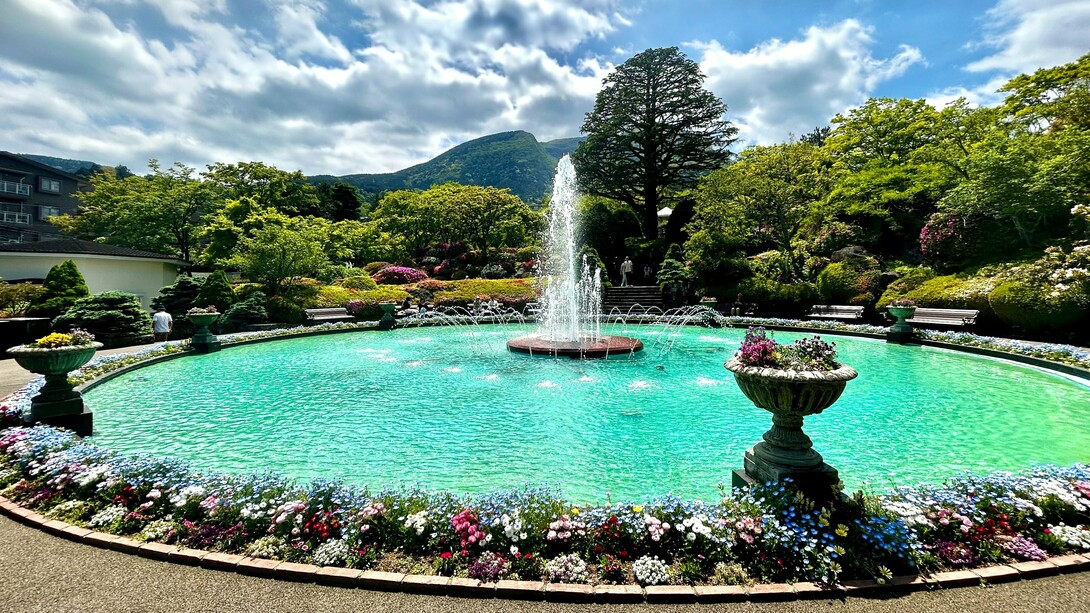
Even after conquering the world, there are still the mountains of Hakone
Japanese proverb (“Tenka o totte mo Hakone no yama”)
A fun day or weekend getaway from Tokyo, Hakone in Kanagawa Prefecture functions as an ideal retreat destination for bathing in lush nature, delectable local cuisine, soothing hot springs, and fun leisure activities. Sightseeing boats cruise around Lake Ashinoko with the stunning Mount Fuji towering in the background. A funicular railway and cable car (ropeway) transport visitors to the peaks of Owakudani and Togendai, enveloped by volcanic vents and spectacular mountain vistas.
Hakone appears in many woodblock prints, paintings, and photographs owing to its deeply rooted history extending over 1,200 years. It lay along the Tokaido route in the Edo period that connected Tokyo and Kyoto. Hence, the Tokugawa shogunate installed the Hakone Checkpoint in this region to watch over travellers, particularly for weapons. The Imperial Family also founded the Hakone Imperial Villa in the late 19th century, embodying a truly time-honoured significance to the territory.
This beautiful resort town is also home to several major museums, villas, temples, shrines, and exotic gardens. The Hakone Gora Park1 opened in 1914 and is considered Japan’s first French-styled garden. The construction was intended to coincide with the completion of the Tozan Railway line as a symbol for the hot spring town of Gora.
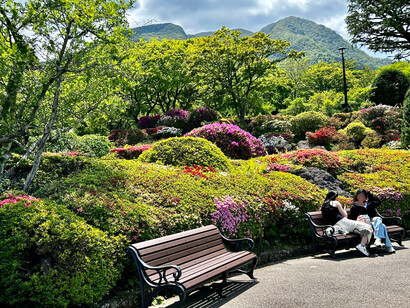
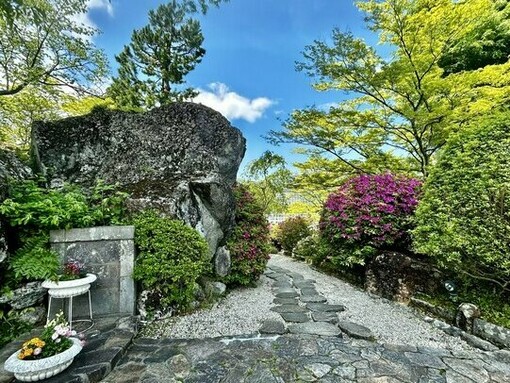
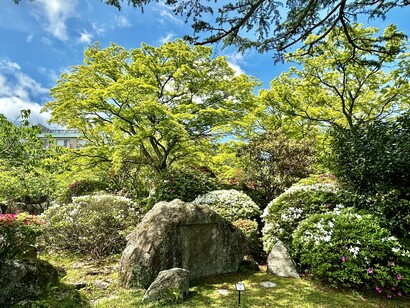
The terrain was previously a rocky wasteland, characterized by natural rock formations and giant boulders. For this reason, the garden incorporates the existing rocks into the park, mapping out a visually unique topography. Its original landscape sprawls on a slope, with a central pond and fountain and patches of seasonal flowers.
Landscape architect Shichigoro Isshiki was also recognized for his Japanese garden masterpiece at the 1910 Japan-Britain Exhibition in London.
With a history running over a hundred years, the garden spanning 26,000 square meters echoes the Western architectural influences of the era, which have survived flawlessly. The main entrance gate on the lower ground opens to a steep staircase that is adorned by delicately pruned trees and shrubs. The natural rock pathways also add a rustic feel, perfectly blending in with the classical French landscape.
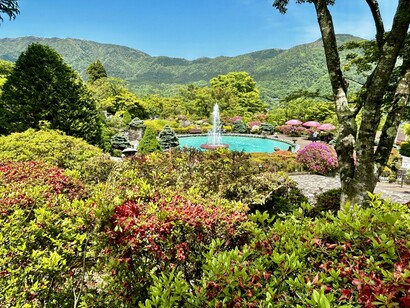
The steps escort you to the prime attraction of the park, the elegant, gorgeous fountain and pond which are as old as the garden’s foundation. The symmetrical layout is enhanced by encircling bright, multi-varied flowerpots, gently complementing the striking turquoise water. Stone and wooden benches border the pond, while rows of cherry blossom, azalea, maple, and conifer trees soar from behind.
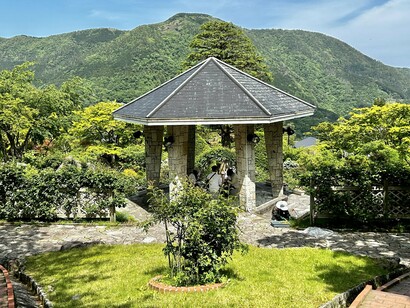
Climbing further up toward a rocky hill, you reach the iconic bandstand, which has retained its original state since 1914. A bed of over a thousand blooming rose varieties can be found on all sides.
Standing from this point at about 600 meters above sea level, you can embrace a splendid panorama of Mount Sounzan and the volcanic peaks of Owakudani. Due to the huge altitude difference of forty meters between the lower main gate and the upper west gate, it is said that the air temperature at both levels contrasts greatly. On certain occasions, only one part of the park may be blanketed in snow.
To the right of the bandstand are three greenhouses—the Tropical Pavilion, Bougainvillea Pavilion, and the Event Pavilion. They grow more than 3,000 plants of over 200 varied species, including herbs and fruits.
Adjacent is the simple Hakuun-do tea house, which renders the spirit of Japanese tradition. Built as well in the 1910s, it has aesthetically preserved its ancient materials taken from the mountain farmhouses. The interior is accented with tatami mats and a fireplace, suitable for a tea ceremony in a mountain-hut setting.
The park also has two craft houses where instructors conduct workshops on glassblowing, ceramics, sandblasting, glass bead-making, laser engraving, and pottery painting.
For gastronomic pleasure, enjoy rolled Japanese omelette, fruit, vegetables, roast beef, and smoked chicken ham sandwiches at the Isshikido café and restaurant close to the bandstand. Café PIC, on the opposite side, serves curry dishes and drinks on an elevated terrace overlooking the central fountain. Some stands also sell seasonally flavoured ice cream and sweets, like cherry blossom. Have a mouthful while sitting around the picturesque pond for a most rejuvenating experience.
Before leaving the park, drop by the Komamonoya Hakone souvenir shop to check out the region’s handcrafted pieces created by glass and pottery artists. Another souvenir shop provides a range of Hakone marquetry products, local chocolates, and other gifts.
Access to the park is possible by the Hakone Tozan Line railway from Hakone-Yumoto station to Gora station in about 35-40 minutes. The train cuts through the mountains, furnishing breath-taking scenery—forested ravines, soaring trees, and lovely flower blooms, especially hydrangeas around June.
Hakone Gora Park is designated as a Registered National Monument, and should certainly not be omitted from your Hakone sojourn itinerary.