English
 Español
 Français
 Deutsch
 Italiano
 Português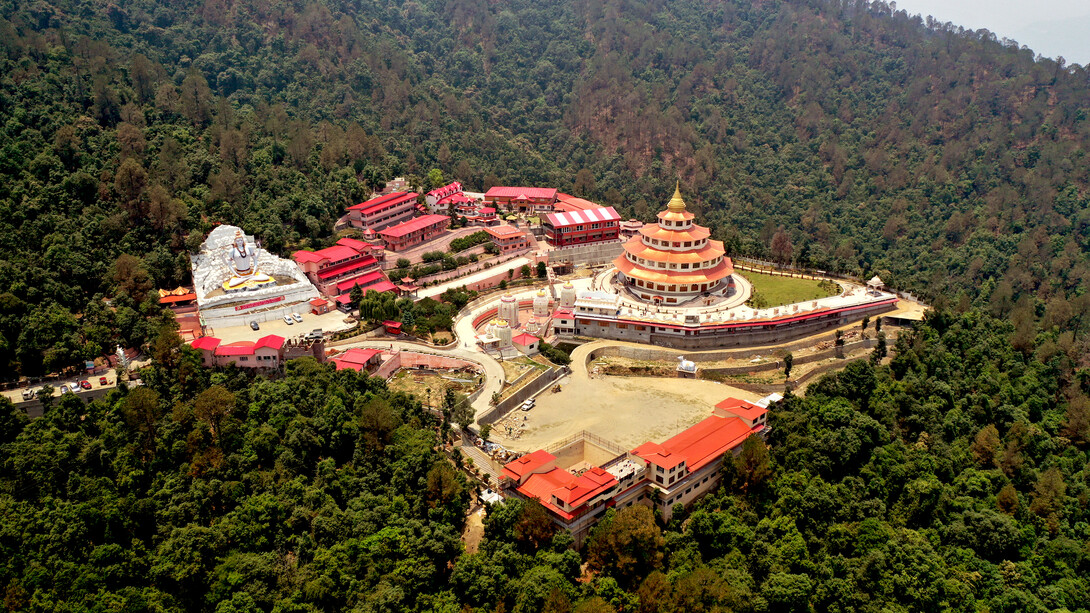
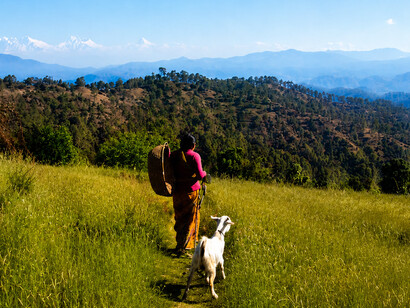
As a metropolitan travel writer for the past three decades, a lot of times I would have that fleeting desire to disappear from the hurly-burly city life and relocate to an idyllic Himalayan hamlet – 360-degree snowy Himalayan views, slow-paced life, organic food, and being surrounded by kind and compassionate people.
However, ever since I lost my dad in 2023, the urge to move to the Himalayas has grown stronger than ever before. My Dubai-based younger brother and I had endless discussions on the best locations; BTW, the Indian Himalayas are so vast and stupendous that arriving at a decision seemed overwhelming. From Darjeeling to Dharamshala and Sikkim to Srinagar, the process seemed to be one endless quest.
In hindsight, from 2023, we decided to zero in on Uttarakhand; both my brother and I thought it wise to depend upon the advice of our long-time family friend from Kumaon – Chandan Singh Koranga. He was one guy who knew us inside out – our mentality, our priorities, our dreams….
Himalayas, figuring out
I consider myself fortunate to have had a prior childhood experience of living in the Himalayas – Tawang, to be precise, in India’s northeastern state of Arunachal Pradesh – and spending my teenage years living in the foothills of India’s Northeast.
May I say that prior exposure to the stupendous dimensions of the Himalayas – geographical and cultural – does make your task of relocation a lot easier!
Being a Himalayan aficionado, I am often flooded with questions about relocating to the Himalayas by people whom I know. And it is exactly for this reason that I am penning down this personal narrative on Himalayan relocation, hoping that people across the world will be able to find pathways in the process of navigating the daunting Himalayas.
Romance vs reality
Very often I find people who have returned from a trip to the Himalayas becoming romantic and harbouring the desire to live the mountain life in the Himalayas. The Himalayas have attracted humankind since ancient times, but it isn’t that easy. The sooner you decipher between dreams and reality, the better it will be.
Ask yourself the questions – how committed are you to your relocation bid? Are you physically and mentally stable enough to take on the Himalayas? Are you financially stable? Can you sacrifice urban comforts for mountain hardships?
Life in the Himalayas can be pretty daunting at times. Coming on a holiday and spending a week in a luxury resort where all your basic needs are taken care of can’t be a basis for relocation; returning home from a mountain vacation and going absolutely ga-ga over what a great holiday you have had in the Himalayas isn’t really a reliable relocation index.
Most people I have come across want to live in the Himalayas for peace, quietude, the slow life, and to be closer to nature.
Bear in mind that up in the Himalayas employment is limited, the healthcare system isn’t all that developed, and business-wise too, you face tough competition if you are thinking of homestays, villa rentals, or boutique stays…
I suggest you think and examine all the pros and cons carefully. A good idea is to come on an extended stay in the Himalayas to test your adaptability and endurance levels before you actually take the plunge.
I have seen many who end up discarding their dreams of settling in the Himalayas when faced with the unique challenges that the Himalayas throw at them.
The search for land
It took us more than two years to select our land from a maze of options. Having a trusted native Kumaoni friend like Chandan was a boon. More so because he himself belongs to a family whose forefathers left behind land parcels in some of the most advantageous locations of Uttarakhand – Almora, Champawat, Lohaghat, etc.
Bear in mind that for outsiders there are restrictions when it comes to purchasing land in Uttarakhand. Outsiders are allowed to purchase up to 250 square metres of land for residential use, and all transactions are tracked online through a dedicated portal.
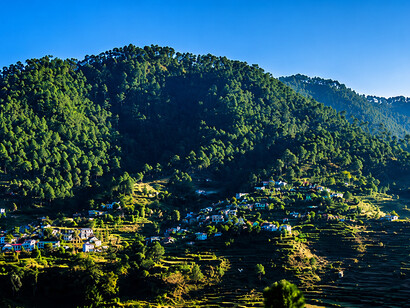
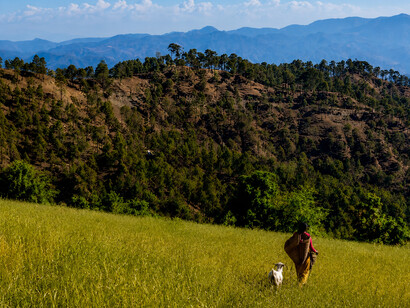
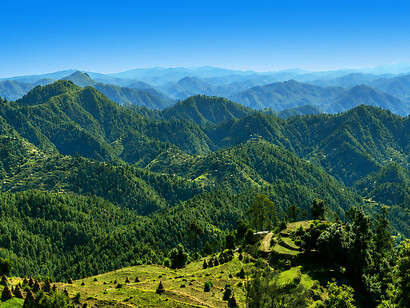
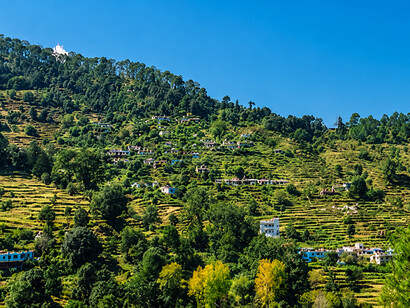
After months of navigating through the Kumaon region, we decided to opt for a secluded Himalayan hamlet called Lamgara – a serene, offbeat village in the Almora district, just 93 kms from Haldwani, the nearest urban town in the foothills.
Finding local guidance
The Himalayas have strange ways of connecting people. Through our long-time Kumaoni friend Chandan, we were introduced to Vidit Singh from XCIS Group, a company involved in residential development projects in Uttarakhand. The introduction helped us better understand the legal and practical aspects of purchasing land and building a home in the region.
At the time, the group was working on a residential project in Lamgara called Wildflower Hills, and through these interactions, the process gradually became more structured for us. Matters such as legal due diligence, land approvals, title clarity, and architectural planning required patience and careful coordination throughout the relocation journey.
It will take us another six months to finally move to our abode in Lamgara, but the Himalayas have taught us resilience, patience, gratitude, and adaptability in ways city life rarely does.
Why Lamgara?
We were focused and committed to our long-term vision – prioritising slow living, community-orientated experiences, spiritual surroundings, and a yoga-friendly atmosphere.
Lamgara aligned closely with what we were looking for. Apart from its Himalayan views, quiet environment, and nature-centred lifestyle, another important factor was connectivity — road access, 5G internet, electricity, and water supply.
Buying land in the Himalayas also requires careful evaluation of priorities and long-term practical considerations. The process can be emotionally rewarding, but it also demands patience, flexibility, and preparedness for unexpected challenges.
Out here in the Himalayas, you don’t just confront the physical dimensions of mountains but also the mountains of your own mind. The region constantly tests one’s endurance, adaptability, and perspective on life.
Divinity personified
I have been a travel writer for the past three decades, and being a yoga practitioner, I have had opportunities galore to hear stories of ancient India, the epics, folklore, and legends that have shaped the Himalayas culturally.
Away from the humdrum of city life, Lamgara has its own intrinsic spiritual vibe. Dol Ashram, Kalika Temple, Nanda Devi Temple, Chitai Golu Devta Temple, and Kasar Devi Temple are within close proximity to Lamgara.
From our tabletop land, the Dol Ashram is just 5 kms away. The focus here is on meditation, yoga, and promoting Sanatan Dharma. The ashram acts as a stimulant for inner transformation and preaches the tenets of India’s ancient Vedantic philosophy.
First-time visitors to the ashram are bewildered by the massive-sized Shree Yantra, the largest of its kind, and a cluster of temples dedicated to gods and goddesses of the Hindu pantheon.
I have already booked my slot for a long-term guided meditation retreat that would allow me to dive deep spiritually as well as take periodic stock of the ongoing construction of my cosy Himalayan cottage.
Writer’s village in Lamgara
The aura of the Almora district is so magnetic that since ancient times, this place has attracted people seeking peace and tranquillity. Leaving aside the Rishis of yore, the list of contemporary figures who have spent time here in search of spiritual solace is extensive — Bob Dylan, D.H. Lawrence, George Harrison, Allen Ginsberg, Uma Thurman, Sunyata Baba (Alfred Sorensen), and Steve Jobs, among others.
Being a travel writer, I was naturally drawn to places that could offer a sustainable and creatively inspiring environment. The presence of a writer's village in Lamgara particularly appealed to me.
The Writer’s Village is designed as a space for writers and other creative individuals. It includes cottages intended for long-term stays, remote work, and creative practice within a quieter Himalayan setting.
For writers and remote workers, places like Lamgara may offer an alternative rhythm of life shaped by isolation, nature, reflection, and slower routines.
Wrapping up
The key to living in the Himalayas is how much minimalism you can embrace. Along with it, you need to cultivate the slow-living mindset, a transition that is not so easy given the plethora of modern-day comforts and amenities that you might be surrounded by.
The “Himalayan life” can be financially challenging, and there will come stages where gaps in income could surface, so a stable source of remote income must be ensured.
The cost of living for a decent life could be anywhere in the range of INR 15,000–INR 20,000–25,000+.
Remember always that you are considering a paradigm shift, and so it is always advisable to do a test run before you make the decision of your lifetime.
I, for one, believe that spiritual growth is dependent and proportional to the height of a place above sea level. This is my personal conviction from years of living in metro cities, where, no matter how hard you try to blossom spiritually, the actual flowering seems elusive due to the distractions, cacophony, and chaos.
Osho, the Indian mystic, philosopher, and founder of the Rajneesh movement, widely considered to be one of the sharpest minds of the 20th century, regarded the Himalayas as a spiritual sanctuary. For him, the Himalayas were “a repository of heritage that has produced more enlightened beings than anywhere else”.
Let your move to the Himalayas be one of deep involvement with Indian spirituality. The true essence of the Himalayas, in Osho's own words, is that of a "Buddhafield"—a space so sacred that it allows deep inner transformation.