English
 Español
 Français
 Deutsch
 Italiano
 Português
The global diamond trade has long oscillated between romance and ruin. For decades, the gemstone representing everlasting love also served as a means of funding some of the most severe conflicts of the late twentieth century. Civil wars in Sierra Leone, Angola, the Democratic Republic of Congo, and Liberia in the 1990s were partially financed through the illegal trade of rough diamonds, gemstones mined in conflict zones and circulated within global markets with minimal oversight.1
These so-called “blood diamonds” became emblematic of the darker side of globalization. In response to mounting outrage, governments, civil society, and the diamond industry attempted an unprecedented experiment in transnational regulation: the Kimberley Process. The Kimberley Process Certification Scheme (KPCS), launched in 2003, was designed as a political and regulatory instrument to prevent conflict diamonds from entering the legitimate supply chain.
Its origins stem from a convergence of investigative journalism, humanitarian advocacy, and diplomatic negotiations around the year 2000. At the heart of this movement was the Fowler Report, commissioned by the United Nations to examine violations of sanctions against Angola’s UNITA rebels. The report highlighted how diamonds were being systematically used to fund armed insurgencies.2 Additionally, De Beers, the world’s largest diamond company, announced it would halt trading with groups operating in conflict-area mines.3
International awareness rapidly escalated. Civil society organizations, especially Global Witness and Partnership Africa Canada, documented how the conflict diamond trade worked and mobilized public opinion. Governments soon realized that traditional sanctions weren’t enough to control a highly portable and profitable commodity. A coordinated international certification system emerged as the only feasible solution.
The United Nations General Assembly formalized its concern with UNGA Resolution 55/56, adopted on December 1, 2000. The resolution recognized the connection between the trade in rough diamonds and armed conflict and called for the development of an international certification system.4 This was followed by UN Security Council Resolution 1459 in 2003, which supported the emerging Kimberley Process negotiations and encouraged states to take part in the initiative.5
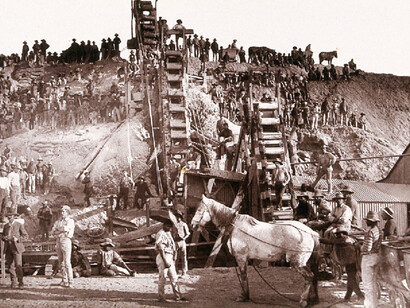
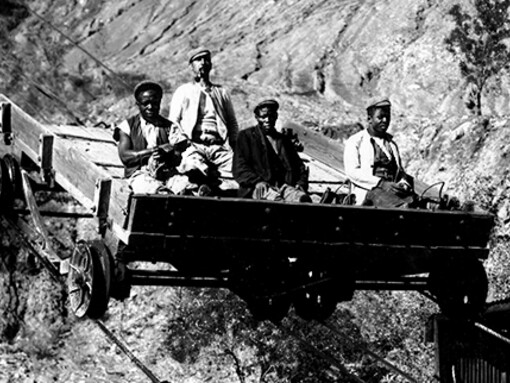
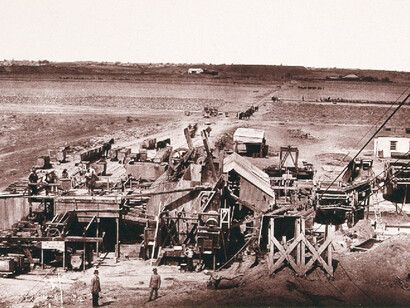
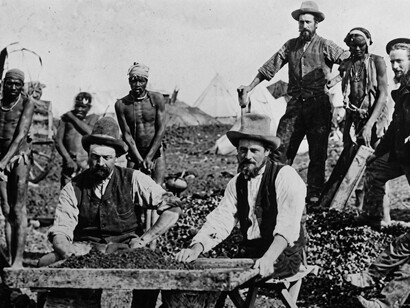
Negotiations took place in Kimberley, a city in South Africa known for mining, and whose name would eventually define the initiative. Governments, diamond industry representatives, and civil society groups held a series of meetings to develop a regulatory framework to tackle the issue. The outcome was not a treaty or a conventional international organization. Instead, the Kimberley Process became a hybrid governance mechanism, part diplomatic forum, part certification scheme, and part public-private partnership.6
At its core, the Kimberley Process is a certification system designed to regulate the international trade in rough diamonds. Participating countries agree to enforce strict controls on the export and import of uncut diamonds. Every shipment of rough diamonds crossing an international border must be accompanied by a Kimberley Process certificate proving that the stones are conflict-free.7 These certificates serve as passports for diamonds, allowing their legal movement in the international market.
Membership in the scheme is extensive. Today, eighty-six countries participate in the Kimberley Process. Collectively, these states account for approximately 99.8% of global rough diamond production. Participation involves several responsibilities. Member states must establish national laws to enforce Kimberley Process standards, including export controls, certification procedures, and penalties for non-compliance. Governments are required to ensure that rough diamonds are transported in tamper-proof containers with valid certificates. Customs authorities must verify the authenticity of documents before allowing diamonds to enter or leave the country.8
Transparency is a key pillar of the system. Participants are expected to keep detailed records of diamond production, imports, and exports. These records are shared periodically among members, allowing for cross-checking and statistical monitoring. In theory, discrepancies in national reports can uncover illicit diamond flows that might otherwise stay hidden within the global trade.
Another key feature is the restriction on trade with non-participants. Countries that are members of the Kimberley Process may trade only rough diamonds with other members of the scheme.9 This rule creates an incentive for diamond-producing states to join the regime, since exclusion would effectively bar them from the legitimate global market. The mechanism thus operates as a form of economic gatekeeping.
From a political standpoint, the Kimberley Process represents a significant experiment in multi-stakeholder governance. Traditional international law often struggles to regulate industries that cross continents and operate through complex private networks. The diamond trade exemplifies such a system: extraction may happen in remote regions of Africa, while cutting and polishing are mainly in India, and retail sales occur in Europe, North America, and East Asia. No single country has the authority to oversee the entire chain.
The Kimberley Process attempts to fill this regulatory gap by aligning the incentives of multiple actors. Governments impose legal controls on trade; industry participants commit to sourcing diamonds only from certified suppliers; and civil society organizations monitor compliance while raising public awareness. In theory, this triangular arrangement creates mutual accountability.
The early years of the Kimberley Process were widely regarded as a success. Estimates suggest that the proportion of conflict diamonds in the global market has fallen from approximately 4 percent to less than 1 percent.10 While these figures are inherently difficult to verify, the decline in large-scale conflict diamond financing appeared evident.
Several African conflicts that had once relied heavily on diamond revenues gradually subsided. In Sierra Leone, the end of the civil war in 2002 coincided with efforts to formalize the diamond sector in line with Kimberley Process standards. Angola similarly undertook reforms to bring its diamond exports into compliance with international certification rules.11
The diamond industry itself had strong incentives to support the initiative. Consumer confidence is the lifeblood of luxury commodities. If buyers began to associate diamonds with atrocities and civil war, the entire market could suffer reputational collapse. By endorsing the Kimberley Process, major industry players sought to protect both their moral credibility and their economic interests.
Retailers soon incorporated the language of ethical sourcing into their marketing strategies. Jewelry brands assured customers that the diamonds adorning engagement rings and necklaces were certified as conflict-free. The Kimberley Process certificate became a symbolic guarantee that romance and responsibility could coexist.
Yet the scheme has not escaped criticism. Over the past decade, scholars, activists, and policymakers have raised concerns about its limitations. The most frequently cited critique is that the Kimberley Process defines “conflict diamonds” too narrowly. Under the current framework, a diamond is considered a conflict diamond only if it finances rebel movements seeking to overthrow legitimate governments.
This definition excludes other forms of violence and exploitation associated with diamond extraction. Abuses committed by state security forces, private militias, or criminal networks may fall outside the scheme's technical scope. Critics argue that such a narrow definition fails to address the broader human rights challenges embedded in the mining sector, including workplace health and safety, the use of child labor, and fair pay.
Another persistent issue is enforcement. Because the Kimberley Process relies heavily on national governments to implement controls, its effectiveness depends on the administrative capacity and political will of participating states. In countries with weak institutions or widespread corruption, certification procedures may be vulnerable to manipulation.
The case of Zimbabwe’s Marange diamond fields illustrates these tensions. About 200 miners were killed by the Zimbabwean army in a military operation in 2008. While some members advocated suspension, effectively barring Zimbabwe from exporting certified diamonds to other participants, others argued that the situation fell outside the formal definition of conflict diamonds. The resulting compromise exposed the scheme’s institutional constraints and highlighted the limits of enforcement within a consensus-based system.
Despite these challenges, the Kimberley Process remains the primary international framework governing the trade in rough diamonds. Its endurance reflects both the political sensitivity of the issue and the absence of obvious alternatives. Dismantling the scheme without replacing it would risk reopening the channels through which conflict diamonds once flowed.
Furthermore, the Kimberley Process has provided important lessons about global commodity governance. It shows that international regulation does not always emerge from formal treaties negotiated solely by states. Hybrid institutions, combining public authority, private-sector involvement, and civil-society oversight, can sometimes succeed where traditional diplomacy falls short.
The scheme has also encouraged greater transparency within the diamond industry. Statistical reporting, certification procedures, and peer-review mechanisms have created an unprecedented level of visibility over the movement of rough diamonds. While not flawless, these systems represent a substantial improvement over the opaque markets that prevailed during the 1990s. At the same time, consumer expectations keep evolving. Ethical sourcing, environmental sustainability, and labor standards have become key issues in the luxury goods industry. Diamonds are no longer judged only by their traditional “four "Cs"—cut, clarity, color, and carat—but also increasingly by a fifth: conscience.
For policymakers, the future of the Kimberley Process lies in adapting the scheme to these changing norms. Expanding the definition of conflict diamonds, strengthening monitoring mechanisms, and integrating new technologies are among the reforms frequently proposed by analysts. Whether the coalition of governments, industry, and civil society can reach consensus on such changes remains uncertain. Nevertheless, the original ambition of the Kimberley Process retains considerable moral force. The initiative was born from the recognition that natural resources should not serve as fuel for human suffering. Diamonds, symbols of beauty and permanence, had become instruments of war. The international community sought to correct that contradiction.
Two decades after its launch, the Kimberley Process stands as a rare example of global cooperation forged in response to humanitarian outrage. It is imperfect, occasionally contentious, and sometimes slow to evolve. Yet its underlying premise, that markets must be governed by ethical responsibility, continues to resonate. In the end, the significance of the Kimberley Process extends beyond diamonds themselves. It reflects a broader transformation in how the international community confronts the relationship between commerce and conflict. By attempting to regulate a glittering but dangerous commodity, the scheme illuminated a simple truth: even the most dazzling stone can cast a long shadow.
References
1 Andrew H. Winetroub, “A Diamond Scheme Is Forever Lost: The Kimberley Process’s Deteriorating Tripartite Structure and Its Consequences for the Scheme’s Survival," Indiana Journal of Global Legal Studies 20, no. 2 (2013).
2 World Diamond Council, “The 20-Year Journey of the Architect of the Kimberley Process Certification Scheme,” WDC Newsletter, last accessed March 3, 2026.
3 Winetroub, “A Diamond Scheme Is Forever Lost,” 1427.
4 United Nations General Assembly, Resolution 55/56: The Role of Diamonds in Fueling Conflict, A/RES/55/56 (December 1, 2000), 1.
5 United Nations Security Council, Resolution 1459 (2003), S/RES/1459 (January 28, 2003), 1.
6 Tim Hughes, “Conflict Diamonds and the Kimberley Process: Mission Accomplished—or Mission Impossible?” South African Journal of International Affairs 13, no. 2 (2006): 120.
7 UNGA, Resolution 55/56, 2.
8 Kimberley Process, “What Is the Kimberley Process?” last accessed March 25, 2026.
9 Ibid.
10 Hughes, “Conflict Diamonds and the Kimberley Process,” 119.
11 Hughes, “Conflict Diamonds and the Kimberley Process,” 123.