English
 Español
 Français
 Deutsch
 Italiano
 Português
The intersection of climate risk and global volatility
The current climate landscape is undergoing rapid transformations under mounting pressures. Extreme weather events are constantly testing the resilience of economic systems and political will — even as their immediate significance wanes in the face of surrounding geopolitical and financial pressures.
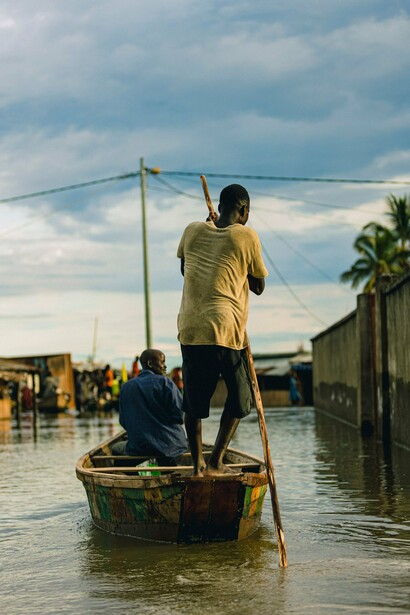
On time scales of a decade or two, the signal is clear: the extreme events are becoming more intense in association with the overall warming of the Atlantic, Pacific, and Indian Oceans and with El Niño's modulating effect on heatwaves, droughts, floods, and storms over the past decade. This changing risk landscape makes health and social inequalities worse because it gives more heat stress to the most vulnerable and poorest communities; thus, there is a pressing need for adaptation that is contextual to diverse communities.
The core dilemma: balancing immediate shock absorption with decadal adaptation
This, then, poses the crucial question: In the face of mounting financial constraints and political challenges, how do institutions balance short-term adaptation measures with long-term resilience?
El Niño variability is likely to be the primary driver of extreme weather risks in the near term. Economic frictions, resilience investments, community responses, and international governance will interact to shape viable adaptation pathways.
The main question is answered in five parts which include the following thematic discussions: the climatic factor as the driver of El Niño-related risks; adaptation barriers in financing and insurance; investments in resilience as a strategic differentiator for organisations, with attention to societal and political backlash and policy fatigue; and the role of international forums in translating risks into concrete commitments. These are the themes that will give explicit detail of how we expect the different actors to navigate a volatile climate economy over the next six months and beyond.
The El Niño factor: compounding hazards and disproportionate vulnerabilities
El Niño variance is one of the main determinants of short-term extreme weather risks, both in event frequency and impact. Climate dynamics also hint that, as a result of the warming trend, there will be a more intensified cycle of both La Niña and El Niño, thereby making weather patterns more extreme and hazardous with cascading impacts on temperature, precipitation, and disaster risk.
Rising temperatures will mean more heat stress for people, which in turn will pose significant health risks to poor communities that lack proper cooling, shelter, or resilience. Droughts, floods, and wildfires are not single, separate events but rather outcomes that are connected to basic shifts in global climate variability. These factors come together during El Niño periods, and they are likely to make the situation worse in the near term; therefore, there is a need to strengthen preparedness and rapid response capabilities across all sectors.
This section builds the case for why adaptation needs to be tied to proper risk prediction and good contingency planning as the number of extreme weather events rises. The trends mentioned above shift focus from climatic elements to financial implications and, in doing so, underscore the need to develop resilience-financing mechanisms in parallel with risk forecasting to ensure sustainability of effective responses.
The affordability trap: overcoming financial friction in high-risk zones
Economic and financial barriers affect the financing of adaptation and the viability of insurance in high-risk areas, thereby creating a vicious cycle between risk, affordability, and action. The main obstacle to increasing insurance coverage is still affordability. In areas prone to wildfires and floods, where risks are increasing, insurance premium subsidies and concessional financing are vital tools for keeping access to insurance. Along with traditional tools, fintech innovations have started to address the challenge of financing climate investments, opening up new paths for the more effective mobilisation of capital and risk management.
This is part of a broader trend: systemic risk of global economic and financial stability due to climate change. Losses are increasing with the rising frequency and intensity of loss events that test models, capital adequacy, and policy design. As reinsurers and insurers reprice their products and institutions reassess risks, the need for such partnerships has grown, underlining the imperative of integrated climate data, improved risk models, and accessible financing to catalyse large-scale adaptation.
So, increasingly, it’s the financial landscape that’s shaping what we can do in the world of adaptation and directing where and how we invest in building resilience. The next section details certain investment strategies that turn resilience into a competitive edge—strategies that separate proactive players from those who must respond.
Resilience as a differentiator: transforming risk management into value creation
Resilience investments are a major part of the strategy that distinguishes organisations in increasing climate risks, with clear returns in reducing losses and improving continuity of business. This report presents nature-based freshwater management solutions as an example of how "green" strategies contribute to the dual objectives of climate change mitigation and adaptation, while preserving biodiversity in a comprehensive approach that links environmental health and resilience gains.
Firms engaged in climate change adaptation and the development of resilient markets present one window of opportunity — where expert knowledge and capital can be bundled to deliver scalable solutions. The paper posits a conceptual model that connects resilience enhancers, post-pandemic operational strategies, and sustainability outcomes to integrate risk-based planning with long-term value creation. Resilience is not a response; it is a strategy.
These insights underscore that investments in resilience are the factors that allow organisations to seize opportunities in the face of uncertainty while, at the same time, mitigating the impacts of shocks. In the following section, the focus moves to the societal dimension, looking at how policy fatigue and backlash affect social acceptance of adaptation efforts and resilient system design.
The human element: navigating policy fatigue, maladaptation, and information warfare
The societal and political dimensions of backlash and policy fatigue add to the complexity of climate strategy implementation by revealing tensions between urgent needs and the burdens placed on households and businesses. Risks of maladaptation come from policies that focus on physical infrastructure at the expense of the social and environmental context. This brings out the enduring opposition between infrastructure and adaptive governance that fits with lived experience.
Current government actions and their impacts shed a sharper light on the opportunities and constraints that inform resilience — including how policy choices affect public acceptance and the success of their implementation. Misinformation and disinformation during climate events further compound the challenge by distorting and undermining public perception.
Policy responses have showcased the fragility of communication systems in times of crises. These dynamics illustrate adaptation as much a political and social endeavour as a technical one. It must be transparent communication, reliable information, and comprehensive policy design to keep momentum going and avoid burnout that leads to stagnation. The final section of the reading shifts to the international arena: How do forums turn risks into solid commitments and, more importantly, money for the work?
The global stage: mobilising capital and accountability through international forums
Global forums are a key place to turn the risk of climate into real commitments, the financing for those commitments, and the collaboration between different parts of the economy. The main role of these forums is to assess the effectiveness of the mobilisation of climate finance, identify gaps in ambitious action, and recommend ways to increase ambition and bridge financing gaps through specific tools.
The roles of the Conference of the Parties and its bodies under the United Nations Framework Convention on Climate Change are to enhance cooperation with major international organisations and bodies in the establishment of climate finance governance, science, and implementation to provide a platform that allows the coordination of diverse actors in strategy and resource mobilisation. The effective functioning of governance mechanisms (participation, ownership, transparency, programme review, and social review) is what turns the aspirations on adaptation into real outcomes; therefore, the five sets of mechanisms are fundamental as tools for performance measurement and accountability.
With the world's eyes set on the 31st Conference of the Parties (COP31) and the preparatory negotiations leading to it, the shape of financing plans, commitments, and implementation will define the possibility of making efforts to build resilience viable in the short and long run. This leaves open how the international arrangements intersect with national policies and private-sector actions, setting up detailed case analyses in later sections.
Grid reliability and supply chain fragility: hardening assets against geopolitical & climate shocks
For fifty years, the primary emphasis in policy and markets has centred around the International Energy Agency and its modern strategy, which has now become that of preventing and managing disruptions. For example, in rapidly expanding digital sectors such as data centres, electricity demand forecasts demonstrate how sudden surges in demand may reconfigure reliability, pricing, and investment standards to strengthen the resilience of energy systems.
The economic framing of the sustainability rationale for real-asset investments also reinforces the argument that climate-conscious capital allocation will deliver risk-adjusted returns and support energy supply stability, storage, and grid modernisation. These factors speak to the need to align policy incentives, market signals, and infrastructure investments so that risks are not shifted onto the most vulnerable groups but rather significant reductions in carbon emissions and improvements in grid reliability can be achieved. There are also other complexities for business planning — risks are spread practically across supply chains due to converging pressures of energy economics and climate risks.
The fragility of supply chains to climate risks and geopolitical issues further underscores the urgency of resilience. Many more companies are reconfiguring their supply chains to better withstand climate risks by, for example, diversifying their supply base, making manufacturing local, and holding buffer stock for multiple regional disruptions. Such a situation would make resilience more pressing for the firms, which would have to quickly adapt to the changing political situations, the costs of shipping, and the reliability of suppliers while continuing to have access to essential inputs.
A quantitative general equilibrium perspective helps clarify how spatial linkages between climate and political shocks at the regional level influence optimal investment decisions regarding the enhancement of supply chain buffers and flexible contracting to mitigate volatility. In summary, these findings suggest a very strong approach: resilience-building strategies should consider not only climate-related risks but also the strategic changes in current global policy to promote international activities. Switching to the insurance industry, this weakness underlines the role of data-centred pricing and risk-sharing plans that steady insurance coverage in the face of shakeups.
Data-driven pricing: the evolution of risk-adjusted insurance ecosystems
The insurance market dynamics reflect the physical risks and the changes in behavioural responses to them. In some international markets, sectors have become more competitively priced; however, risk-adjusted pricing remains an effective method for promoting prudence and conserving capital. To facilitate the scaling up of public-private cooperation in financing quick recovery projects and strengthening climate resilience, a partnership between governments and insurance companies is needed to extend rapid recovery projects and climate resilience. Insurers are now more than ever before moving towards data-driven pricing using real-time historical data, analytics, and advanced technologies to match premiums and coverages with actual risk profiles.
These market adjustments are part and parcel of the broader movement toward a more financially accurate assessment of risks with better incentives for mitigation and adaptation — a path where financial mechanisms are aligned with resilience outcomes. In urban and regional planning, these indicators of prices show where the investment in infrastructure that is capable of resisting damage is most efficient in terms of avoiding losses at the level of the community.
Civic blueprints: interdisciplinary and equitable urban planning
Urban and regional resilience planning has evolved to focus on building disaster resilience through integrated design practices. Today’s urban planners design and develop cities that can adjust to climate change by incorporating flood management, green infrastructure, sustainable development, disaster risk reduction, and quick recovery. This paper assumes that disaster preparedness can only be achieved when it is viewed as a multidisciplinary process that involves the legal, political, and technological aspects as well as community partnerships for creating a collaboration process between institutional authority and real community needs.
The paper also develops an approach to multi-hazard design concepts at the local level, considering the specific environmental and social standards of the region, based on the integration of local characteristics and practices in coherence as a strategy for risk reduction and resilience building. In this context, resilience planning goes beyond solutions for physical infrastructure to include governance, equity, and participatory decision-making, which can be defined or formulated in ways that enable urban systems to resist and recover from increasing risks. From a monitoring and evaluation perspective, the right metrics will clarify whether investments in urban resilience are actually translating into losses avoided.
Results frameworks: quantifying avoided losses and climate ROI
Adaptation results frameworks will show the results of adaptation in reducing risk exposure and losses by making clear where and how investment is directed. Metrics for climate resilience will be important to assess how much adaptation financing contributes to overall resilience to ensure financing is in line with risk reduction and value preservation.
The six insights presented on climate adaptation underline that monitoring, evaluation, and learning are necessary to translate evidence into practical actions, guide continuous adjustments, and ensure accountability. Integration of adaptation into risk management and addressing protection gaps through financing and insurance are necessary to ensure that resilience activities reach the most vulnerable segments of society, close performance gaps, and strengthen social safety nets. The above assessment mechanisms will help in the improvement of policy design, corporate strategies, and community planning. This will ensure that in both the short and long term the avoided losses are realised and investment in adaptation is worthwhile.
Securing social stability and economic viability
Consideration is extreme; events and climate risks continue to impose significant influences on the strategic choices of governments, businesses, and society. The paper will argue that immediate risks resulting from El Niño fluctuations, financial constraints, investments in resilience-building, societal responses, and international governance underscore the central theme of this paper: long-term adaptation.
Energy security dynamics and demand also set a path for the joint evolution of policies and markets to maintain reliability of energy while building momentum in reducing carbon emissions; fragile supply chains and the geopolitical context point to diversified and flexible operations and contracts. The reading also showcases the evolution of the insurance market as an indicator and financing mechanism that aligns incentives between mitigation, protection, and rapid recovery.
At the same time, urban and regional resilience planning shows that spatial approaches should be interdisciplinary to lessen risks and hasten adaptation and that strong monitoring and evaluation frameworks make sure that actions result in loss prevention and knowledge acquisition.
These are the pieces that need to be put together to make progress sustainable: risk insights must be translated into tangible commitments, financing, and implementation. As the world's climate and financial problems heat up, this need becomes more and more pressing: integrating resilience as a core part of policy design, corporate strategies, and community planning, while watching for any bad side effects that might come from transparent and inclusive governance.
The broader impact is in balancing short-term response with long-term preparedness—investing today in systems that can handle tomorrow’s shocks while also maintaining social stability, economic viability, and environmental safety.