English
 Español
 Français
 Deutsch
 Italiano
 Português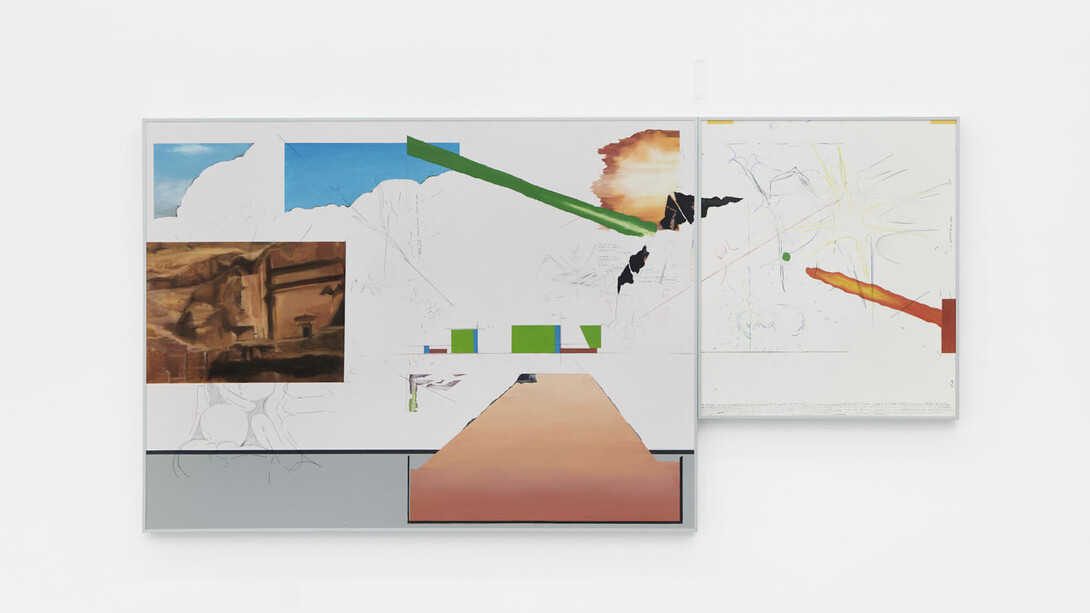
For some time now, I have been revisiting the ways in which telecommunications were represented in Spain during the second half of the 20th century. This interest emerged from an idea that struck me as unsettling when approached from a position of estrangement: that there exists a fiber-optic infrastructure that keeps our perception and consciousness almost permanently connected. This infrastructure allows us to see and hear from almost anywhere and constitutes a global system that channels our individual and collective will. Today, however, the most dominant images of its dissemination tend to suppress its materiality. They do not depict the complex and fragile apparatus that runs through walls, underground spaces, and across oceans, but rather a clear blue sky, a smiling face gazing at the horizon, or beams of light traveling through the air, connecting our devices in an interactive network, almost like a magical manifestation. When did this experience become naturalized, and when did we turn away from the infrastructure and technical imagination that sustain it? The works in this exhibition explore archives and materials that surround this question.
Qué pasa
In 1967, when cabling systems were still primarily based on copper, the first issue of the magazine QP of CTNE was published. This editorial project, aimed at company employees, had embraced the aesthetic tendencies of editorial design of its time, something unusual for a corporate publication. Interviews with employees, a cultural section, and articles devoted to the development of telecommunications shared space within a single printed publication. The magazine was not without an ideological tone; it illustrated the growth of buildings, personnel, and subscribers with a certain inventiveness, while also featuring the active presence of Falangist writers in its pages. Reviewing its later issues, I see how the magazine evolved over time, in parallel with advances in printing technology, which by the 1980s allowed for glossy pages, highlights, and intense gradients. In its final years, a more consolidated corporate and advertising aesthetic became evident.In the March 1985 issue, I find nine pages dedicated to the arrival of a new transmission medium: fiber optics. Further on, three pages dedicated to the ruins of Petra in the Jordanian desert, with photographs marked by intensely blue skies. In another 1985 issue, Luis Miguel is interviewed: “How many telephones do you have?” “I have twenty,” he replies early in the conversation. This is followed by an article on the integration of Telefónica’s private networks into IBERPAC X-25. Then, a special feature dedicated to Dalí. The magazine managed to address the technical world of communications while interweaving it with leisure and entertainment.
I cannot help but think that within this editorial work, there is a kind of conspiracy: an attempt to prepare the groundwork for a visuality that would later emerge, persuading us, if only through association, that the technological imagination of telecommunications forms part of our most ordinary everyday life. I try to see this as an effort to imprint the image of the technical world onto our collective unconscious, only to later make it disappear entirely.
Coins
In 1974, on the occasion of the fiftieth anniversary of CTNE, ten bronze medals were produced featuring intriguing, almost retrofuturistic reliefs of underground cables, cable-laying ships, rivers, and oceans, as if the technology depicted were more ancestral than contemporary. As if it had always been part of our history, the weathered patina of the metal seems to construct a transcendental image of our contemporary interconnectedness. These images reinforce the same idea: to make infrastructure and labor disappear, a visual fiction must be constructed to replace them.
Illescas
In late 2025, I visited a colleague in Illescas, on the outskirts of Madrid. He is a union representative for fiber-optic repair workers in the area and a repair technician himself. He showed me around. There are several logistics centers for Amazon, Dia, Zara... Illescas appears to be the ideal location for implementing these large facilities: first, because of its proximity to the city center, and second, because of the relatively low cost of land. We visited his house, surrounded by trees and vegetation. As he spoke to me about his work, he simultaneously installed a cable that would connect his house to the main network. The scene, very informal, appeared to me as the opposite of the idealized corporate imagery of network expansion. The fusion splicer used to join fiber-optic cables was worn from use. The overall image is curious, though increasingly common: nature and fiber infrastructure coexisting in the same space. Perhaps it is more striking when one is not surrounded by concrete.
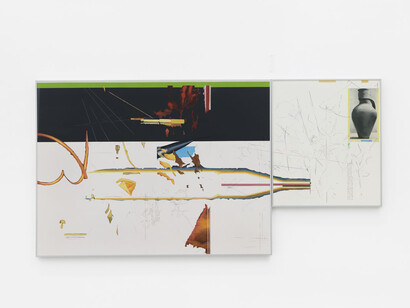
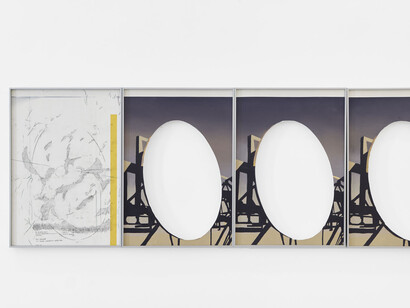
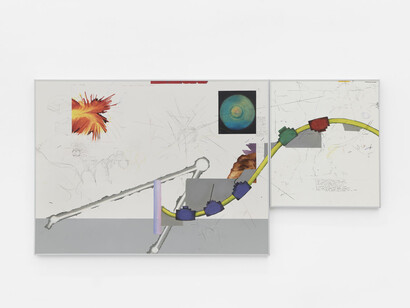
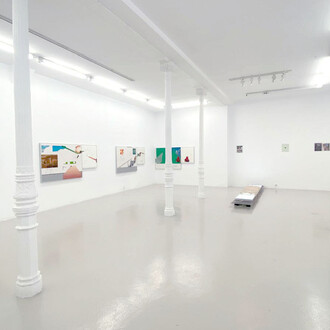
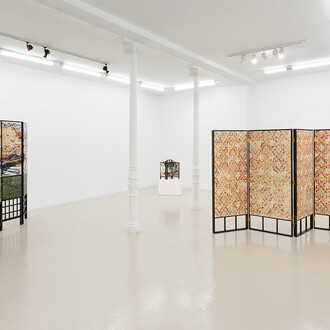
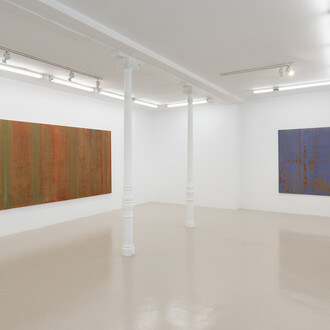
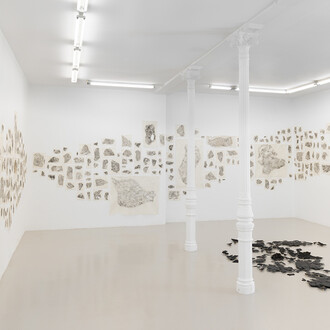
This exhibition proposes a symbolic essay based on the elements described above. Rather than a deliberate concealment of infrastructure, what emerges is a form of representation in which the experience of communication becomes detached from the material conditions that make it possible. In this displacement, technical labor (its rhythms, its gestures, its precarity) loses visibility, while communication is presented as a fluid experience. This exhibition attends to what remains outside the image.