English
 Español
 Français
 Deutsch
 Italiano
 Português
Not many people noticed the earthquake in Nepal back in March; few countries, after all, are more earthquake-prone than Nepal. However, this one was a bit different – a political rather than a geological earthquake.
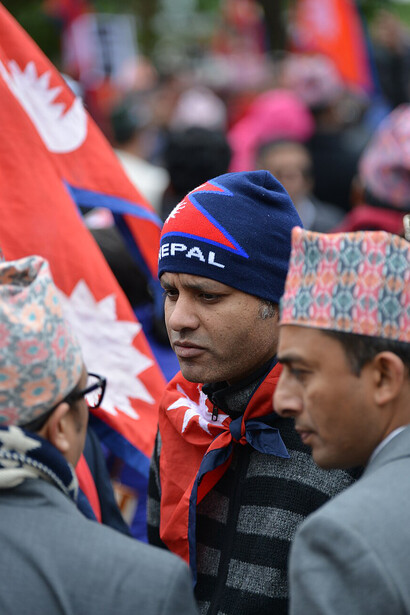
For the first time in more than 50 years, one party won enough seats (182 out of 275) to be able to form a government without going into coalition with any other party. That party was Rastriya Swatantra, with its 35-year-old leader, Balendra Shah, a rapper-turned-politician who had shot to fame back in 2022 in becoming the mayor of Kathmandu. In the March election, he beat the long-serving Prime Minister K.P.Sharma Oli by standing against him in his own seat.
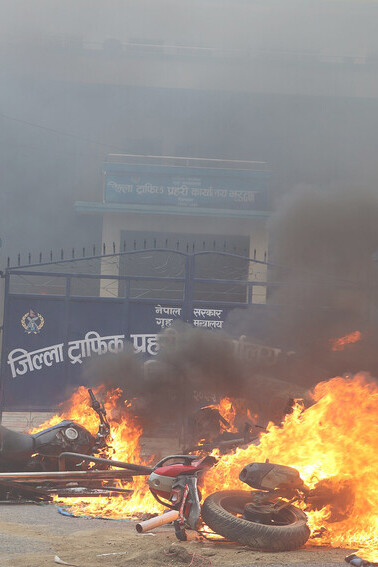
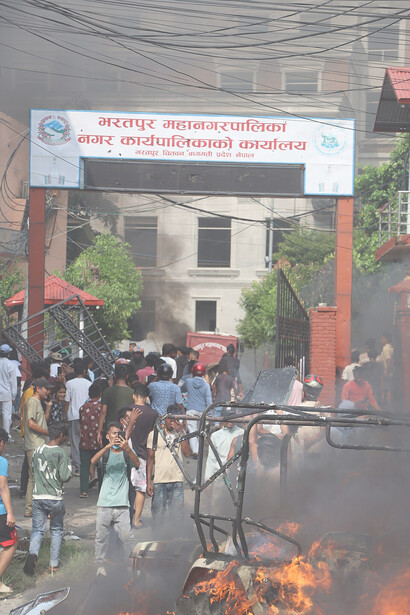
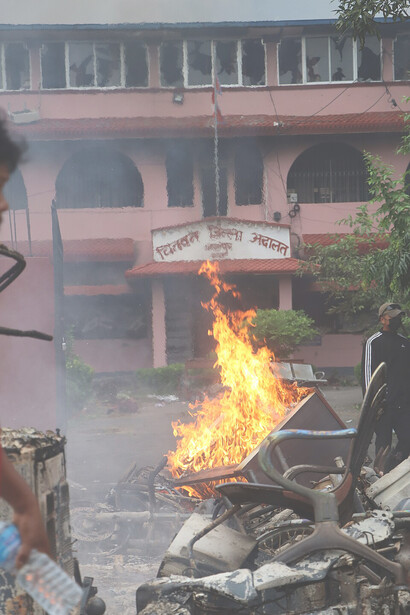
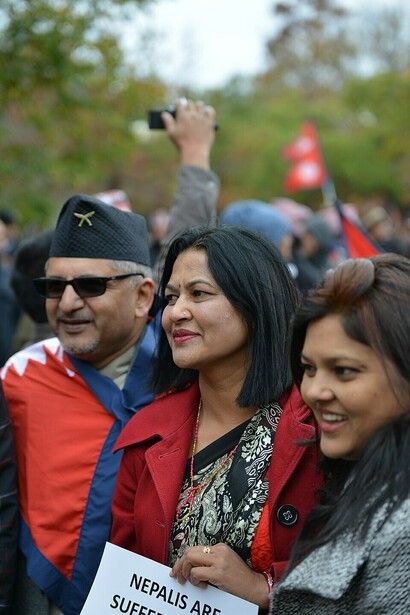
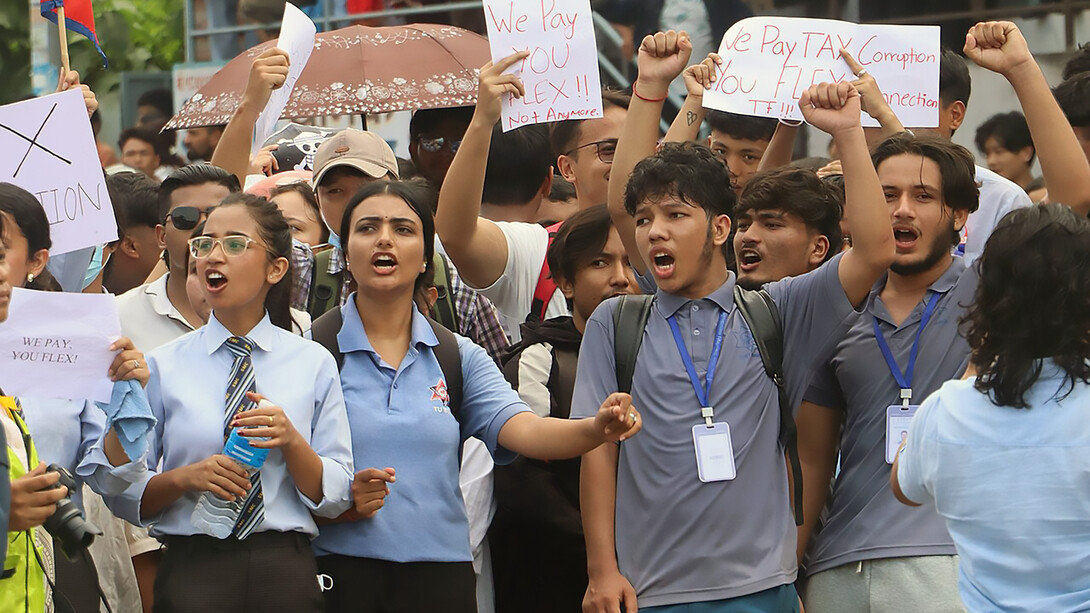
The tremors that led to this seismic event started back in September 2025, when huge numbers of students took to the streets of Kathmandu to protest against the corruption and nepotism at the heart of Oli's government—as well as its ill-advised ban on social media. At first, the protests were completely non-violent, but the government's gratuitously violent response (more than 75 people were killed) turned the protests into riots, with many government buildings severely damaged.
The government immediately resigned; a caretaker administration stepped in before the elections in March—and the ensuing electoral earthquake.
This is probably the best-known of a wave of ‘Gen Z’ uprisings over the last few years, including the toppling of the tyrannical Sheikh Hasina’s government in Bangladesh in 2024. Sri Lanka’s government had gone the same way in 2022 and Madagascar’s in 2025. In more than a dozen countries, demonstrations led by Gen Z protesters have forced governments to change key policies and personnel.
Gen Z (people born anywhere between 1997 and 2010) has been described as “the most educated, the most underemployed, the most apprehensive, and the most indebted." A recent ‘youth bulge’ across much of the global south means that the population of many countries is heavily weighted to young people—46% of the population in Nepal is below the age of 24. They have understandably high aspirations regarding their future, but many end up having to cope with extremely precarious working lives.
A combustible combination. And it seems highly likely that this all but guarantees future uprisings.
None of which comes as any surprise to me. Back in 2012, I wrote a book called ‘The World We Made’, looking forward to the year 2050, and in that I speculated about the likelihood that young people would eventually rise up against the continuing betrayal by older generations. This is what I wrote at that time:
In July 2018, the Enough! movement exploded into life in France, the USA, India, and Russia, and then went global. Huge numbers of young people were mobilised around a shared vision, with young people occupying government buildings, parliaments, stock exchanges, newspapers and TV companies, banks, oil and mining companies, town halls and civic centres — an irresistible tide of shared fury and compassion.
Chaos reigned for several months, at which point governments all around the world began to respond to those demands, pledging to introduce radical reforms on fair taxation, climate change, and protection of the natural world. Some meant it and were almost grateful for the fresh start. Most didn't, but it didn't matter. Too high a price had been paid; too many young people had been mobilized to let things slide back.
Well, that obviously didn't happen in 2018, although we did see an explosion of concern amongst young people at that time, all around the world, with the Fridays for Future movement and the inspiring leadership of Greta Thunberg.
Fourteen years on, unfortunately, we find ourselves in a very different place, where levels of concern about the climate crisis have all but collapsed.
According to the Climate Change Observatory at the University of Colorado Boulder, in a report earlier this year, global news coverage of climate change dropped by 38% since its peak in 2021—a decline confirmed by the US-based watchdog Media Matters, analyzing output from all major broadcast networks in the US. Even the New York Times, which published a lot of articles on the climate crisis back in the early '20s, has so radically 'deprioritized' climate reporting that its output in 2025 was down by 66%. And this all has a marked effect on levels of public awareness and readiness to take action in homes and workplaces.
Many young people are outraged by this continuing refusal to get to grips with the climate crisis. Every year, things go on getting just a little worse, and climate-induced disasters just a little more intense (and a lot more expensive), with more and more people affected by rising temperatures, drought, wildfires, extreme weather, and so on. And that's all happening right now, driven by an average temperature increase of just 1.5° C since the Industrial Revolution. Prospects for young people at 2°C, let alone 2.5°C, are beginning to look truly terrifying.
Unlike today's older generations, most young people are all too aware of the connections between the climate crisis, the continuing stranglehold that the fossil fuel industry still has on the global economy, and wars in the Middle East. With the US defense budget now nearing $1 trillion and total global spending on military and security budgets at $2.6 trillion, the cumulative opportunity cost of this turbo-charged militarism becomes clearer and clearer.
That $2.6 trillion isn't being invested in those things that would far more reliably ensure the future well-being and security of young people today: enabling countries the world over to better adapt to the now inevitable ravages of climate breakdown; rebuilding ‘the natural capital’—rivers, oceans, soils, forests, and biodiversity—on which everything depends; and addressing the grotesque inequalities that now scar every country.
Meanwhile, as the horrendous war in Iran demonstrated, our continuing dependence on fossil fuels imposes a terrible cost on the whole of humankind.
Imagine yourself as part of today's Gen Z: how could you not be angry at what all this means for the future? How could you not feel betrayed by those currently in power?
And for us (collectively responsible for this devastating intergenerational betrayal), there's surely one principal conclusion to be drawn: what if the earthquake in Nepal is just the tiniest of geopolitical signals as to what might happen next?