English
 Español
 Français
 Deutsch
 Italiano
 Português
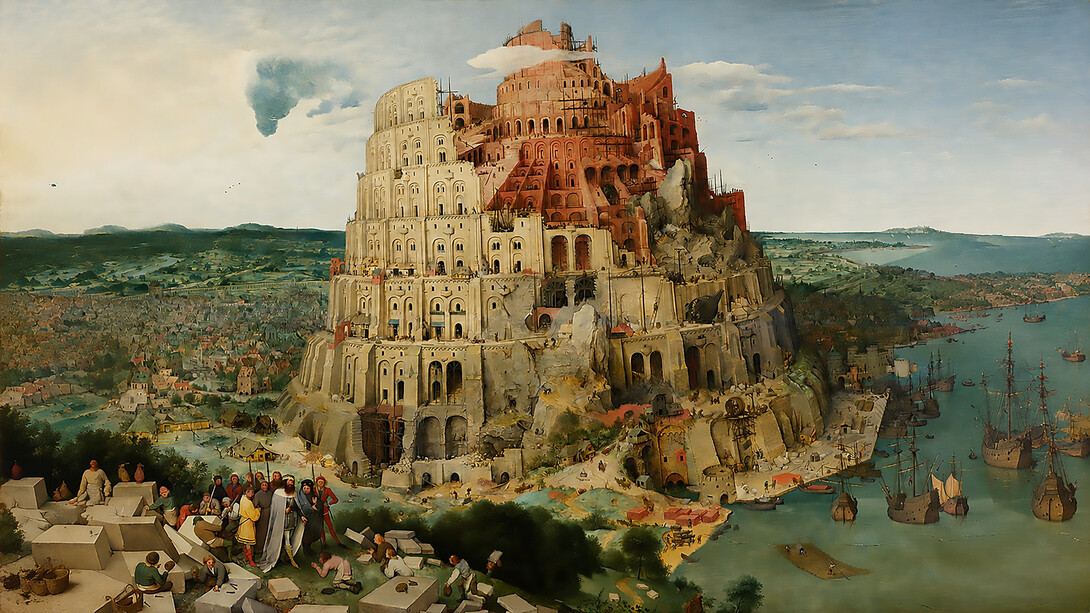
Only by articulating a social vision into an ideology can people understand how the problems they face in their daily lives are actually the reflection of a larger social problem.
Political ideologies and theories concerned with how societies and geopolitics function contribute to our understanding of social realities and relationships at any given time. As these theories become obsolete, their weaknesses emerge; they come to be seen as the product of a particular time and circumstance. Other ideas take their place, and those who lived by the old ideology are left behind. Political ideology, as Hannah Arendt said, is but a temporary manifestation of a still hidden good.
The notion that there is no escape from politics, no way to represent the social world free of ideology, is not meant simply to correct some intellectual mistake that academics have made in the process of interpreting the world. Rather, it is to oppose the authority of official knowledge, precisely because it chooses to leave out the political dimension. It is also to denounce that the justification for certain people being marginalised and excluded from social power is the result of viewing the world through biased eyes, or to accept that those so-called learned, rational, and civilised individuals often see a distorted social reality.
In that sense, capitalist ideology works to cover its tracks, to ignore the biased nature of the categories it constructs. Categories for interpreting the social world can be applied apolitically, but believing these claims to truth has played a powerful political role in the construction of the world’s social relations --in the ways that those in power have justified their power and those out of power have been made to feel that their powerlessness is their own fault and inadequacy.
Myths built around such claims to truth are no fiction. Myths are acted out in our own psyches repetitively and ongoingly and, for better or for worse, they do end up shaping our future.
What I am saying is that class-bound bourgeois ideology, with its rather modest objectives for development, puts us in a position from which we need to escape even if it requires heroic efforts. This prevailing class-bound bourgeois ideology makes it difficult for us to look at fundamental issues without prejudice. Having a technological or technocratic logic displaces a philosophical discourse in the name of political expediency.
Western development pursues bourgeois ideals rather than a more concrete bourgeois ideology; it relies more on eliciting attitudes and gestures than on embracing a specific philosophy. It is extremely difficult for a society in a Third World nation (sorry for using this outdated term) to pursue a development path different from the path dictated by the mainstream (capitalist) world economic system. And note: past forms of development in the North, when copied, are simply not leading to a viable future in the South. As a response, perceived threats to the continued viability of Western development trends are likely to lead to non-constructive actions by external financers (I do not use 'donors'), such as them irrationally further strengthening the faith in technocratic approaches.
It is true that pragmatism more than idealism makes change possible. But such pragmatism has to be rooted in a solid development theory that starts by defining the social problems of maldevelopment. We thus need new ways of defining problems before we try to solve them.
It is one thing to argue persuasively that current development policies have led to the neglect of those rendered poor; it is another to provide a substitute model. In fact, one can safely predict that it will be counterproductive to attempt to replace the current development model(s) with (an)other if power and equity issues continue to be neglected.
The use of Western models carries the danger of inhibiting original thinking in searching for solutions to social problems. The central ideological conflict, however, does emanate from the definition of those social problems in development and, hence, the choice of the policy instrument that will be applied as relevant to solve them in the context of the model. Relevance is dependent upon the political environment and upon the social assumptions within which the model is being applied. In short, at the macro level, how phenomena appear ultimately depends on one’s perspective and biases.
Only similarities or consensus stated in political terms, i.e., explicitly stating social assumptions, will lead to similarities or consensus in the adoption of strategies of development. (However, not even this type of consensus necessarily suggests similar outcomes under all conditions…). There simply are no neat algorithms of development that will fit every country.
W.H. Auden (British-American poet, 1907-1973) used to say he could never be friends with anyone who liked his steak well-done. There is something refreshing about that --a straightforward prejudice presented straightforwardly, not all dolled up as a philosophical principle. Conversely, in Western development circles, we keep finding fresh excuses for not focusing on important public issues straightforwardly. Posturing about peripheral matters (peripheral, that is, to structural, macro questions) brings on a clouding of the sense of direction pursued.
There seems to be at work a law of inverse proportionality: The anger invested in disputes over the future of today’s development is inversely related to the real differences between the disputants. There is an unwillingness to allow the (sometimes) slight differences --between the proponents of different development approaches-- to seem slight. Such mock debate we so often see in Western development can be called “the narcissism of small differences”, the exaggeration of small differences to give a little dispute the appearance of moral gravity.
On another note, it is imperative to point out that economics, as used in development modelling, is a fundamentally political social discipline. Ideology is always implicit in economics, framing a certain social reality that is too often taken for granted. Western development economics can thus be accused of being blind in one eye: Most of its practitioners completely ignore certain social factors that have tremendous influence on economic outcomes. We must, therefore, take economics as a belief system that is not only inherently ideological but also imbued with prejudiced beliefs as to human nature. Be, therefore, wary of the rhetorical deception of economists, particularly those applying econometrics to development modelling!
The Western development paradigm is also guilty of the bias of believing that political discourse is conflictual, while the economic discourse is mostly cooperative.
By naively trying to avoid political conflict, the Western development model is overwhelmingly conceived as economic development only. Models of development do not often enough take into consideration existing conflict and tensions --and not tackling the conflicts at hand is a sure way to not achieve set development goals.
Viewing societies as “economies” (in the narrow sense) and reducing the reactions of human beings to “feedback loops” in a systems model badly betrays reality. I contend that systems theory cannot overrule an intelligent, sensitive, moral and political vision. A political vision is a systems vision par excellence, and as René Dumont (French sociologist and environmental activist, 1904-2001) used to say, those who refuse to include morality in the economic system… are leading us to death. “Successful economies” have, indeed, already been responsible for the death of tens of millions of people around the globe; these deaths are the facts from which we should be seeking truth.
Another fact becoming more and more an accepted truth is that the dominant development models that follow Euro-centric prescriptions are not open to modifications of the actual development paradigm; they lead to an undesirable mimetic development based on a misleading and faulty pan-economic ideology.
Along these same lines, the aid-for-development model actually fosters a process that E.F. Schumacher (British statistician and economist, 1911-1977) characterised as “collecting money from the poor people in the rich countries to give to the rich people in the poor countries”.
It just happens that most so-called anti-poverty programmes are like a bus: they offer a ride to both poor and non-poor. One can safely guess the outcome: The poor will soon be elbowed out of the programme; ergo, in the name of those rendered poor, the non-poor will reap the benefits.
In that sense, too many so-called development efforts have thus ironically become anti-developmental, primarily because macroeconomic policies have ignored or forgotten their inseparable counterpart: macro-social policies.
In summary, established models of analysis are no match for the complexity of reality itself; they often lead to false optimism about the future. More often than not, it is the areas of action contained in the “forbidden agenda” of those analyses that contain our best hopes. The models that we choose to guide the development of Third World societies play an important role in these societies’ evolution. However, when the models are flawed, progress is distorted and often stunted. This is doubly true when models are imposed from the outside. For the most part, LDCs have been given the Western model of development-- and the system has not worked well. For instance, mad consumerism beyond the reach of the lowest income quartile is quite a standard outcome of the Western model of development. If the country develops the means of production designed primarily to produce consumer goods, goes the logic, it does accumulate wealth. But this wealth is usually not available to benefit all society. The consumer model also rarely corresponds to the population’s fundamental needs in mass consumer goods.
Since outdated and oversimplified models of the world lead to inappropriate policies, it is important that policy-making be guided by appropriate theory. To be relevant, such theory will have to include the dynamics of exploitation within and between nations. Therefore, a development theory which fails to come to grips with all aspects of national and international politics will have little chance of success, to say the least.
Paradigms and new theories
Danger comes when our science and our technology outpace our political imagination and when the ruling paradigm assumes that it does already encapsulate all relevant knowledge within its discipline of origin and that that gives it licence to arrive at conclusions valid beyond its boundaries.
The extent to which a paradigm pervades our minds is a tribute to the efficiency of its propagation. Each compartment of universal knowledge has a ruling paradigm.
Therefore, as applied to Western development, modern science and technology already bring with them a preconceived basic methodology, an ensemble of working theories, an accumulated body of knowledge and a range of what are considered effective techniques for applying that knowledge. To make things worse, these modern tools are applied in a top-down manner that ignores the most basic principles of the scientific method as applied to society and to the political discourse.
The world’s experience is not the reality they taught us in science class. In fact, each generation of scholars changes academic truths, although mostly staying within the sanctioned paradigm. Reality is, therefore, our own, dated, conscious awareness of that world experience as seen through the filter of the ruling paradigm that imposes on us customary rules of judgement and practice representing an invisible hand.
Unfortunately, paradigms actually care more about what one should not believe in than about what one should believe in.
As a matter of fact, current global and societal problems are of a sort that raise doubts as to their solvability within the ruling development paradigm altogether. And, to make things more complicated, although most of today’s social scientists and development practitioners working within the ruling paradigm declare themselves neutral, they are…more neutral toward some social groups than toward others.
Western social scientists too often fashion their work, not only in relation to their peer scholarly community, but also in relation to the prevailing politics serving the aims of their employers. As somebody said in a somehow derogatory tone, these scientists’ training has retained a Jesuitic flavour: you have to be bright enough to understand it but dumb enough to believe it and go along with it. A possible reason for their myopia as professionals is that their professional training is focused on acquiring power through control of a magic body of scientific knowledge. But that magic body not only defines the profession’s knowledge base, it also acts as a lens through which they both look at and define problems. The result is that many of the most pressing problems of society are not addressed because they do not fit into the predetermined magic body. This, of course, is a problem given that this modus-operandus has evidently reduced the historic role of these professionals’ potential activism for bringing about meaningful changes.
The scholarly subject of development, as a distinct discipline, is only 40-45 years old. For most of these years, progress has been ‘pushing through the sand dunes’ of the often naive assumptions of the ruling paradigm about the nature of the process itself.
While an eagerness to establish more political general theories of development that would accommodate the vacuum here exposed is understandable, I must repeat the caveat that another false general theory may be worse than no new theory in development work. Quite a few pseudo-Marxist scholars have ventured into this field and have proposed still flawed novel approaches. Our criticism of them has been hesitant but has largely been ineffectual and slow to ignite appropriate reactions and corrective responses.
Arriving at a more definite new theory of development, applicable to our present world, is particularly difficult, because the issue is so ideologically charged.
- Once such a theory is arrived at, dialectically, it will have to be made not only a tool but also a weapon, because principles without action are as bad as action without principles. The challenge is to bring principles and action together.
Regrettably, most of our colleagues seem to take a “MEGO” attitude (“my eyes glaze over and my brain shuts off”) as they go over these, to them distasteful, issues of paradigms and general theories that force them to dig deep into where it might hurt. They rather prefer to talk directly and lightly in terms of modernisation, the need for capitalisation, the development of industrial infrastructure or, occasionally, the need for a strong state apparatus, all issues more in-line with conducting business as usual.
The irrelevance of much of current development studies
- The chilling injustice of what is really happening in the world of those rendered poor seems to be escaping many of our development scholars’ attention, passing by their windows on the smooth flow of economic analysis, disguising itself in the respectable clothing of the financial vocabulary.
Development studies cannot continue to simply be a descriptive discipline that seeks merely to explain how underdevelopment has come about. The description offers no remedy (‘paralysis in analysis?’). Development must also be prescriptive, actively seeking change through political action. In today’s world, this action cannot be confined to the national arena only. We need to embark more on studies of poverty and inequality between nations, looking for appropriate avenues of direct political action at this international level as well.
Development studies is to become the social science with a commitment to do what other social sciences only preach. Therefore, development teachers ought to take up a more political role commensurate with this mandate.
In the prevailing (mostly functionalist) development paradigm, the problem has not been so much how to promote innovation as such, but how to prevent the emergence of unwanted innovation from below. Western development has constantly attempted to channel and, at the same time, control the inevitable flow of innovations by protecting and fostering those ones which coincide with the (mainly political) interests and orientations of the ruling social forces in the North and of the local elites that emulate them and benefit from them.
Poverty, rather than any microbe, parasite or worm, is the more relevant key vector of ill health and malnutrition, and it is no coincidence that those rendered poor are the ones who suffer from these deprivations (or rather privations, since they never had good health or nutrition in the first place…).
The countless packaged development schemes implemented around the world have actually worsened the status of blue-collar workers and peasants. By overlooking the macro constraints, development studies specialists keep dreaming they can revert maldevelopment --“if only we were left to do our technical work better and more efficiently." One often wonders if things would have turned out any worse without all those packaged interventions. With them, what we have witnessed and what we continue to witness is rather the unfolding of a process of modernisation of poverty in which a number of new variables have been introduced that have mostly confounded the problem(s).
Be aware that we have also seen the rise (and fall) of pseudo-macro intervention approaches. These are attempts at acting in the macro context but departing from a flawed analysis of reality, thus leading to failure. What seems to ultimately matter more is that development studies scholars and development practitioners “wash their brains in the same ideological tub” each day.
The time has come for new frameworks to break old thinking on development.
The myth of objectivity and of apoliticism
The allegedly “objective” evaluator at best only makes a virtue out of the objectivity vice.
Truly objective evaluators of progress in development will be those professionals, even those with the highest integrity, whose own agendas, conscious or unconscious, do not affect to some extent the validity and the conclusions of their evaluation.
While the goal of science applied to development issues is to produce an objective and tested body of knowledge, many aspects of that knowledge are coloured by the cultural and social perspectives of the scientist. In examining allegedly scientific work, it requires a conscious effort to separate the “background colour" – the cultural and sociopolitical biases-- from the essential scientific elements of the contribution. In short, analysis is contingent upon the politics of the analyst. (Have you ever thought of how your evaluation report on project X in country Y will be different from one I may have written if I had been hired as the consultant --despite the fact that we both have been looking at the same project?).
Objectivity in a given context is actually merely the effect of a particular form of existing social power that presents itself as beyond mere interpretation, as truth itself. The content of reason is simply an effect of a particular group being in power through a certain twist of politics.
Evaluation is neither neutral nor passive
The active participation of the interpreter is, therefore, part of the construction of meaning. One has to distinguish the truth from ideology, fact from opinion and representation from interpretation. The claim by those in our midst that “a rational approach” is able to purify itself of ideology and social conventionality does not fit the evidence. The traditional view of knowledge and truth is ideologically biased. The rationale depends on an association between reason and particular cultural and political visions of social life.
Therefore, priorities in development are selected for an array of political, social, economic and other reasons. It is a myth to think that priorities can be based only on valid social-scientific evidence and that there are right and wrong decisions. Moreover, as already argued above, good information does not necessarily mean good policy. The priorities chosen only denote some kind of consensus, be it imposed or democratically arrived at.
Let us not forget, then, that meaning is always constructed and always subject to being constructed differently. The attribution of meaning to events, especially in development, is a political process that cannot be determined by the authority of reason. It depends on the particular ideology of the meaning-giver (and meaning-taker!). Always remember: There is just no way to flee from the politics of interpretation of reality to the purity of reason. Social research is thus always, and by logical necessity, based on moral and political values, and the latter are not part of the science but of the ideology of the enquirer.
- What the above all boils down to is the fact that development often passes for universal but is – more often than not – “North Atlantic”.
Consequently, our current political space in development work --a space in which those rendered poor, the women and the generally marginalised are not yet sufficiently found beyond lip service-- needs to be changed. What development workers need to do is to make the experience of the generally excluded a more explicit and integral part of the common political space in the battle to overcome maldevelopment. By extension, as Gunnar Myrdal (Swedish economist and sociologist, 1898-1987) posited, they need to get more involved in participatory research showing social and political commitment to the cause of an empowering development (even if conventional research methodology risks becoming less pristine in the process).
In the new development order, therefore, heretofore marginalised individuals will have to acquire a status and a stature that transform them from an object of international compassion into a subject of right.
The issue of social power
- Let us face it: if change were to be measured by a shift in power relationships in society, then one would find that fundamental change is not taking place, i.e., the losers are staying losers.
Social relations in any given society are ruled by a particular discourse of power that, as a rule, seeks to legitimise the existing social hierarchy. The most successful form of social power is the one that presents itself not as power, but as reason, truth and objectivity, claiming to have escaped politics. There is no grand organising theory which can justify the choices made by the socially powerful as neutral and apolitical, as the products of reason and truth rather than of the dominant ideology.
Progress depends on denouncing these choices, disproportionately benefiting the haves, and made in the name of truth. As concerned development workers, we have to warn people about the distortions in the ruling paradigm. But on the other hand, I am afraid that if there is anything most apologists of Western development — including some of our own development colleagues —are, it is establishment. So, how can we break this deadlock when some of the fifth columnists are within?
We need to understand that worldwide systems, such as health, food, education, defence, and legal systems, generally serve power more than they serve need. Thus, health status, for instance, is not determined primarily by health systems, but by wealth and power. Widespread malnutrition and disease are due to poverty but even more fundamentally to powerlessness.
Most people have too little bargaining power
When people increase their productivity, most of the benefits of the increase are drawn away from them. The poor are endlessly marginalised. Malnutrition is thus a problem of the social order, and excessive child mortality has its roots in powerlessness as well.
Long-term remedies to malnutrition and child mortality must lie in political and economic empowerment. This calls for coalescing and networking, for consolidating power at the base. An example of such empowerment is the acceptance of the economic policies that make access to credit, especially by women, an inalienable human right (I include here the right of widows to inherit).
In the 1980s, the concept of empowerment was borrowed (stolen?) from the political literature, particularly from Marxist writings, and has since been grossly trivialised.
There are economic and non-economic factors that rule the distribution of forces in society. Hence, to correct the existing maldistribution of power, the pointer should be directed toward the crucial elements propping up those forces that have excess power in the system. Among others, the following social, political and economic factors have, directly or indirectly, entrenched power maladjustments in Third World societies:
Those that comprise all existing social rigidities, the weakness of social participation, social injustice and the weakness of education to induce structural transformations. (Keep in mind, for instance, that except for rare cases, genuinely critical social thought has had no place in the education of North American development professionals).
Those that are embodied in the ubiquitous existence of authoritarian regimes that restrict democratic freedoms of citizens and forestall any political participation in making decisions concerning society.
The fact that the vast majority of governments of LDCs have no explicit and forceful economic policies to reduce inequalities of wealth and income distribution, to go for the land of absent landowners and to push for a democratic agrarian reform.
Note: Although these assertions about power are generally true, it is not acceptable to generalise them for different individual countries with different levels of development and distinct social and economic conditions.
Conflict or alliance between power, knowledge and truth is inevitable. Knowledge is not only not neutral, as we said earlier, but also too often serves the interests of power. (Even language is not an impartial medium through which truth can be represented; language is a socially constructed medium with middle- and upper-class overtones). Scepticism should thus be exerted toward “truth and knowledge”, particularly when disguised as scientific. One has to keep asking oneself whose power they further or serve.
There is, therefore, no such thing as a benign deployment of science and technology, much less in the realm of development.
In the words of Rajni Kothari (Indian political scientist, 1928-2015), we have to cease making knowledge the instrument of established power and begin creating alternative bases of authority to validate all knowledge being applied in the name of development.
The caveat emptor that flows from all the above is that, in circumstances of omnipresent power plays, it is a sham to assert that simple adherence to principles or belief in ideals has much to do with the real outcomes of current development projects in the Third World.
Epilogue
As a contemporary development worker, you cannot allow yourself to be marginalised or intimidated into silence. You cannot afford the luxury of this kind of political irresponsibility. You must help unseat the sophisticated charlatans in development from their positions of influence and replace them with people who can serve the real interests of those rendered poor. You must do so, not with a sense of moral superiority, but rather with respect for the many who have suffered from policies that cannot and should never receive our respect or support.
As a tactical step, start by becoming an advocate for a new development with ideas that involve minimum ideological antipathy or overtones, that is,
The first task is to explode the myth that things are fine; the second is to do some educating about the major underlying problems, e.g., unemployment, infant mortality and malnutrition trends, budget deficits, trade imbalances, and world debt as seen from a macroeconomic and structural perspective;
Then, you have to, once and for all, debunk a second myth: you have to make it absolutely clear that, although there are independent causes, all causes of underdevelopment are connected to and by the persisting structural problems in the world economy dominated by the North. A hallmark of Western development has been its refusal to see any of these as interrelated problems. This has been called the “shish-kebab mentality”, a mentality that focuses on the chunks of meat without considering the skewer that holds them together, representing the social and political determinants that affect each and every chunk of meat (Terzie Vittachi, Sri Lankan journalist, 1921-1993).
From demonstrating that current development praxis has problems, it is necessary to move to specific economic constraints which are understandable and convincing to the people in a way that makes it clear to them how these constraints are affecting them in their daily lives.
At this stage of your advocacy, you are still talking about old values but applying them in sensible ways to new, or newly recognised, problems. Only then can you start breaking down the long list of other stereotypes and unreasonable expectations of current trends in development praxis.
Whether the time is now right for a large-scale mobilisation of international efforts remains to be seen. But you must face the hard questions that have so far gone unanswered. Not to ask them now might cause you to succumb to amnesia, missing the opportunity for needed critical thinking that could lead to finding new possibilities for effective action on behalf of people-centred development.
I will leave things here with an appeal for us to see things whole, to be consistent in the application of principles and to show equal concern for all injustice wherever it may occur. The standard is not easily met, I am aware. I will elaborate on the actors and on the future of development in Part Three of Development Nemesis.