English
 Español
 Français
 Deutsch
 Italiano
 Português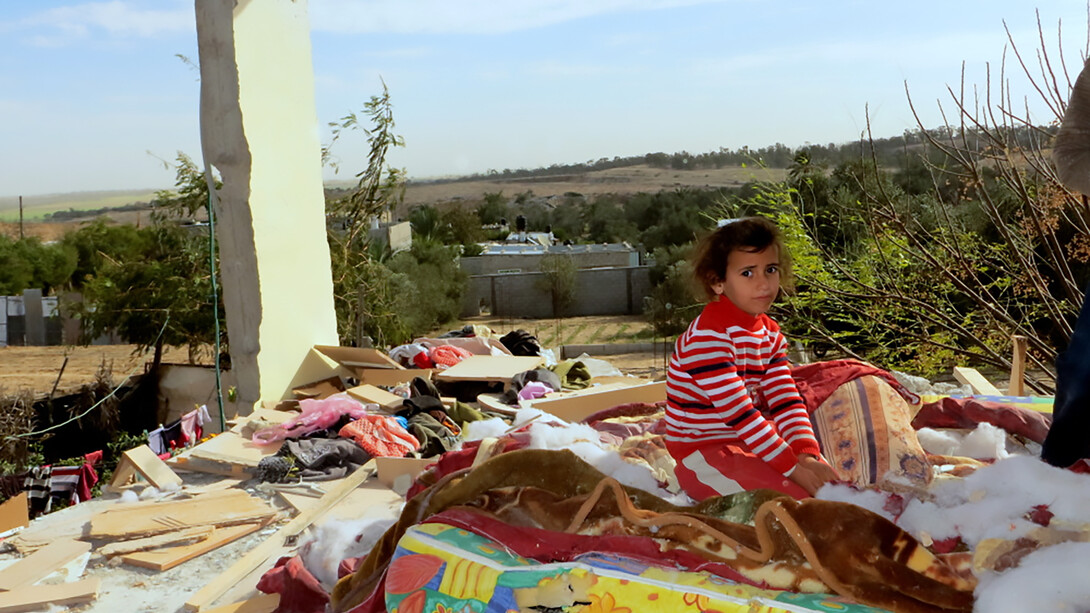
War is usually presented as a dramatic event: missiles launched, cities struck, armies moved, leaders speaking from podiums. But that view is too narrow. War is not only a sequence of violent acts. It is also a way of arranging attention, fear, belonging, memory, and daily life. It creates a whole pattern of seeing and responding. Once that pattern takes hold, war begins to feed on more than weapons. It feeds on habits, stories, institutions, and routines that make further violence appear necessary, inevitable, or even natural.
That is why war should not be understood only as a rupture in an otherwise peaceful world. It is better understood as a mode of organization. It sorts people into camps, hardens borders, simplifies history, and gives public life a new rhythm. In wartime, schools, media, transport, policing, and family life all change shape. The battlefield is only the most visible edge of a much larger arrangement. The deeper question is not simply who attacked first, but how a society becomes able to continue war, justify war, and rebuild the conditions for more war even while claiming to seek peace.
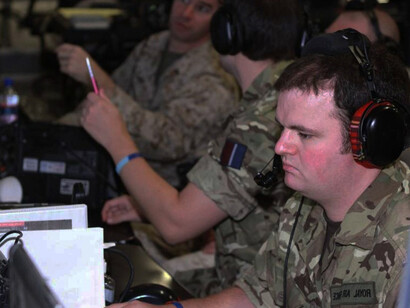
This perspective begins with a simple observation: violence lasts when the surrounding world learns how to carry it. Armies need logistics, but they also need narratives. Governments need weapons, but they also need categories such as enemy, security, sacrifice, and national survival. Citizens are trained, often gradually, to see some deaths as unbearable and others as routine. Maps, schoolbooks, commemorations, television graphics, emergency laws, border technologies, and military language all help build the conditions in which war can continue. Violence does not stand alone. It is held in place by a whole network of supporting practices.
One of the biggest errors is to think that war starts with hatred. Hatred matters, but it often comes later, intensified by repetition. What usually comes first is division. A line is drawn between those who count and those who do not, between those imagined as fully human and those recast as threat, contamination, obstacle, or target. The line may be national, racial, religious, civilisational, or ideological. Once that line hardens, almost any event can be folded into it. A negotiation becomes surrender. Restraint becomes weakness. Civilian suffering becomes a collateral necessity. The world is reduced to a few fixed roles, and complexity begins to disappear.
This is why propaganda is not secondary to war. It is one of its main engines. Propaganda does not simply persuade people to support a conflict. It narrows what can be noticed and what can be said. It replaces tangled histories with clean moral theater. It turns uncertainty into certainty and turns grief into fuel. Most importantly, it repeats. The same words, images, and emotional cues circulate until they begin to feel like reality itself. At that point, war does not have to argue for itself at every step. Much of the work has already been done.
War also becomes self-sustaining because it creates the very conditions used to justify its continuation. Bombing produces fear; fear legitimizes more bombing. Retaliation produces grief; grief is organized into revenge. Emergency powers weaken public scrutiny; the absence of scrutiny allows the emergency to expand. Even failures can become fuel. A stalled offensive becomes proof that greater force is needed. A humanitarian disaster becomes evidence of the enemy’s evil rather than a reason to stop. In this way war often stops being a tool used for limited ends and becomes a structure that keeps generating new reasons to survive.
The current war involving the United States, Israel, and Iran makes this brutally clear. What matters here is not only the scale of destruction but also the pattern the war is creating. The conflict is no longer confined to a single front. It reaches into shipping lanes, oil markets, proxy networks, intelligence channels, domestic politics, and the civilian life of multiple countries. In other words, the war is not an isolated clash between states. It is reorganizing a whole region and radiating outward into the wider world.
The war also shows how modern conflict is held together by competing stories of necessity. For Israel and the United States, the language is pre-emption, deterrence, nuclear danger, and regime weakness. For Iran, the language is sovereignty, resistance, retaliation, and survival under attack. Each side presents its violence as compelled by the violence of the other. Each side frames escalation as reluctant realism. This does not mean all claims are morally or strategically equal. It means that war survives by producing closed circles of justification in which every strike arrives already explained before the smoke clears.
That circularity is one reason war is so difficult to end. A ceasefire can interrupt shooting, but it does not by itself dismantle the habits that made violence durable. If leaders, media systems, military planners, and publics remain locked inside the same hardened narratives, then any pause becomes merely an interval between rounds. Peace fails when it is treated as a legal announcement rather than a social transformation. A country may sign an agreement and still keep alive the emotional, political, and economic machinery of future war.
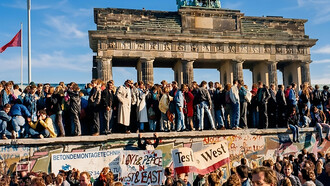
This is why peace cannot be defined only as the absence of combat. Peace requires changes in how people live together, how institutions respond to pressure, how legitimacy is rebuilt, and how memory is carried. It requires room for complexity where wartime demanded simplification. It requires structures that can absorb fear, loss, and disagreement without immediately translating them into existential threat. It requires public life that is not permanently organized around emergency. Without such changes, the social life of war remains intact even after formal hostilities end.
There is also a material side that cannot be ignored. No serious account of war can rest on discourse alone. Hunger, sanctions, extraction, occupation, displacement, destroyed infrastructure, and economic humiliation all shape the conditions in which violence becomes renewable. The symbolic and the material are bound together. A checkpoint is both concrete and theatrical. A blockade is both logistical and psychological. A ruined hospital is both a physical loss and a message about whose lives can be broken without consequence. That is why rebuilding after war is not an optional moral supplement. Housing, water, transport, courts, schools, and food systems are part of whether another pattern of life can actually hold.
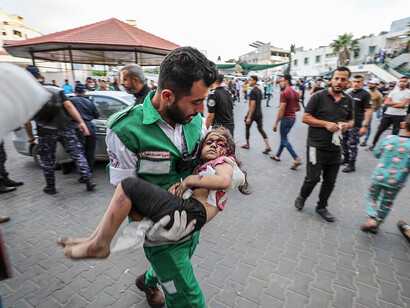
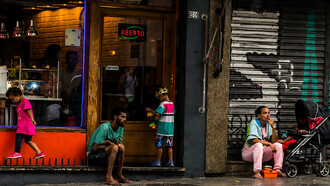
War also reaches deeply into ordinary life. It changes how people move through cities, how they imagine tomorrow, how they speak to children, how they mourn, and how they ration hope. Under prolonged conflict, emergency becomes normal. Sirens, checkpoints, shortages, surveillance, rumors, and waiting begin to structure the day. People learn to organize intimacy and attention around danger. In such conditions, war is not just a public event. It becomes a private atmosphere. Even those far from the front can be drawn into it through markets, screens, migration, and fear.
If this diagnosis is right, then resisting war means more than condemning it. It means interrupting the patterns that allow it to renew itself. Journalism matters when it restores detail against caricature. Literature matters when it gives back interior life to those reduced to categories. Institutions matter when they create channels for correction before grievance hardens into annihilating certainty. Diplomacy matters not because it is pure, but because it creates spaces where more than one reality can still be spoken in the same room. Even protest matters in a deeper sense than simple opposition: it tests whether a society can still hear what its war-making language excludes.
The hardest lesson is that war often appears powerful because it is spectacular, but it is in fact fragile in a specific way. It must be constantly maintained. It needs repetition. It needs obedient narratives. It needs institutions that can translate fear into procedure. It needs publics trained to endure contradiction without revolt. Once those supports weaken, war loses part of its hold. That does not make peace easy. Peace is slower, less theatrical, and less emotionally intoxicating. But it is the more demanding achievement because it asks societies to live without the false clarity that war provides.
To understand war well, then, is to stop seeing it only as organized killing and begin seeing it as organized world-making. It arranges perception, redistributes value, disciplines memory, and trains people in narrowed forms of belonging. The war between the United States, Israel, and Iran is a current and devastating example of that wider truth: what is unfolding is not just a military exchange but a region-wide remaking of fear, legitimacy, infrastructure, and everyday possibility.
The central political question is therefore larger than who wins. It is this: what keeps producing the conditions in which war can return? Until that question is faced, war will go on presenting itself as an answer, while quietly reproducing the world that requires it.