English
 Español
 Français
 Deutsch
 Italiano
 Português
The recent skirmish between India and Pakistan has reignited the concern over the security and safety of Kashmir and its people. In any war, one of the main objectives of the actors involved is to capture or weaken the space of power called the city. A city, whether the capital of the country or not, is very important due to its huge population & strategic importance. Making a city a battlefield for full-scale violent conflict is usually avoided due to its high human costs. But when there is no choice, a city has the potential to become a place of bloodbath for rivaling soldiers as well as its citizens. Sometimes city is intentionally made a battlefield by the host country to play its game of attrition. As cities provide opportunities for hiding and ambushing the invading parties.
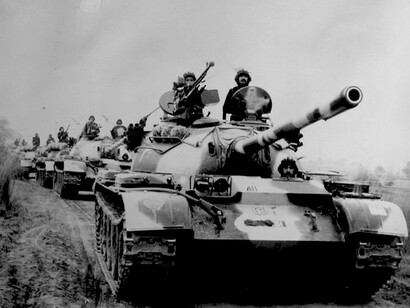
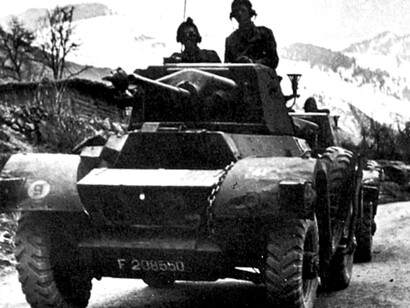
Srinagar, being a capital city of the region, had become a target during recent airstrikes. The largest airport with the biggest runway is located here, and the army uses it as a launching pad for its aircraft. Destroying the airport means disabling the activity of any military to perform aerial offensives, as well as defensive ones. During the 1947–1948 India–Pakistan War, capturing Srinagar was one of the main targets to prevent the airlifting of Indian forces. During that war, the area around the airport became a battleground, and eventually the airport at south – west of the city was successfully defended. The successful defense of the airport decided the future of Kashmir, as Srinagar Airport was the only swift option to bring in more reinforcements.
In military strategy, if one captures the entry & exit of the valley, i.e., mountain passes, then the valley would be under siege. Historically, the Kashmir Valley had access to various mountain passes that connected it to the outside world. Now that number is reduced to 02 main passes, Zojila Pass & Banihal Pass. Zojila Pass connects the valley to the Ladakh region, which itself is connected to the Indian subcontinent through the Leh–Manali road. Conversely, Banihal Pass connects the valley with the Jammu region, which borders the Punjab state of India. There is also another alternative route to Jammu through Mughal Road, and the mountain pass on this road is called Peer ki Gali, but this road is not the usual means of transportation. It is mostly used by people of Poonch to visit the valley.
The capital city of Kashmir is located on the northeastern edge of the valley, just on the foothills of the Zabarwan Range on the eastern side. At the northern side, Srinagar city is protected from the Rangil Mountain range, which forms part of the Sind Valley. On the western side, Srinagar city is covered with marshy swamps, stretches of uplands called Karewas, and most importantly, the Srinagar–Baramullah highway, which leads to Muzaffarabad, located in Pakistan-held Kashmir. On the south & south-western side are again these highlands called Karewas, which can be mistaken for shallow mountains. And on one part of these Karewas, the Srinagar Airport is located at the southwestern end of the city. So during 1947 – 1948, Srinagar was attacked from the West and the southern end of the city. These sections of the cities became venues of the battles, like the Battle of Shalteng & Budgam.
Away from the western borders, Srinagar may seem relatively safe to our common perception. But Srinagar city is still vulnerable, as it is less than 100 km from the LOC. Also, increasing use of new technology, such as remotely operated UAVs, has made it even more possible to engage the interiors of the region. Border areas of Jammu and Kashmir have always witnessed aerial attacks for the past 70 years. People in these regions have been suffering from violence ever since the two nations came into existence. During times of war as well as peace, these borders have been victims of shelling and repeated ceasefire violations.
To minimize casualties at border regions, the government has provided underground bunkers for the people and also imparted necessary skills to deal with these emergencies, like ceasefire violations. Coming back to Srinagar, people at the borders are much more prepared to deal with aerial attacks compared to people in Srinagar city. Border areas have some bunkers, but the city has almost none. Recent attacks have shown that Srinagar city can be targeted in similar patterns to border areas. So Srinagar, like any other border area, should have underground bunkers for its citizens, as a densely populated city like this may have higher casualties compared to villages or towns on the front.
Having bunkers in the city will provide a safe place for its people. Cities in Israel have them to protect their citizens from hostile neighbors. Even states with relatively peaceful relations, like Switzerland, have them for protecting their citizens in the event of any future disaster. So having these bunkers built for Srinagar city would make people safer in the event of any crisis. By providing these temporary shelters, Srinagar city will be better prepared to deal with any future onslaughts.