English
 Español
 Français
 Deutsch
 Italiano
 Português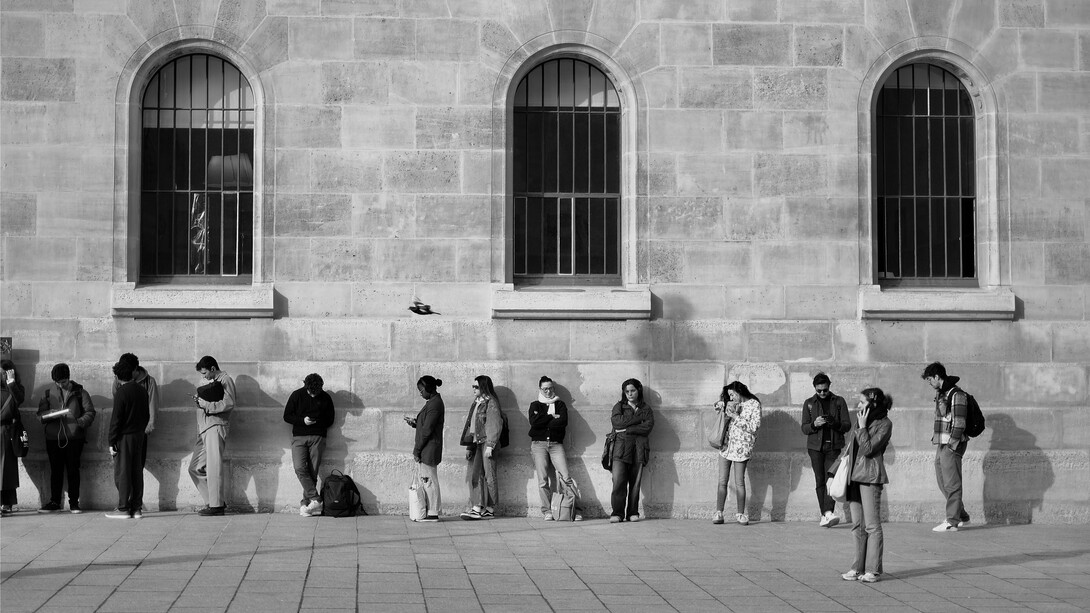
Waiting is not neutral
Everyone waits.
We wait for jobs, for approvals, for hospital appointments, for visas, for salaries, for refunds, for responses that never quite arrive. Waiting has become so normal that we rarely question it. It is treated as an inconvenience, a minor irritation, something to tolerate quietly.
But waiting is not neutral.
Waiting is political. Waiting is economic. Waiting distributes power unevenly, rewarding some people with speed and punishing others with silence. In today’s world, time itself has become a currency, and not everyone can afford to lose it.
The economy of delays
In theory, modern economies are designed to be efficient. We are told that technology has streamlined systems, reduced friction, and made access easier. Yet, for millions of people, daily life feels slower than ever.
Applications disappear into digital portals. Customer care lines loop endlessly. Government offices close early."We'll get back to you" becomes a sentence with no deadline.
What looks like inefficiency is often something else entirely: a system that shifts the cost of time onto citizens.
When you spend weeks waiting for a document, you are paying with lost income, emotional strain, and stalled plans. When healthcare appointments take months, the price is paid in anxiety, worsening illness, and sometimes irreversible damage. Waiting quietly extracts value from people without ever appearing on a balance sheet.
Who gets to move fast?
Speed is a privilege.
Those with money can pay to skip queues, hire intermediaries, access private services, or outsource waiting altogether. Expedited visa, private hospitals, and premium processing fees are all of these are ways economies monetize urgency.
Meanwhile, those without recourse wait longer, explain themselves more often, and absorb delays as part of life. Their time is treated as flexible, abundant, and ultimately disposable.
The result is a two-speed society: one where efficiency exists, but only for those who can afford it.
Bureaucracy as a gatekeeper
Bureaucracy is often described as messy or outdated, but in reality, it performs a very specific function: it filters access.
Forms, requirements, repeated documentation, and unclear instructions, these are not accidental. They determine who persists and who gives up. Who has the emotional bandwidth to keep following up? Who can afford to take days off work just to stand in line?
In many countries, people learn early that navigating systems requires strategy, patience, and often personal connections. Knowledge of “how things really work” becomes more valuable than official rules.
This informal navigation of bureaucracy is not just cultural; it is economic survival.
Waiting as emotional labour
Waiting is exhausting.
It demands hope without guarantees, patience without timelines, and calm in the face of uncertainty. People are expected to wait politely, silently, and gratefully as if access to basic services is a favor rather than a right.
Over time, this creates emotional fatigue. Not dramatic burnout, but a low-level weariness that seeps into daily life. Plans are postponed. Confidence erodes. Motivation weakens.
When systems normalize waiting, they normalize emotional strain as well.
The hidden productivity loss
Economies often measure productivity in output, hours worked, and growth rates. Rarely do they account for time lost waiting.
Waiting for approvals delays business creation. Waiting for permits stalls infrastructure.Waiting for funding freezes innovation. Waiting for employment drains skills and morale.
Multiply individual days across millions of people, and the economic cost becomes staggering yet largely invisible.
This is not inefficiency; it is misallocated time on a massive scale.
Digital systems, same old waiting
Digitisation promised faster access. In many ways, it delivered convenience, but it also introduced new forms of delay.
Automated response replaces human accountability. Portals crash without explanation. Errors cannot be corrected because "The system does not allow it." Responsibility dissolves into software.
Digital waiting feels coder. There is no desk to approach, no person to appeal to, only silence behind a screen.
Technology did not remove bureaucracy. It simply made it quieter.
Global, but unequal
The politics of waiting is global, but its impact is uneven.
In some counties, waiting means inconvenience. In others, it determines whether people eat, work, travel, or receive care. For migrants, refugees, informal workers, and low-income communities, waiting can suspend life indefinitely.
The entire future is placed on hold, pending approvals that may never come. Waiting becomes a form of control, not through force, but through time.
Why waiting persists
If waiting is so costly, why does it persist?
Because it shifts responsibility away from institutions and onto individuals. If a system is slow, the burden falls on the person navigating it to follow up, remain patient, and adapt.
Waiting also reduces visible conflict. Delays soften resistance. People grow tired before they grow angry. Urgency fades into resignation.
From a governance perspective, waiting is efficient precisely because it’s exhausting.
Rethinking time as a public resource
Time is not infinite. It is not evenly distributed. And I should not be casually consumed by systems that are meant to serve people.
If economies treated time as a public resource, something to protect rather than waste, policy decisions would look different. Processes would be designed around human capacity, not institutional convenience.
Speed would not be a luxury. It would be a standard.
The quiet demand
People rarely protest waiting. They adapt to it. They plan around it. They joke about it. They internalise it.
But beneath the jokes is a quiet demand: to be taken seriously, to be responded to, to have one's time acknowledged as valuable.
Because at the end of the day, waiting is not just about time. It is about dignity.
The true measure of an economy is not how fast money moves but how long people are forced to wait.
Waiting reveals who is prioritised, who is postponed, and who is invisible. It exposes the real hierarchy beneath policy promises and growth statistics.
Until time is treated as something citizens deserve to keep rather than something systems are free to consume, waiting will remain one of the most powerful tools shaping everyday life.
And most people will continue paying for it quietly, minute by minute.