English
 Español
 Français
 Deutsch
 Italiano
 Português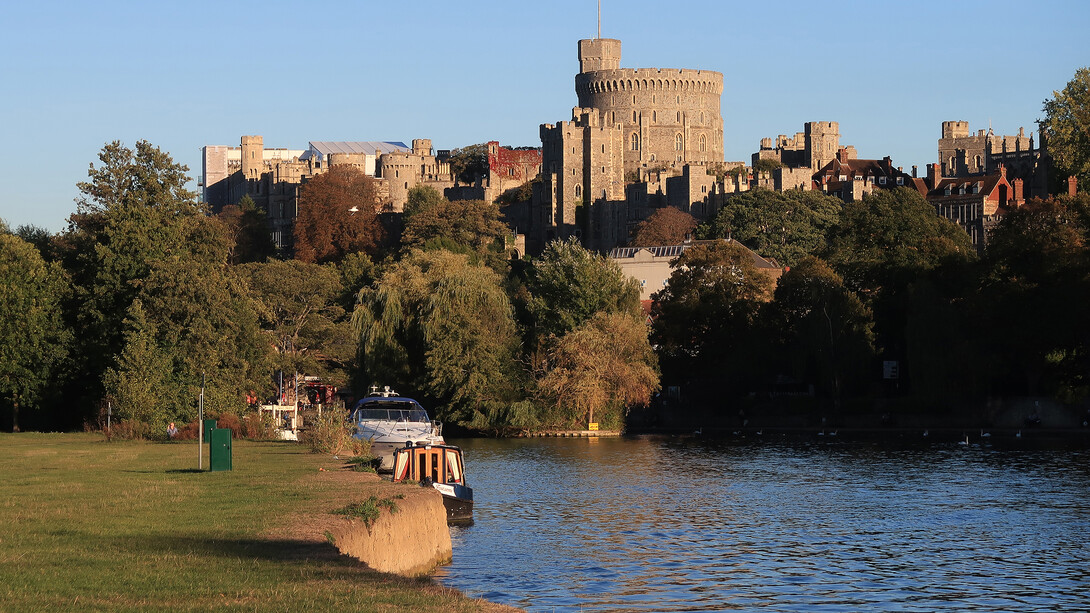
There are towns that feel historic, and then there is Windsor, where history does not sit quietly in museums but rises above you in stone towers and royal standards. Just a short journey from London, Windsor unfolds as a place where monarchy, tradition, and everyday English charm exist side by side in effortless harmony. Visiting in summer, I found the town bathed in golden light, its castle walls glowing warmly against a cloudless sky, while the River Thames shimmered below like a silver thread stitching the landscape together. The air carried the soft hum of conversation, distant church bells, and the gentle rhythm of boats cutting through water. It was a place alive not only with tourists and locals but also with centuries of accumulated memory.
Windsor Castle: a living chronicle
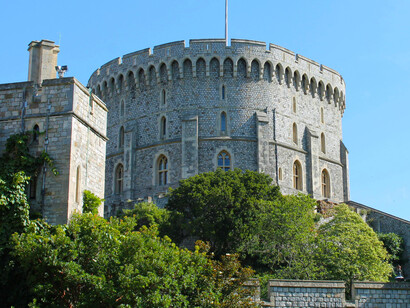
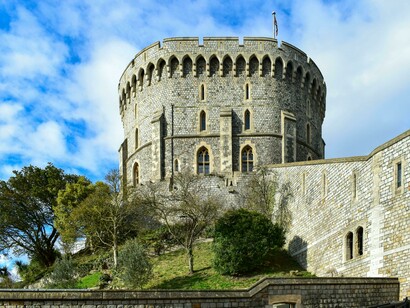
At the heart of the town stands Windsor Castle, the oldest and largest inhabited castle in the world. Unlike many historic fortresses that exist only as relics of conflict and conquest, Windsor Castle remains an active royal residence—a living symbol of continuity stretching back nearly a thousand years to William the Conqueror. Its presence dominates the skyline, yet it does not feel imposing in an aggressive way; rather, it feels steady, grounded, and certain of its place in history.
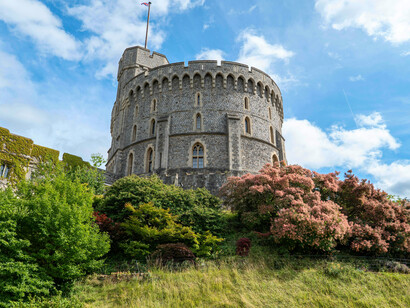
Walking through its gates, I felt the quiet grandeur of centuries unfold. The Round Tower rises with a commanding dignity, offering panoramic views over the Thames Valley. The stone beneath my feet has carried monarchs, courtiers, soldiers, and visitors from across the globe. There is something humbling about standing where so much history has quietly passed.
The State Apartments are a symphony of gilded ceilings, elaborate tapestries, and portraits that seem to watch visitors with knowing eyes. Each room tells a chapter of Britain’s constitutional story, from medieval monarchs who ruled by divine right to modern sovereigns who embody constitutional continuity. The walls glow with works by masters such as Rembrandt and Rubens. Chandeliers shimmer overhead, refracting sunlight into fragments that dance across polished floors. Yet despite the splendor, the rooms do not feel frozen. They feel prepared—as though a reception could begin at any moment.
Inside St. George’s Chapel, the atmosphere shifts from splendor to reverence. The Gothic stonework rises delicately overhead, its fan-vaulted ceiling appearing almost weightless despite the centuries it has endured. Light filters through stained glass, scattering jewel-toned patterns across the floor. This is not only a chapel of architectural beauty but also a place of profound national memory. Monarchs are buried here, and royal weddings have filled these aisles with ceremony and celebration. Standing quietly beneath its arches, I felt the weight of tradition balanced with something intimate and human. History here is not abstract; it is personal, commemorated in names carved into stone.
The long walk and Windsor Great Park
Beyond the castle walls stretches Windsor Great Park, a vast green landscape that softens the formality of royal architecture. Stepping out from the castle’s structured grandeur into open parkland feels like exhaling after holding one’s breath. The Long Walk extends in a perfectly straight line for nearly three miles, leading the eye toward the Copper Horse statue of King George III perched atop Snow Hill. The symmetry is striking—an avenue designed not only for movement but also for perspective.
In summer, the avenue felt alive yet peaceful. Families strolled beneath the canopy of trees whose leaves whispered gently in the warm breeze. Cyclists moved steadily along the path, and runners passed with quiet determination. Dogs darted happily across the grass, their joy unconcerned with royal associations. The distant outline of the castle framed by symmetrical rows of greenery created a perspective so precise it seemed almost painted, as though Constable himself might have set up an easel nearby.
As I walked, I was struck by how Windsor balances ceremony with openness. The same grounds that host royal processions and state occasions also welcome ordinary visitors to picnic, jog, and breathe deeply in the warm afternoon air. The grandeur does not exclude; it coexists with the everyday. Sitting briefly on the grass, I watched clouds drift lazily across the wide English sky. In that moment, Windsor felt less like a symbol and more like a living landscape shared between crown and country.
Across the Thames to Eton
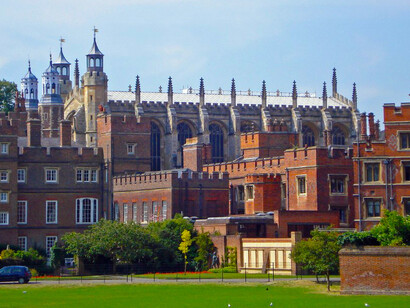
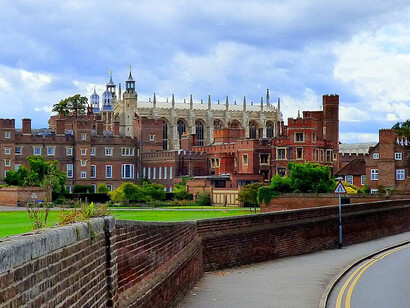
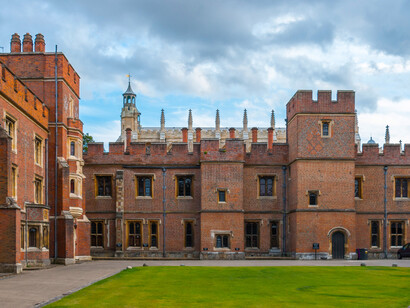
Crossing the bridge over the Thames, I entered the quieter streets of Eton. The shift was subtle but perceptible. Where Windsor hums with royal tourism, Eton feels enclosed and introspective. The red brick buildings and medieval courtyards seem almost frozen in time, their weathered facades softened by centuries of rain and sunlight.
Founded in 1440, Eton College has educated generations of leaders—prime ministers, diplomats, writers, and thinkers. Yet the town itself feels modest and intimate. Students in formal attire walked between classes, their measured pace reinforcing the sense of continuity that defines Windsor and its surroundings. The black tailcoats and crisp collars evoke tradition without spectacle.
The cobbled lanes, small bookshops, and historic chapels lend the area an atmosphere that feels scholarly and serene. There is a quiet confidence here, an understanding that education, like monarchy, is built upon ritual and repetition. Peering into a narrow alleyway, I glimpsed ivy climbing ancient walls and bicycles leaning casually against stone. The world beyond may move quickly, but within Eton’s boundaries, time seems to stretch gently, measured in academic terms rather than headlines.
Riverside evenings
As evening approached, I returned to the riverside. The Thames, so lively in the afternoon, had softened into something reflective and unhurried. Boats drifted lazily across the water, their reflections wavering like brushstrokes in an impressionist painting. Swans glided with quiet authority, as if aware they too were part of Windsor’s timeless tableau.
Couples lingered along the promenade. Laughter rose from outdoor cafés. The scent of summer—fresh grass, river air, distant flowers—hung lightly in the cooling breeze. The castle, illuminated by the lowering sun, shifted from gold to amber to rose. Its silhouette grew softer, less commanding, and more contemplative.
I sat on a bench overlooking the river, watching as the sky deepened into shades of lavender and pale blue. In that moment, Windsor revealed its true character. Beneath the crown and ceremony lies a town that feels deeply human. It is a place where history feels alive, yet never distant; where grandeur does not overshadow warmth; and where summer light transforms ancient stone into something almost luminous.
Windsor does not demand attention through spectacle. Instead, it invites reflection. It reminds visitors that continuity can coexist with change, that institutions endure because they adapt, and that even the most storied walls are part of everyday life. As twilight settled over the Thames and the first evening lights flickered on, I realized that Windsor is not merely a destination to be visited. It is an experience to be absorbed slowly—like summer itself—lingering long after the journey home.