English
 Español
 Français
 Deutsch
 Italiano
 Português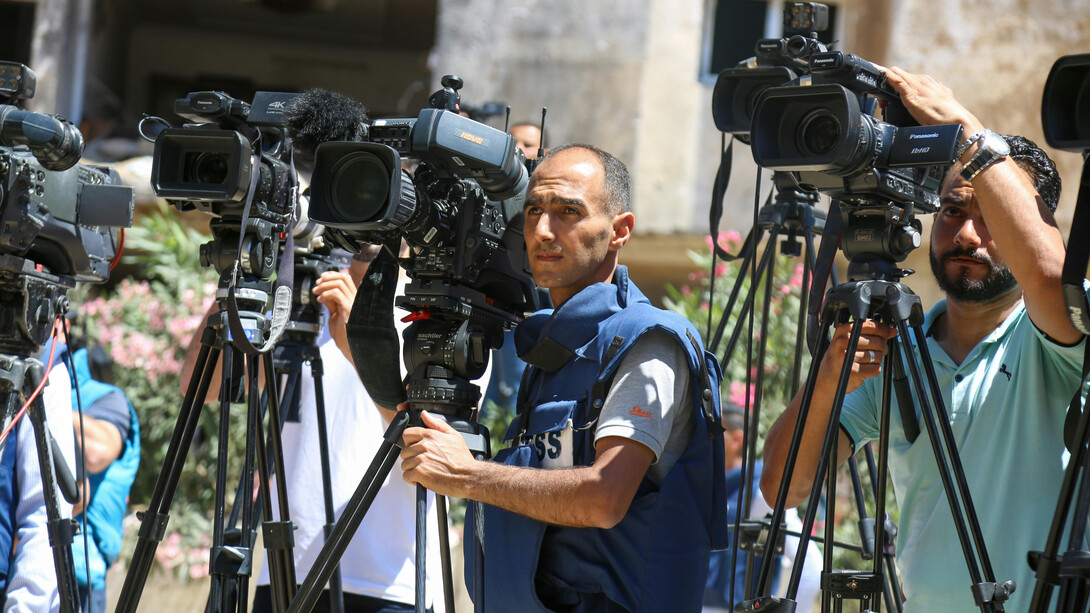
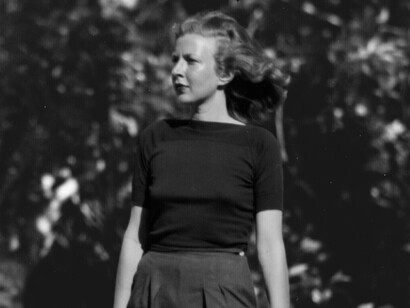
Last year, The Guardian told the story of Fatma Hassouna. She was a 25-year-old photojournalist in Gaza who spent 18 months documenting destruction and violence there. Months before her wedding date, she and six members of her family were killed by an Israeli airstrike.
“If I die, I want a loud death,” she had written. “I don’t want to be just breaking news, or a number in a group. I want a death the world will hear, an impact that will remain through time, and a timeless image that cannot be buried by time or place.”
All good journalists share that hope if they are killed or “disappeared” in the line of duty. Too many are. Their business can be risky because powerful people don’t want anyone to shed light on the dark side of influence.
In addition, journalism must swim against the strong and growing current of falsehoods. There are over 90 authoritarian regimes in the world today, lording over 70 percent of the population. Authoritarians depend on suppressing or manipulating information to generate fear and discredit opposition. There’s a reason that one of their first objectives is to take over a nation’s media and control its news.
Artificial intelligence gives anyone with an internet connection the ability to cast big nets for facts and to help digest them. But it’s still in its infancy, prone to errors, hallucinations, bad data, plagiarism, and most worrisome of all, deep fakery.
I live in the United States, the world’s oldest existing democracy. One of its principal founders, Thomas Jefferson, warned that democracy cannot survive without an informed citizenry. That’s why the U.S. Constitution guarantees freedom of the press. No other industry is given such special treatment in the founding documents.
There has always been an adversarial relationship between the news media and political leaders. However, the current president wages war on the press, especially the traditional news outlets. Since entering politics a decade ago, Donald Trump has called news reporters “the enemy of the American people.” He openly lectures and shouts personal insults at reporters who ask him tough questions. He has encouraged his supporters to physically attack journalists. It has had an effect.
Only 43 percent of Americans say they are confident that journalists act in the public's best interests today. In its latest ranking of press freedoms around the world, Reporters Without Borders (RWB) placed the United States a disgraceful 57th among the 180 countries analyzed.
Trump’s troubled relationship with the truth has also taken a toll on his credibility. Only one in three Americans trusts him today. He is using government lawyers and communications laws to sue trusted legacy news networks that air content he doesn’t like. His administration is harassing and arresting journalists covering his brutal crackdown on immigrants.
Rather than maintaining its objectivity, much of America’s news media has inched to the political left or right after learning how profitable it is to tell audiences what they want to hear rather than what they need to know. Conservative billionaires in the U.S. who are buying, consolidating, and often interfering with the objectivity of legacy news media, which they believe have drifted too far left.
Forbes reports, “trust in mainstream media is fractured. Consumers are skeptical, discerning, and deeply aware that media is no longer a neutral gatekeeper. Algorithms shape what people see. Sponsored content blurs into editorial. Political bias, pay-to-play dynamics, and declining newsroom resources have eroded confidence. As a result, one press mention, no matter how reputable the outlet, rarely carries the weight it once did.”
A Reuters study concludes that “Politicians, business leaders and celebrities are increasingly bypassing traditional outlets altogether, opting instead to speak directly to sympathetic podcasters, YouTubers or social media personalities.”
Social media gives new significance to the observation that lies travel halfway round the world before the truth can put on its pants. Today, the truth can’t even get its pants out of the closet.
AI summarizes, “The global news media landscape is undergoing a complex evolution, characterized less by a simple, uniform drift to the right, and more by fragmentation, a shift toward ‘personality-led’ media, and the rapid adoption of AI. While some legacy outlets are facing ownership shifts and political pressure, the overarching trend is a move toward a more polarized, fragmented, and ‘intentional’ media environment where audiences actively seek out content aligning with their existing views.”
RWB notes that “after a century of gradual expansion of press rights in the United States, the country is experiencing its first significant and prolonged decline in press freedom in modern history, and Donald Trump's return to the presidency is greatly exacerbating the situation."
However, the erosion of press freedom is not just a problem in the U.S. RWB says 194 nations have some language protecting press freedom, but few enforce it. Even in healthy democracies, leaders worry that watchdogs will bite them, so they muzzle them.
Journalists may be killed or imprisoned because authorities object to what they write, or fear what they might. Worldwide last year,128 journalists and media workers, including 10 women, were killed. Relatively few, nine, died in accidents. Military, paramilitary, organized crime, and dictatorial governments killed dozens. More than 500 reporters are “detained,” most imprisoned in China and Russia.
“Key witnesses to history, journalists have gradually become collateral victims, inconvenient eyewitnesses, bargaining chips, pawns in diplomatic games, men and women to be ‘eliminated,’” according to Thibaut Bruttin, RWB’s director general. “No one gives their lives for journalism — it is taken from them; journalists do not just die — they are killed.”
As you might have noticed, I am biased about journalism’s value. I have been a print and photojournalist since age 19, when the U.S. Army sent me to Vietnam fresh out of high school after nine weeks of cursory training. My real education over the following year came from working side by side with and competing against award-winning professionals who had spent much of their careers covering wars.
Technically, we were noncombatants. Patches on our shirts with the words Bao Chi (the press) were supposed to protect us from prison, torture, or execution if we were captured. However, the patch offered no protection against bullets and shrapnel.
Back in the U.S. several years later, I was the editorial writer for a moderately conservative daily newspaper. One week, when the editor was on vacation, I wrote a column predicting that as television and photojournalism became more ubiquitous on battlefields, they would discourage atrocities and needless wars. The editor thought the piece was embarrassingly naive.
Yet I knew the impact of news footage that recorded the ugliest and most heart-wrenching moments of the Vietnam War, America’s longest at the time. From the comfort of their living rooms, families watched a Vietnamese child running for her life from a napalm attack, naked with the clothes burned off her body. They saw a Viet Cong officer’s distorted face as he was shot in the head by a South Vietnamese police chief. They witnessed a Buddhist monk calmly setting himself on fire and being engulfed in flames on a Saigon street.
I was a veteran of the war at home as well as the one in Vietnam. Reporting for the Associated Press, I covered the civil rights and anti-war movements in the 1970s. I believe the film and photos of police beating African Americans with batons and attacking them with dogs had a significant impact on the eventual passage of laws protecting the voting rights of minority Americans.
Newspapers published a photo of a young antiwar protester lying face-down in the street, with a female student screaming over his body, after National Guardsmen shot and killed him at Kent State University in Ohio. Images like that made it harder for the Nixon administration to continue the war long after it knew the U.S. could not win.
Today, every citizen with a smartphone is a photojournalist. In 2020, bystanders photographed a Minneapolis police officer casually suffocating George Floyd to death in 2020. The picture ignited nationwide demonstrations against policy brutality.
Weeks ago, just blocks from the Floyd murder, witnesses recorded federal agents shooting a young mother to death during protests against the Trump administration’s brutal immigrant raids. Two weeks later, protesters videotaped federal officers executing a male nurse after he tried to help a woman they had thrown to the ground. In all three cases – Floyd, the mother, and the nurse – the photos and videos proved that the Trump administration lied when it claimed its officers shot in self-defense.
The administration has refused to investigate these murders to determine whether they were justified. The videos allowed the American people to judge for themselves. Now, two-thirds of them agree that the president’s immigration policies have gone too far, and Trump has changed some of its tactics against protestors.
In the weeks that followed, news footage captured thousands of citizens marching through the streets of Minneapolis against Trump’s policies, despite sub-zero temperatures and obvious danger.
Journalism at its best defends human rights and dignity by recording, freezing, and sharing the moments when they are violated. Freedom requires that the profession be protected, yet press freedom worldwide has sunk to an “unprecedented, critical low” in 90 countries, according to RWB.
Anthony Bellanger, general secretary of the International Federation of Journalists, says journalists “are being targeted with impunity, simply for doing their job. Governments must act now to protect media workers, bring killers to justice, and uphold press freedoms. The world can no longer wait.”
A superb photojournalist with whom I worked long ago, Steven Raymer, puts it well. We must protect the integrity of written and photojournalism because they are “the core mechanism by which state power is witnessed, contested, and remembered.”
In the name of Fatma Hassouna and the other 127 journalists who died doing their jobs last year, let it be so.