English
 Español
 Français
 Deutsch
 Italiano
 Português
By any measure—by every measure—the world just feels like a more dangerous place. People's gut feelings, weighty academic analysis, and stark economic and geopolitical realities are all aligned: a collective sense of dread shrouds whatever hopes we might have had of a better future.
No surprise then that the Doomsday Clock (first developed by nuclear experts at the Bulletin of Atomic Scientists in 1947) now stands at 89 seconds before midnight—the closest that second hand has ever gotten to the top of the hour.
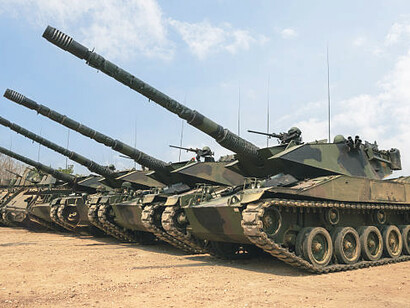
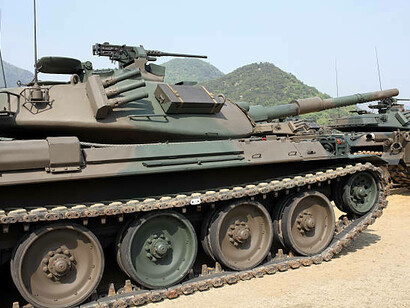
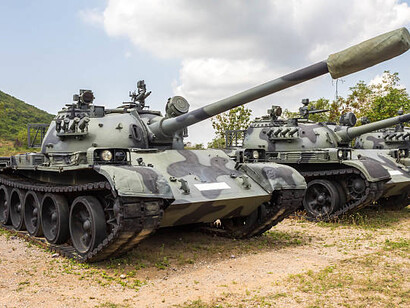
So, what could be more rational, in such a dangerous and dread-inducing world, than for governments to ramp up spending on defense? To seek to reassure citizens that their nation’s security is safe in their hands—by committing an ever-higher percentage of GDP to every conceivable kind of military expenditure?
I'm old enough to remember that sense of elation that people felt when all the talk was of the huge “peace dividend” that would accrue from the end of the Cold War in the early 1990s, freeing up precious resources to fund public services, innovation, new infrastructure, and so on. And this wasn't all just talk: economists in Europe have assessed the cumulative benefit of that dividend as somewhere between €3 billion and €4 billion a year over a 20-year period.
That was not a good time for what US President Dwight Eisenhower first described as “the military-industrial complex” in his Farewell Address to the Nation in 1961. He'd seen how powerful arms companies had established themselves at the very heart of America's economy since the end of the Second World War. And it worried him:
We must guard against the acquisition of unwarranted influence, whether sought or unsought, by the military-industrial complex. The potential for the disastrous rise of misplaced power exists and will persist. We must never let the weight of this combination endanger our liberties or democratic processes.
65 years on, that military-industrial complex has never been more powerful. Defense and security spending has been on an upward trajectory pretty much since the end of the 20th century. The 11th of September later this year will mark the 25th anniversary of al Qaeda’s attack on the Twin Towers in New York, with a direct trail from that traumatic moment through to the start of the Iraq War in 2003 and the horrendous chaos that this unleashed. Perhaps the most authoritative study ever done of this decade (by the US National Institutes of Health) revealed that more than half a million Iraqis (one in 40 of the country's total population) died from violent causes during that time.
One might imagine that this would mark a high point in the influence of the military-industrial complex within Western governments. In fact, we've witnessed the very opposite, with total global defense spending increasing by more than a third between 2015 and 2024, according to the Stockholm International Peace Research Institute. That figure now stands at a completely mind-boggling $2.7 trillion a year.
All of which leads to one of the most consequential paradoxes of our age: the more we spend on defense, the less secure we are.
All NATO countries are beginning to realize the implications of this as defense ministries lay claim to a higher and higher percentage of GDP, squeezing budgets on education, health and social care, infrastructure, international development, the environment, and so on. And with President Trump regularly bragging about the way in which he intends to further increase the US Department of War’s budget (from an already staggering $1 trillion to $1.5 trillion) over the next few years, the consequences of this madness risk undermining economic, social, and environmental security around the world.
For fiscal conservatives in the Republican Party, this is becoming a total nightmare. Back in 2019, interest on U.S. debt stood at $375 billion, roughly 1.7% of GDP at that time. By FY 2025, it had ballooned to $925 billion, more than 3% of GDP.
There are all sorts of reasons for this (not least interest rates in the US staying high because of inflation and because of the huge tax giveaways for the super-rich in the USA in President Trump's very own One Big Beautiful Act), but the huge hikes in defense spending, year on year, have had a massive impact on taking US debt to an all-time high of $38 trillion.
(Weirdly, both expenditure on defense and on debt repayment now come in at around $1 trillion a year).
It's not just fiscal conservatives that are sounding a more and more strident alarm call about the direction of travel. It's increasingly clear that every single additional debt-funded defense dollar is essentially an attack on social security, an attack on economic stability, and an attack on what environmentalists now describe as “planetary solvency”—maintaining critical life-support systems (climate, water, soil, forests, etc.) as the foundation for the entire global economy.
It bears repeating: the more we spend on defense, the less secure we are.
But getting off this suicidally high-risk treadmill is no easy task. Citizens have gotten very used to the non-stop rhetoric of “the more we spend, the safer we are.” Even for radical left-leaning/green parties, bucking the trend by promising to make our communities, nation-states, and the entire world more secure by reducing rather than increasing defense expenditure has proved to be all but impossible given what are flagged as “the terminal electoral consequences” of any such heterodoxy—as the Green Party here in the UK has discovered as it seeks to win support for its policy of getting out of NATO.
All of which means, as so often these days, that things will get crazier—a lot crazier—before some kind of fiscal and geopolitical sanity is restored.