English
 Español
 Français
 Deutsch
 Italiano
 Português
In a world fractured by political distrust and government scandal, few symbols have travelled as far or as strangely as a cartoon pirate flag. The Jolly Roger of the Straw Hat Pirates, the iconic skull with a straw hat from Eiichiro Oda’s One Piece, has drifted out of the pages of manga and off television screens to become a rallying emblem for anti-corruption movements around the world. Its appearance in protests from Southeast Asia to Latin America and parts of Africa has startled analysts and irritated governments. But its rise is neither accidental nor superficial.
Behind the playful grin of the Straw Hat skull lies a deeper, more uncomfortable truth: an entire generation is so disillusioned with political systems that they are turning to fictional narratives to fill the moral void left by broken institutions.
The global adoption of this symbol reveals a phenomenon far larger than pop culture. It shows a population, particularly the youth, rejecting traditional political language, which they often see as compromised or co-opted, and instead embracing a new vocabulary born of shared global media.
The Straw Hat flag has become a shorthand for rebellion, a visual code for exposing the rot of governance, and a signal that the younger generation no longer feels represented by nationalistic or partisan imagery. And as corruption scandals continue to erupt globally, from procurement anomalies and misused funds to rigged contracts and political dynasties, the pirate emblem now serves as both a protest banner and an indictment.
To understand the symbol’s rise, one must begin in Indonesia, where the Jolly Roger made its most politically charged appearance. In the early months of 2025, Indonesia’s transport sector was hit by rising fuel costs, policy shifts, and economic decisions that many small and independent truck drivers believed were made to favour major corporate players. Within days, convoys of trucks across Java swapped out the national flag for the black-and-white pirate emblem.
Drivers who felt exhausted, unheard, and financially cornered raised the Straw Hat flag in quiet but pointed defiance. In video clips circulated widely on social media, the grinning skull fluttered from truck roofs as long lines of vehicles crawled down major highways. It was not anarchy they were signalling; it was frustration. They were telling the government that they believed the system had been captured, corrupted, and re-engineered to leave them behind.
Government reaction was swift and severe. Certain officials dismissed the movement as childish, tasteless, or disrespectful. Others deemed it unpatriotic, even dangerous. Yet the more authorities attempted to discredit the symbol, the more it gained traction.
Indonesian youth, already steeped in online culture and disillusioned by political manoeuvring, adopted the pirate flag as their own. They posted photos of it taped on university bulletin boards, hung from dorm windows, painted onto placards, and sewn onto jackets. What began as an economic protest transformed into a cultural act of defiance. It was not merely a rejection of policy but of the political establishment itself.
Then the symbol appeared in Nepal. The Himalayan nation has struggled for years with persistent corruption allegations, political gridlock, and public mistrust toward its ruling class. When thousands of Nepali youths began organizing rallies demanding government transparency and accountability, many arrived carrying the One Piece flag. In Kathmandu, protesters unfurled giant versions of the emblem as they marched toward government buildings, chanting for reform and an end to what they described as systemic theft of the nation's future.
For Nepali youth, the flag represented more than a cartoon reference; it was a symbol of reclaimed power. They viewed it as a statement that moral leadership had been outsourced, not to politicians but to stories that embodied the values they felt were missing from reality. In a country where political factions often control imagery and messaging, the Straw Hat flag was a rare visual object that no party could claim. It was untainted by the histories of political betrayal that shadowed national symbols. Its neutrality, ironically, made it radical.
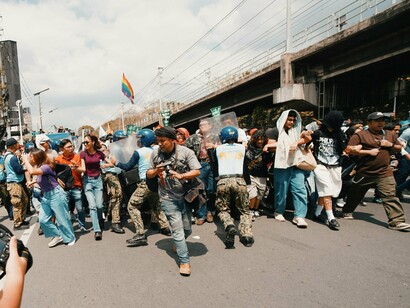
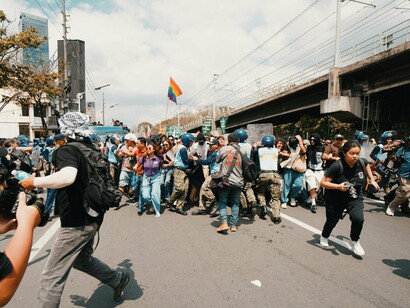
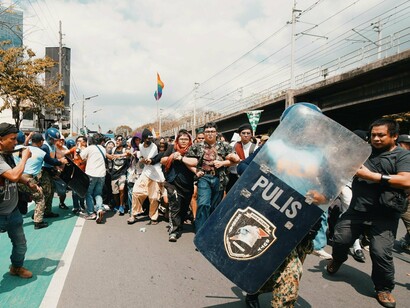
Meanwhile, the Philippines, long grappling with recurring corruption scandals, questionable public contracts, and controversies around government procurement, has seen the quiet rise of the pirate emblem in street demonstrations and campus protests. Though not as widespread as in Indonesia or Nepal, its presence is unmistakable. Manila students have carried it during rallies calling out misused budgets, overpriced public goods, and irregular expenditures that remain unresolved. Among activists, the flag serves as a statement of youthful dissent in a political landscape often dominated by traditional power blocs and dynastic influence.
The pirate flag’s Philippine supporters say it captures the absurdity of their political frustrations. They argue that it highlights the disconnect between young people’s lived realities and the polished narratives delivered by officials. The skull’s grin, they say, mocks the repetitive cycle of scandals, hearings, investigations, and stagnation. The straw hat, a symbol of resilience and optimism, offers a contrast to the cynicism that corruption breeds. For many Filipino protesters, the pirate emblem is a reminder that courage and community, the central themes of One Piece, remain powerful when institutions fail.
In Latin America, where anti-corruption protests have a long and often dangerous history, the symbol has likewise taken hold. In Mexico, student demonstrators have carried the One Piece flag in marches demanding action on high-profile corruption cases and government collusion with organized crime.
For these youth, the story of the Straw Hat Pirates resonates deeply: a ragtag crew fighting an oppressive world government rife with abuse, privilege, and manipulation. The parallels, they argue, are strikingly real. When they hold the flag aloft, they do so not as anime fans seeking spectacle but as citizens drawing from a narrative that articulates their struggle better than their political institutions have been able to.
In parts of Africa, including Madagascar, the flag has appeared in community-led protests against the mismanagement of basic services, power outages, water shortages, and questionable development deals. Interestingly, some groups have localized the symbol, altered the straw hat or added markings that reflect cultural identity. This blending of global media and local expression demonstrates how the pirate emblem has transcended its origins. It is not merely an imported symbol; it is a reinterpreted one.
What ties these different countries together is not shared language, culture, or political structure, but a shared disillusionment with governance. The One Piece Jolly Roger offers something national flags and partisan banners no longer do: a sense of unfiltered honesty. It carries no history of broken promises. It represents no political dynasty. It cannot be opted by ruling parties or oligarchs. It belongs to the people who carry it, and to no one else.
But the rise of the pirate flag also exposes a deeper crisis: the collapse of trust between youth and the political systems meant to serve them. When young people turn to a fictional pirate crew for symbolic leadership, it signals not immaturity but emotional truth. They no longer see their leaders as protectors of the public good. They see them as characters in a different kind of story, one defined by impunity, self-preservation, and the hoarding of power.
In this context, the Straw Hat Jolly Roger becomes a form of cultural whistleblowing. It announces that the social contract has ruptured. It exposes that traditional symbolism, once a source of unity, now carries the baggage of betrayal. And it suggests that political legitimacy, at least for the youth, has gravitated away from institutions and toward narratives that offer moral clarity, even if those narratives come from fiction.
Yet governments often respond with defensiveness rather than reflection. Officials in various countries have condemned the flag as childish, foreign, subversive, or disrespectful, missing the deeper meaning beneath its imagery. They fail to understand that suppressing the symbol only amplifies its power. When police confiscate pirate flags or when officials equate them with anti-state sentiment, they inadvertently confirm the protesters’ suspicions: that those in power are more concerned with optics than with accountability.
Still, the enduring question remains: will the pirate flag movement translate into real political reform? Symbolic protest alone cannot dismantle entrenched corruption. Movements must evolve from symbolic dissent to organized civic engagement, policy advocacy, voting strength, and long-term institution-building. Yet dismissing symbolism as merely aesthetic ignores its ability to mobilize and unify. The global protests of the past decade, from Chile to Hong Kong, demonstrate how symbols become rallying anchors, shaping identity, morale, and solidarity.
The One Piece Jolly Roger is now one of those anchors. Its rise tells a story not of fandom but of frustration, not of piracy but of principle. It marks a turning point in youth political expression, where the old language of protest has been replaced by a global cultural lexicon shaped online, across borders, and beyond ideology.
In a time when political institutions feel distant and compromised, a simple black flag with a smiling skull and a straw hat has become a reminder that people, especially the young, will always find new ways to demand justice. The pirate flag may have been born in fiction, but its meaning in the streets is real, powerful, and impossible to ignore.