English
 Español
 Français
 Deutsch
 Italiano
 Português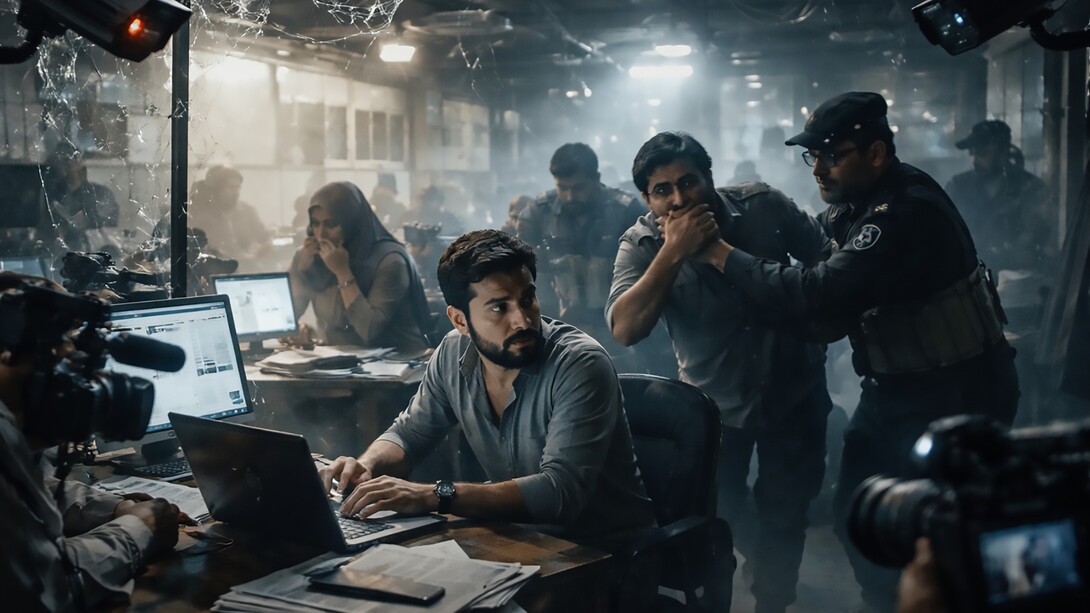
From Hungary to India, from Turkey to Egypt, governments have learned that controlling narratives is often more effective than controlling territory. Pakistan’s experience fits squarely within this global trend—but with a uniquely dangerous twist. Here, repression does not always arrive in the form of a single dictator or emergency law. Instead, it emerges through a complex and shifting system of political influence, legal constraints, economic pressure, and institutional fear.
Pakistan has long claimed a vibrant and pluralistic media environment. On the surface, dozens of television channels, newspapers, and digital platforms suggest diversity. Yet beneath this apparent openness lies a shrinking space for independent journalism—one in which the cost of speaking freely has become increasingly high.
Is the state responsible?
International observers often ask a direct question: Is the Pakistani state responsible for the decline of press freedom?
The answer is yes—but only partially.
Successive governments, along with powerful unelected institutions, have contributed to this environment through restrictive laws, selective enforcement, surveillance, and informal pressure. However, focusing solely on the state obscures a deeper and more uncomfortable reality: journalism itself has been complicit in its own weakening.
From public service to power brokerage
Historically, Pakistani journalism functioned—however imperfectly—as a public service. Reporters challenged military rule, exposed corruption, and mobilized public opinion during democratic struggles. Over time, however, the media transformed into a high-revenue industry. Advertising money, ratings wars, and political access reshaped newsroom priorities.
As profits increased, media ownership consolidated. Large conglomerates with political and corporate ties gained control over editorial lines. Journalists were no longer judged solely by their reporting but by their usefulness to powerful actors. Editorial independence eroded, and journalism shifted from watchdog to power broker.
For international audiences, this mirrors patterns seen elsewhere: when the media becomes too closely tied to power, it loses its ability to question it.
Fragmentation as a tool of control
The most damaging consequence of this transformation was fragmentation. The Pakistani press fractured into ideological and political camps aligned with competing parties, personalities, and institutions. Professional solidarity gave way to tribal loyalty.
Each camp claimed moral superiority. Journalists began viewing repression not as a threat to press freedom but as a weapon against rivals. When one group faced arrests, censorship, or intimidation, others either stayed silent or justified the action as “necessary,” “legal,” or “deserved.”
This fragmentation proved invaluable to those in power.
A repeating cycle across governments
Unlike classic authoritarian states, Pakistan’s repression of the media does not depend on one permanent regime. It adapts.
When one political party governs, journalists aligned with the opposition are targeted. When power changes hands, the same tactics are reused—only the victims change. Each cycle is rationalized as accountability, reform, or national security.
From the outside, this revolving-door repression creates the illusion of neutrality. In reality, it normalizes censorship and makes resistance difficult. Principle is replaced by convenience; freedom becomes conditional.
Journalism’s silent bargain
Was this outcome planned? Partially. But it was also enabled by a series of silent bargains.
Journalists and media owners often accepted short-term protection, access, or financial stability in exchange for compliance. Each compromise seemed minor at the time. Collectively, they proved devastating.
This is a pattern international audiences will recognize: authoritarianism rarely crushes the press outright—it co-opts it first.
Legal, economic, and psychological pressure
Today, Pakistan’s media operates under layered constraints. Laws governing cybercrime, defamation, and national security are frequently vague and selectively enforced. Economic pressure—through advertising controls, licensing threats, and layoffs—disciplines dissent. Surveillance and intimidation foster self-censorship long before a story reaches the public.
The result is a newsroom culture governed not by editorial judgment but by fear.
The cost of disunity
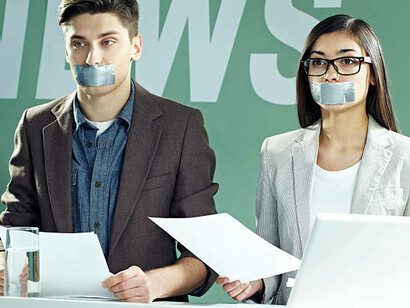
The greatest tragedy is not the existence of repression but the absence of collective resistance. When journalists fail to defend colleagues whose views they oppose, they weaken the entire profession. Silence becomes normalization.
For international readers, this is the key lesson: authoritarian systems succeed not because they are strong but because their opponents are divided.
Why unity matters—in Pakistan and beyond
The survival of journalism in Pakistan does not depend on which party rules or which narrative dominates. It depends on whether journalists can rediscover a shared commitment to press freedom—one that transcends politics, ideology, and personal interest. Disagreement is healthy. Division is not.
An attack on one journalist must be treated as an attack on all. Without this principle, no legal reform or international pressure will be sufficient.
A warning beyond borders
Pakistan’s experience is not an exception—it is a warning. It demonstrates how journalism can erode gradually, quietly, and with the consent of those meant to protect it.
Rebuilding solidarity will require more than rhetoric. It demands professional ethics, institutional courage, and sustained public support for independent reporting. If Pakistani journalism is to recover its watchdog role, it must resist the temptations of factional loyalty and commercial dependence.
The future of press freedom—both in Pakistan and globally—will hinge on whether journalists choose cooperation over competition and principle over proximity to power.
The final truth is universal: authoritarianism does not destroy journalism alone—it succeeds when journalists stop standing together.