English
 Español
 Français
 Deutsch
 Italiano
 Português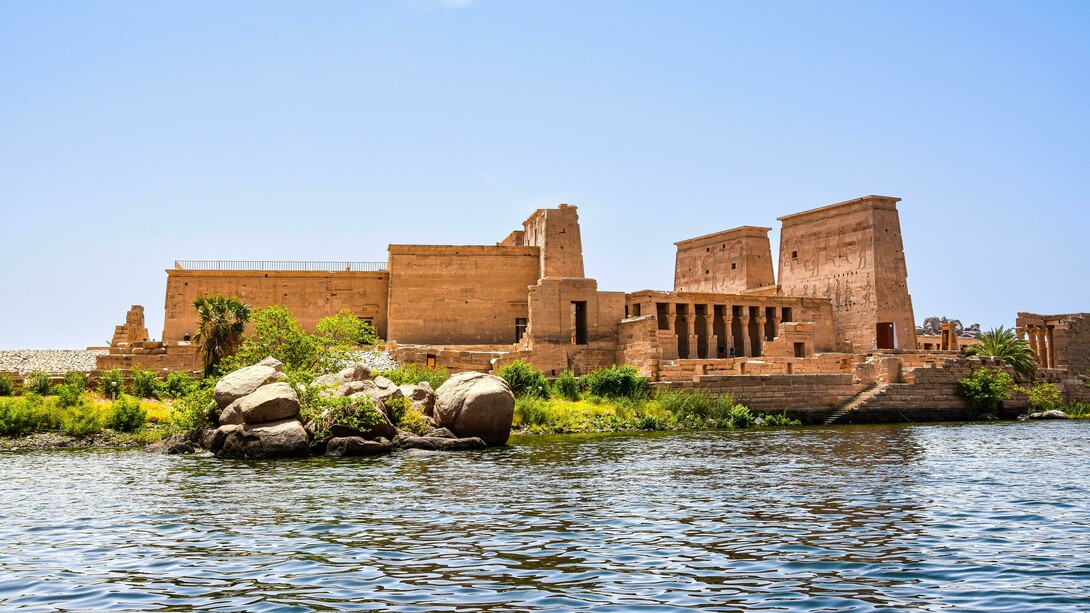
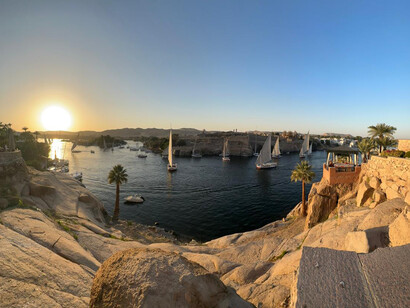
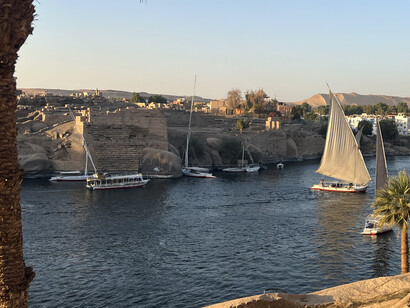
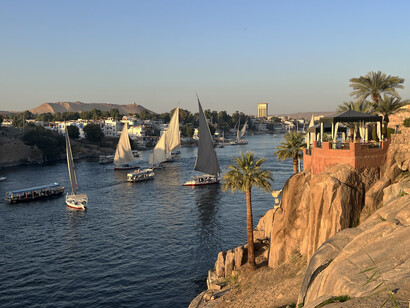
Upper Egypt, despite its name, lies in the south, where the Nile flows northward toward the Mediterranean and history feels especially concentrated along its banks. The stretch of river between Luxor and Aswan forms one of the most remarkable historical and cultural corridors in the world. Here, travelers can sail the Nile to explore monumental temples, royal tombs, granite quarries, colorful Nubian Villages, and vast desert landscape, all unfolding in sequence along the water. From November to April, Nile cruises and traditional Dahabiyas travel daily in both directions, timing their itineraries to make the most of Egypt’s most seasonal river passage; a journey shaped equally by nature and architecture.
Whether Aswan marks the beginning of your journey or its final chapter, the city is not merely a stopping point on the way to or from somewhere else; it offers its own equally rich and rewarding discoveries. Aswan stands confidently on its own, inviting visitors to slow down, explore deeply, and appreciate the balance of culture, engineering, and natural beauty that defines Upper Egypt.
Aswan greets visitors with a gentler pace and a distinctly Nubian character. Its importance runs deeper than its monuments. Much of the granite used in temples across Egypt was quarried here, and the city once sat squarely on the main trade route linking Egypt to lands farther south. Its earliest inhabitants were Nubians, who still make up roughly a third of the local population and continue to speak their own Nubian languages. Scattered across the Nile - especially along the west bank - are small islands and villages where vividly painted homes add bursts of color to the desert landscape, offering a living counterpoint to the ancient stone that defines the journey.
The Nubian Village
Tucked along the west bank of the Nile, the Gharb Soheil offers one of Aswan’s most joyful and colorful experiences. Often referred to simply as the Nubian Village, this lively community feels less like a museum and more like a living canvas, where bright mud-brick houses, painted in bold blues, yellows, and oranges, line winding lanes that lead straight to the river’s edge.
This is the heart of Nubian culture, a heritage that stretches back more than 5,000 years. The Nubian people, descendants of ancient traders and travelers from the south, maintain their own languages, music, and customs, distinct from much of Egypt. Hospitality here is not staged; it’s instinctive. Visitors are often welcomed into homes for hibiscus tea, invited to listen to local music, or shown handmade crafts and jewelry. In some households, you may even meet a pet crocodile, traditionally believed to bring protection and good fortune.
The village’s architecture is as practical as it is eye-catching. Homes are built from mud brick and topped with domed roofs that help keep interiors cool during Aswan’s intense summers. Geometric patterns decorate exterior walls, turning entire streets into open-air galleries. Wandering on foot through the narrow lanes is one of the best ways to experience the village, with every corner offering a new burst of color, or a friendly greeting.
Getting to Gharb Soheil is part of the charm. Located south of Awan, it’s reached by a scenic ride across the Nile by motorboat. Once there, visitors can enjoy camel rides, spice shopping, henna tattoos and more.
The Philae Temple
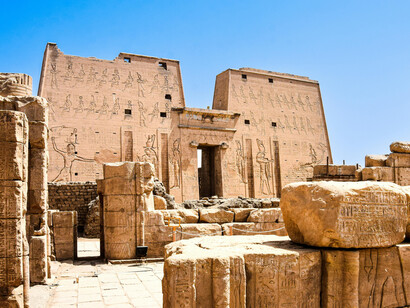
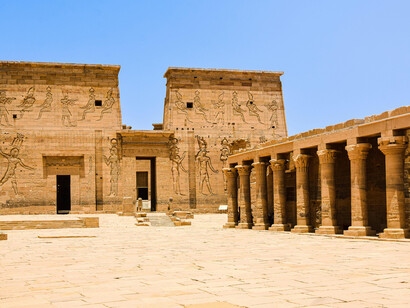
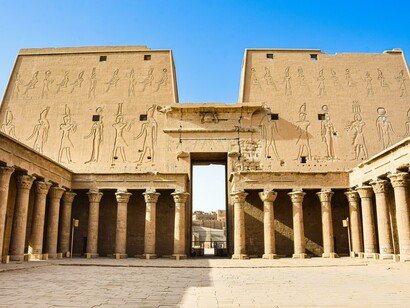
Another important site only reachable by boat is the Philae Temple. It is one of those rare monuments that has quite literally survived by moving with the times. When the rising waters of the Nile caused by the construction of the Aswan High Dam threatened to drown it in the 1970s, the entire temple complex was carefully dismantled, stone by stone, and relocated to nearby Agilkia Island. The rescue took five painstaking years, and, when it was finished, the temple was reassembled so precisely that you’d never guess it had been picked up and moved.
Dating to the Ptolemaic era, the Philae Temple was dedicated to Isis, one of the most important and beloved goddesses of the ancient world. Long after other temples fell silent, worship continued here well into the Roman period, making the Philae Temple a major pilgrimage site until around 550 CE. In fact, the very last known hieroglyphic inscription ever carved - dated to 394 CE - was recorded on this island, marking the quiet end of an ancient written tradition.
At the heart of the complex stands the Temple of Isis itself, once home to the goddess’s sacred cult statue. Surrounding it are smaller but equally striking structures: the elegant Kiosk of Trajan, with its 14 floral-topped columns and open-air design; the Temple of Hathor; and the Temple of Imhotep. Together, they create a layered architectural landscape that reflects centuries of religious devotion and political change.
The Aswan Dam
The Aswan High Dam is one of those projects that permanently changed the rhythm of a country. Completed in 1970 and formally inaugurated in 1971 at a cost of roughly $1 billion, this massive rock-fill dam was built to do what the Nile had never done willingly: behave. For millennia, the river’s annual floods were both a blessing and a gamble; sometimes nourishing crops, other times destroying them. The High Dam put that unpredictability under human control, capturing floodwaters and releasing them strategically to irrigate farmland, improve navigation, and power a modern nation.
Stretching 3.8 kilometers across the Nile and rising 111 meters high, the dam is an engineering heavyweight. Built from compacted rock, clay, and sand, it channels water through 12 turbines that once generated nearly half of Egypt’s electricity. Its reservoir, Lake Nasser, became one of the largest man-made lakes in the world.
The dam was also deeply political. It replaced the smaller British-built Aswan Low Dam of 1902 and became a cornerstone of Gamal Abdel Nasser’s post-1952 vision to modernize and industrialize Egypt. When U.S. and British funding collapsed in 1956 - triggering the Suez Crisis - Egypt turned to the Soviet Union, which provided financing, expertise, and heavy machinery.
Construction began in 1960 and employed some 34,000 workers, but progress came at a cost. The creation of Lake Nasser flooded vast areas of Nubia, forcing the relocation of between 80,000 and 90,000 Nubians, many moved up to 45 kilometers away from their ancestral homes. Rising waters also threatened dozens of ancient monuments, prompting UNESCO to lead one of the largest archaeological rescue operations ever undertaken, relocating 22 major sites to higher ground.
Today, the Aswan High Dam stands as both triumph and trade-off. It revolutionized agriculture, electrification, and water management, while introducing environmental challenges such as trapped nutrient-rich silt, coastal erosion, and rising soil salinity. More than half a century later, it remains a powerful symbol of Egypt’s modern ambitions, proof that mastering the Nile reshaped not just the landscape, but the future of an entire nation.
Lake Nasser
One of the world’s largest man-made lakes, Lake Nasser was created in the 1960s following the construction of the Aswan High Dam. Stretching nearly 500 kilometers from Egypt into northern Sudan, the lake serves as a vast reservoir supporting water storage, hydroelectric power, and fishing, while also evolving into an unexpected destination for tourism.
Today, Lake Nasser is known for its striking desert landscapes, calm waters, and rich wildlife. Luxury cruises glide across the lake toward Abu Simbel, offering travelers a rare perspective on temples that now appear to rise directly from the water. The lake is also a premier fishing destination, home to Nile perch, tigerfish, and catfish, and a haven for birdwatchers, with more than 100 species recorded, including pelicans, herons, and cormorants. Nile crocodiles and desert reptiles are also part of the ecosystem.
The Unfinished Obelisk
Commissioned by Queen Hatshepsut, the Unfinished Obelisk was to stand at the Temple of Karnak, but was never completed. Most scholars believe work was halted after a structural crack and other flaws appeared during the carving process, an unfortunate but decisive moment for a monument of this scale.
Had it been finished, the obelisk would have measured 42 meters in length and weighed an estimated 1,200 tons, making it the tallest and heaviest obelisk ever attempted. Instead, it remains attached to the bedrock in the northern red granite quarries of Aswan, offering a rare and remarkably clear look at ancient Egyptian stone-working techniques.
Archaeologists believe workers used dolerite balls - stones harder than granite - to patiently pound the obelisk free from the surrounding rock. Today, the site functions as an open-air museum where visitors can walk alongside the massive, half-carved monument. A series of steps allows visitors to follow its length, providing an unusually close and informative view of ancient engineering; unfinished, but invaluable.
The Old Cataract Hotel
The Old Cataract Hotel doesn’t just sit on the Nile, it presides over it. Perched dramatically on a granite cliff, this legendary five-star hotel has been hosting history, intrigue, and high society for well over a century, and it shows no sign of relinquishing its leading role.
Built in 1899 by Thomas Cook and opened in 1900, the hotel was designed to cater to European travelers arriving in Egypt at the height of the colonial era. With its Victorian façade, Moorish interiors, and sweeping views of the Nile and the Sahara beyond, it quickly became a favorite address for diplomats, explorers, writers, and the world’s elite.
Among its most devoted guests was Winston Churchill, who stayed here during the inauguration of the Aswan Low Dam and loved it enough to keep coming back on holiday. The guest list also included Howard Carter, fresh from discovering the tomb of Tutankhamun, Margaret Thatcher, Jimmy Carter, and Princess Diana.
Then there’s Agatha Christie, who found inspiration and set key scenes of Death on the Nile here. The hotel later served as a filming location for the 1978 movie adaptation, further cementing its place in pop culture lore.
Today, the Old Cataract is made up of two distinct sections: the original Palace Wing and the modern Nile Wing, both offering panoramic river views. Guests still gather for afternoon tea on the terrace - one of the hotel’s most enduring rituals - or dress up for fine dining at the elegant 1902 Restaurant, where the atmosphere feels timeless and the Nile drifts past below, unhurried and unimpressed by fame.
The Mausoleum of Aga Khan
Resting high above the Nile on Aswan’s west bank, the Mausoleum of Aga Khan commands sweeping views of the river. The mausoleum was commissioned by the wife of Aga Khan III, with construction beginning in 1956 and concluding in 1960. For a time, the site was open to visitors, though it is now closed to the public. The design was entrusted to Egyptian architect Farid Shafie, who drew inspiration from Fatimid architecture.
In design, the mausoleum echoes the form of the Al-Juyushi Mosque, featuring a rectangular layout, high enclosing walls, a prominent central dome, and several smaller domes. While it shares aesthetic and structural elements associated with Fatimid mosque design, the building is not a place of worship and functions solely as a funerary monument.
Upper Egypt offers a rare kind of journey, one where history, nature, and human ingenuity unfold side by side, mile after unforgettable mile. Here, temples rise from the desert as they have for thousands of years, granite monuments withstand floods, dams, and time itself, and the Nile continues its quiet work of shaping both landscape and life.
Whether you arrive by riverboat gliding past palm-lined banks, by plane descending over desert and water, or by road tracing age-old trade routes, Aswan rewards the traveler with depth, scale, and perspective. It is proof that its monuments and architectural feats are not relics of a distant past, but living landmarks that remain every bit as powerful today as when they were first conceived.