English
 Español
 Français
 Deutsch
 Italiano
 Português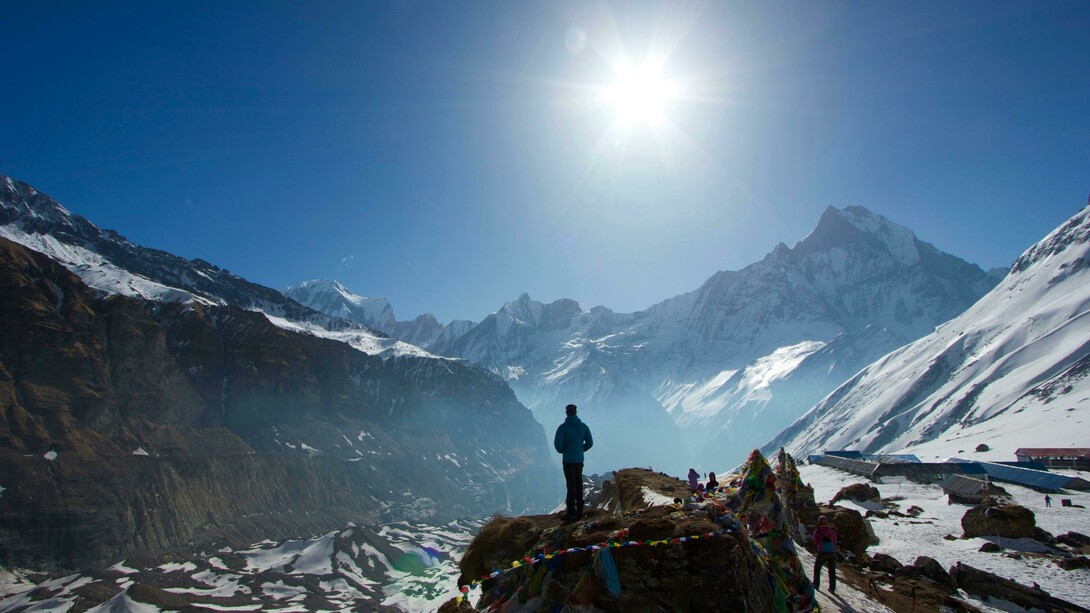
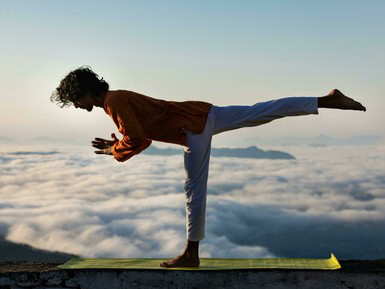
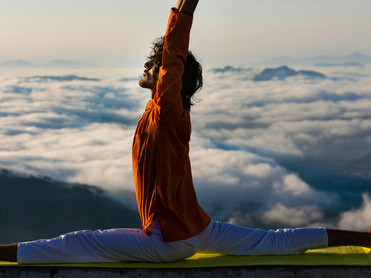
How about a week's yoga retreat in the Indian Himalayas? And, if that is performed on the backdrop of a secluded 9th-century “Sun Temple” or “Surya Mandir” at an altitude of 2116 m above sea level, where the air is rarefied and the powdery Himalayan peaks on the far horizon stand as witness, where every yogic stretch connects you to the cosmic Himalayan energy and every session of yoga leaves you rejuvenated as you bask in the splendours of Mother Nature, history and divinity!
As a yoga practitioner, I couldn’t have asked for more, and so when I received an invitation to participate in a week-long yoga retreat from our long-time family friend Shri Nandan Singh Koranga – an armed forces veteran from the Kumaon Regiment, who is are native of Devbhumi Uttarakhand – I knew this was to be my date with Divinity!
An overnight train journey from Kolkata to Kathgodam, followed by a 45-minute helicopter ride to Almora, and I was in my yoga destination. I spent the night at Koranga’s Wood Villas in Dhamas village, away from the humdrum of Almora town, and also just a short hop to the iconic Katarmal Sun Temple, the venue for the yoga retreat.
We were 12 in number, and most of the other participants were from retired armed forces backgrounds; not surprising, though, given the fact that Uttarakhand is home to two of the Indian Army’s most decorated infantry units – the Kumaon Regiment and the Garhwal Regiment.
The venue
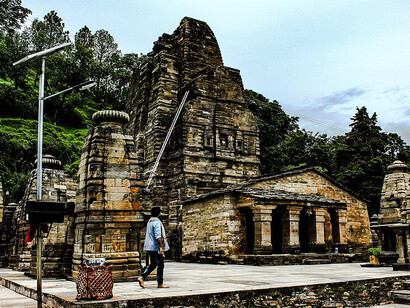
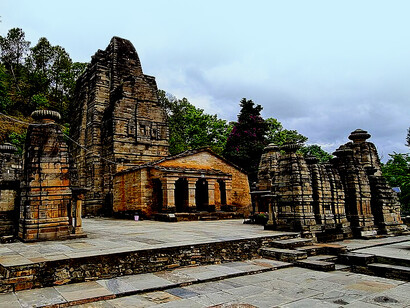
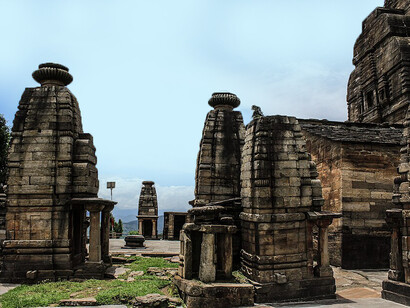
The venue for the yoga retreat was the ancient 9th-century Katarmal Sun Temple, or the “Surya Temple”, a remote village hamlet in the majestic Kumaon Himalayas.
This idyllic temple, located at an altitude of 2116 m, is easily accessible from the popular hill station of Almora (19 km) and is conspicuous by its centuries-old sculpted architecture. Katarmal Sun Temple is one of India's oldest sun temples, and hats off to our yoga instructor, Palash Biswas, a product of the globally renowned Bihar School of Yoga, for choosing Katarmal as the venue for the retreat.
Two reasons why Katarmal was unanimously chosen as the retreat venue – No. 1 was the remote location: one has to trek 2 km from the Kosi river to reach the temple premises, and No. 2 was the surreal setting – snowy Himalayan vistas and the ancient Nagara-style architecture for inspiration!
Legend has it that the then King of Kumaon, Maharaj Katarmalla, built this temple in the 9th century, conspicuous by an exclusive temple dedicated to the Sun God – “Surya” – and a cluster of approximately 45 other temples surrounding the main temple.
This unique temple is a living example, a testament to ancient India's architectural prowess and astronomical supremacy, given the fact that the temple has been so designed that the first rays of the sun fall on the main temple dedicated to the Sun God Surya!
Indeed, it is a wonder for contemporary architects and astronomy experts as to how such a refined piece of a standalone architectural specimen was handcrafted to perfection way back in the 9th century!
Katarmal Village: immersive local community experience
Apart from the main temple, Katarmal village is located in a rather picturesque locale. With the population being sparse, just about 300 people reside in this secluded hamlet.
Some of the herbs we used in our yogic diet were freshly sourced from the village's vegetative cover, and the medicinal knowledge of villagers in treating diseases was a revelation.
In tune with centuries-old tradition, the villagers adhere to a caste-based geographical setting – higher-caste people are domiciled in the upper reaches, while lower-caste people are accommodated in the low foothills.
A typical early morning scene at Katarmal village is nothing short of Himalayan documentary storytelling unravelling itself naturally – farmers ploughing their fields, womenfolk tending to the homestead and cattle, while children dash to the village school. This is a cultural symphony that only the Himalayas can provide.
The Govt of India's Ministry of Tourism has given its nod to develop Katarmal village as one of India's “Spiritual Villages” through the Swadesh Darshan policy. Already, there are telltale signs of progress, and it augurs well for the village folks who have had to wait for several millennia to come to the forefront of Uttarakhand's tourism landscape – new homestays, cafes, yoga centres... all of which should catapult this village of stupendous dimensions into the elite league of heritage tourism.
The Yogic significance of the solar cult
According to yoga instructor Palash Biswas, sun worship in ancient India was a phenomenon, more so in the high Himalayas, where the weather is severe and the rarefied landscape and atmospheric elements made life difficult for living. Thus, the natives of the Himalayas worshipped the Sun God, Surya, seeking good health, peace, and prosperity.
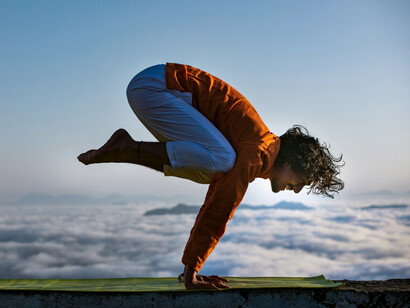
And here we were – in remote Katarmal offering our yogic salutations to the sun god, and believe me, with each stretch, be it the Surya Namaskar sequence, the cobra pose or the multiple other poses that we engaged in, we knew in our deepest recess that we were connecting to that ancient “solar cult” of India and partaking of the blessings of the most ancient rishis/monks who engaged in deep spiritual austerities up here in the Himalayas.
The Yogic regimen
With Wood Villas in Dhamas as our base, the week-long yoga retreat offered us a peek into that idyllic yogic balance in terms of diet and lifestyle, which I am following as per the instructions of the yoga therapist.
This retreat has transformed me inside out. I have removed meat totally from my diet. But the fish is still in my stable because a Bengali and his fish are inseparable! My diet plan is “Sattvic”, with the emphasis on fresh fruits, vegetables, whole grains (brown rice), proteins, and dairy products.
I now realise how much I tortured my system with those “Frankenstein” food habits – chicken kebabs, mutton rezala, handi biriyani…
Today, after a month's immersion into yoga, I feel more awake and more empowered, and there is clarity in my everyday decision-making.
Yoga without a proper diet plan is useless. And the biggest reward I pay myself is that I have politely asked my family's cook of many years to take a sabbatical. I cook my own food, and trust me, yoga is more than those stretches on the mat; preparing your own food and relishing it through every bite offers you a contentment which no other holistic process can offer. The best part is that it is all so natural and spontaneous. I believe this is what “mindfulness” is all about.
Wrapping up
The biggest takeaway from this yoga retreat at Katarmal Sun Temple has been the divine opportunity to learn the intricacies of yoga philosophy at a place which, in itself, has radiated with “cosmic energy” or “adhyatmik urjaa” since ancient times. The Sun Salutations and pouring oblations of water by chanting the “Gayatri Mantra” to “Surya Devata” with prayers on my lips for good health and positivity will resonate in my mind for eternity.
This yoga retreat has further illuminated my vision of how Devbhumi Uttarakhand is silently unravelling its potent spiritual and wellness ethos to the world outside – no flashy advertising, no chasing trends, just a plain, simple invitation to today's jaded travellers to partake in the holiness process.
While this trip has thoroughly transformed me, my habits, my tendencies, and my outlook towards life, as a much-published travel writer, I reckon it would be incredibly satisfying to see the Katarmal Sun Temple renovated and placed on the altar of world tourism as a stellar specimen of ancient India's “Solar Cult” phenomenon.
I was told that the masterly impressive statue of the Sun God, along with the intricately designed wooden doors of Katarmal Temple, is in the safe possession of the National Museum in New Delhi, while the magnificent statue of Paun Raj – one of India's rarest specimens of metallic artwork – is in American custody!
I look forward to a fully evolved Katarmal. Not just an archaeological site! Rather, a stupendous cultural showpiece for the world to marvel at.