English
 Español
 Français
 Deutsch
 Italiano
 Português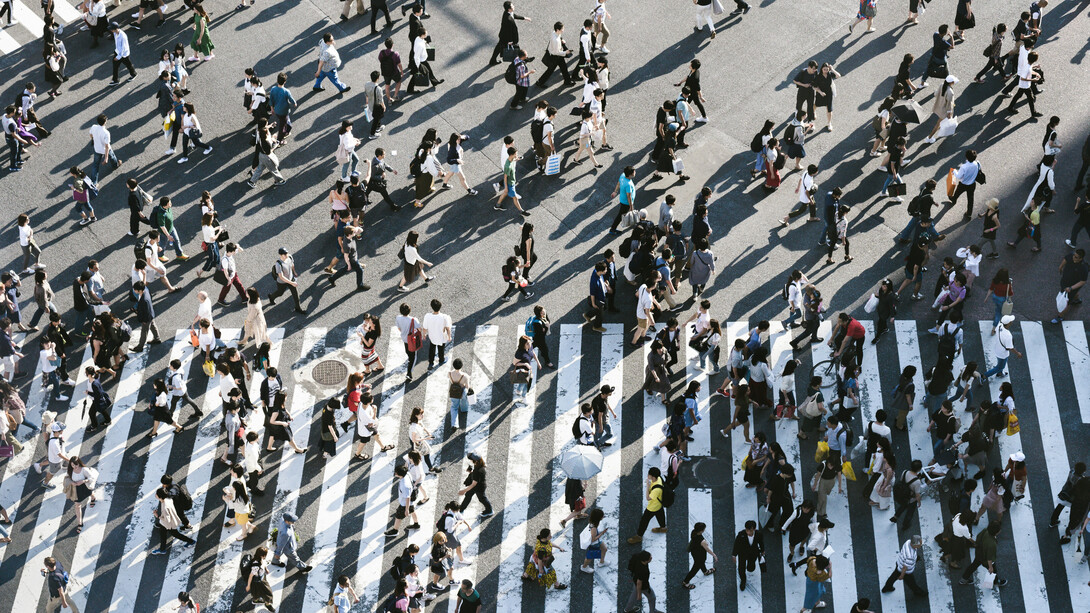
Today, living in the second decade of the 21st century, I no longer have the joy of talking in person with my mother, Lolita; we do continue our conversations internally. And on the same topic: are we progressing as a human species? Are we better off now than before? How do we measure progress?
Human rights, economic equality, self-awareness, life expectancy, availability of education? Are they all equally important in measuring humanity's progress? What is progress really? Now I am the one who stands at the end of my life, as she was on that memorable porch, and I realize, as she did, that today's world is quite different from the one I grew up in, and I wonder: Are we progressing, are we better or worse?
Once, about ten years ago, I went on a work trip to Beijing. My Chinese counterpart was Chen Xinming. I had never met him. We stayed in the same hotel in Beijing, he, his interpreter, and I. We had a day of productive meetings; The interpreter was essential because, otherwise, there would have been no communication of any kind. …I thought.
The next day, we agreed to have breakfast at the hotel restaurant. The interpreter was not yet there. Chen and I arrived, looked at each other without saying anything; We smiled and went to help ourselves to breakfast and sat at the table. He looked at his watch, looked at me, and smiled again. I smiled back. We were there for almost 15 minutes. He called on his mobile phone and spoke to someone, I imagine, the interpreter, and he looked at me again and smiled.
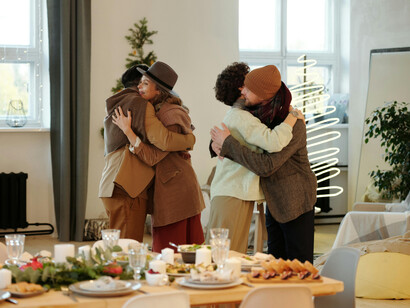
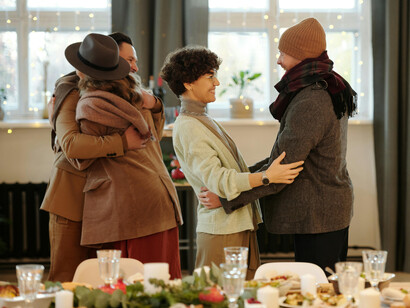
Another ten minutes passed. Chen looked at me again, but this time he stood up and motioned for me to do the same. I did, and then he came over and gave me a very warm hug. I felt his affection, his friendship. At that moment, the interpreter arrived, and Chen said something to her in Chinese. And she said to me: Mr. Chen wants to tell you, the fact that we could not speak did not mean that we did not communicate, with our hug we said much more than we could have said to each other with words. I gave him another hug. And, I thought, the new humanity is going to be born from our inner being.
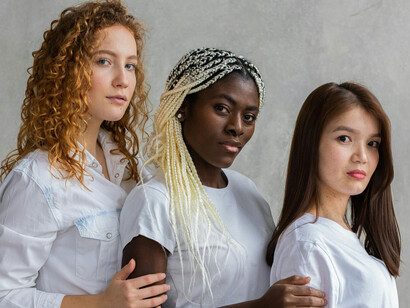
We are living in a special moment in our human history. The world populations are mixing like never before. We are becoming planetarian. Mass migration and intercultural families are swaying all over, as well as the global and immediate exchange of concepts, perceptions, news and propaganda, a network of global connectivity. The instantaneous intertwining, the globalization of markets, the economy, and consumerism, are disrupting the foundations of political power and the sense of social identity. Today, more than ever, corporate interests influence political leaders. Today, important international decisions are made at meetings such as those of the World Economic Forum in Davos, and not at the United Nations.
At Davos, Trump critically remarked that Europe was no longer the same, alluding to what he called "uncontrolled mass migration," saying it has altered European societies in negative ways. He leads an anti-immigration campaign in the United States, taking advantage of a deep insecurity among the followers of the MAGA movement, reacting to the dilution of the hegemony of the white population. From 1970 to the present, the proportion of whites in the US has decreased significantly from ~83–84% to ~57–58%. Hispanic, Asian, and multiracial populations have grown rapidly. And by 2060, the census projects that the percentage of the white U.S. population will be down to 45%.
The demographic forces that are shaping the U.S.—declining birth rates, aging populations, and increased diversity due to migration—are also present in Europe, especially in countries like Germany, France, Italy, and the U.K., though patterns differ. There has also been a growth of groups like those who support Trump.
From a sociological perspective, resistance to ethnic and racial integration, whether framed as “genetic purity” or “tribal preservation,” stems from fear of social change, reinforcement of group identity, ethnicity-bound political ideologies, and historical divisions imposed by power structures.
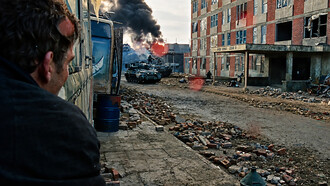
And scenes from history came to me. Wars, our selfishness, the ruling powerful, the mixing of the tribes, the always present vanity, the religions based on love that burned witches and heretics, the conquests, the ovens of Germany, the massacres of Rwanda, the shameless faces of politicians in the United States putting fear on television: “They are eating our cats and dogs”. The sweet lady, so incapable of hurting anyone, a secretary at the Methodist church on my corner, in her 60 years of goodhearted smiles at the other, reacting to a joke about Trump's tariffs, and seriously and strongly saying Trump!! Trump!! Go Trump!
The scoundrels and the credulous. The usual stuff of history. The gullible also use the scoundrels, because they act on what they secretly feel: the deep inside fear, the resentment towards others who are different, as they remain tied to beliefs that they do not really understand, but tie them to a group or a tribe.
As recently as 12 to 15 thousand years ago, we learned how to farm. And this agricultural revolution changed everything. Cities, empires, language, and religions began. New civilizations arose in various parts, but did not communicate with each other on a large scale. The human species at that time was thinking about itself in fragments.
Today. Beyond our tribal history and the birth of countries and empires, we are a globally connected community, not by affection or antipathy, nor by relationships of people, but by a constant flow of words and images, without feelings or smiles, which connect in networks but do not communicate the important things in life. Digital platforms, which amplify disinformation, promote ideological dynamics and serve to manipulate. Where opinion groups echo themselves, sustain false narratives, and accentuate fragmentation.
And those instant social networks amplify the ego, the fear, undermine reason, intuition, and contemplative consciousness. Not only does it spread falsehoods, but it also erodes a society's overall ability to access reliable information. The digital networks do not disseminate truth. They evoke quick participation, like consumer propaganda, and are effective instruments for the manipulation of emotions. We have built a planetary-far-reaching information system, but it amplifies emotion faster than verification. The result is the erosion of shared reality.
Despite the above, I would say to Lolita on that inner porch of yesterday, today, humanity is in a better situation than in all its history. Per capita violence is lower than ever; slavery, while not fully eradicated, is illegal and condemned, human rights are recognized, extreme poverty has been reduced, and life expectancy, education, literacy, and health have improved on all continents. The legal status of women has advanced more in the last one hundred years than in the previous 5,000. Today, lynching is a crime; 150 years ago, it was fun.
Yes, humans have progressed in knowledge. We connect in language and signal, to share happiness, love, and poetry, and from isolated tribes we built the structure of a planet-house, despite our massacres and wars and the “each one to its own mentality.” But just when we are beginning to realize that we are all connected, that nature is part of our body, and that every action that disturbs our balance with it affects us. The unbridled selfishness, fear, and ignorance of many resurfaces, encouraged by corporate greed. And we return to anti-science, to the persecution of others, and to the wasting of nature.
But I tell my mother, in that inner conversation, everything will pass. We will have a transformation, simple and silent, like the embrace from Chen. Such are the stages of the Garden. And this point of view, which I call myself, will also pass. This dream will pass. And that awakening, always, that blessed insomnia will come. And we can imagine it.
And then we both started singing this song in that realm within.
If sleeplessness were wealth, I would live in a palace alongside the moon, and from my window would see the gracious spilling of light over everything that crawls and flies.
A sidereal breeze would herald mornings, sprinkling stars on windowsills, with music so delightful that smiles would spring into lovers’ lips and dreams.
I would walk all night, while everyone else is asleep. Imagining ways to dare to let go, so that those impulses of forever dissolve, the tribal context of my mind, the spaces of my ignorance.
I would dance with the svelte night, so elegantly dressed in her dark cloak, adorned with sounds of mystery, stories of love, shadows and memories. Tender rains would then pour on me; maternal woos, sensual lips, and the laughter of children in eternal play, a total feminine display.
My body would collapse. All the jars within my mind would pop open their lids, spilling silly things like intellectual pride, yes and irony, sarcasm, wittiness, and cynicism. And all that insistence in showing off would vanish, like vapor through the windows of the mind-heart open ajar.
For whenever we dance with the Splendorous Night, our shadows are diluted by her Shadow, our dark side devoured by her deep darkness.
Carriages with damsels aboard would gaily cruise in front of the palace, as Beauty, dressed in woman, walks the universe.
All those tribes, of our collective imagination, would parade incessantly before my open eyes, Jews, Shiites, Sunnis, Kurds, Tarahumara, French, Aztecs, Mayas, Masai, Kikuyu, Japanese, Chinese, American and Thai, and so many, many others, some I do not remember or that I never knew.
We will all parade in carnival’s caravans, dancing, whining, laughing, suffering, struggling, murdering, justifying, guessing, forgiving, loving, each in our own script.
In sleepless nights, I dream of you awake, and it brings the deluge again, drowning all and everything perishable, with the flood of our derelict passions.
I then recount all my happenings, I remember everyone I have met, every thought that crossed my mind, and everything I should have said but did not. Every feeling upturned by antagonism in conversation when approaches and flavors differ. (Because one is so attached to our utterance stuff.)
That is why we invented fencing with concepts and words, in a contest of who knows better, when we know that nobody does.
Our heart feels sad when the friend’s embrace becomes evasive, as reproaches follow the diversity of approaches on this and that, whenever we forget that we are not apart in this slumber.
If sleeplessness were wealth, everything would have been forgiven; we would live alongside the moon, making light shine. Oh, the marvelous things we would illuminate with our long moon fingers.
Laughter would fill every instant, and bitterness would be a flavor in a British drink. We would dance all night, rounds of day and life.
Existence would be the essence of every glance and word.
Pillows and beds, just imaginary fluffy things, to whisper stories into our ears, as we dance so closely the sensual rhythms of the naked night. A night intimately profound and authentic, where everyone is unique while being the same.
Our sleeplessness of love would light fires, making the sun wake up before daybreak, in an unexpected rave never seen. The sun and the moon would dance together to their steps of light within the night.
Our souls in a merry-go-round, conceiving a whole new universe again. Out of an endless love.