English
 Español
 Français
 Deutsch
 Italiano
 Português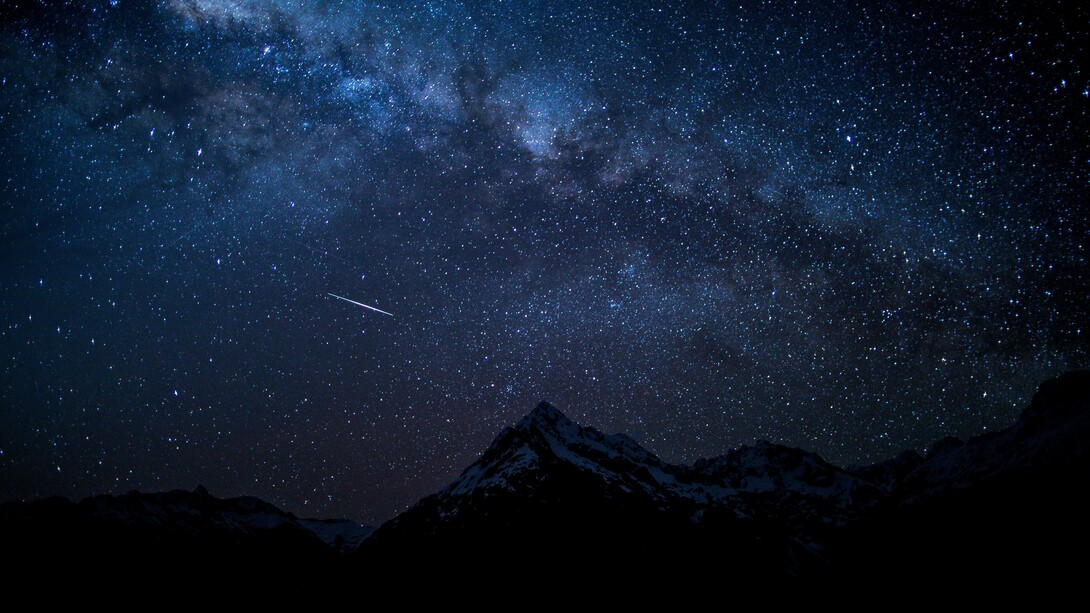
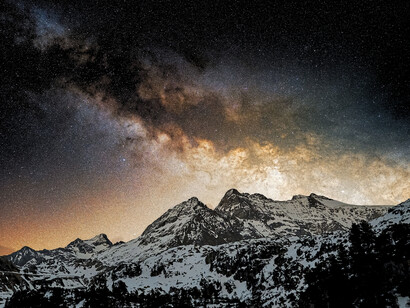
Several meteor showers have lit up the summer sky, with two major meteor showers becoming active in July 2026. The first would be the Southern Delta Aquariids from July 12 to August 23, and the second would be the Perseids from July 17 to August 24.
The Action Network’s study has revealed the best and worst U.S. states for spotting a meteor in 2026. The best time to spot a meteor would be the pre-dawn hours, as the meteor shower’s radiant would reach the highest position above the horizon.
The Action Network’s team has ranked all 50 states using six viewing factors: access to Bortle Class 1-3 zones, annual clear days, recorded fireball activity, observatories, DarkSky-certified places, and average elevation. A meteor shower is a celestial event in which multiple meteors radiate, or originate, from one point in the night sky. Although meteor showers are common in the United States, the visibility levels depend on atmospheric conditions. Read on for the Action Network’s full study.
Key findings
California leads the U.S. with a 7.34% implied spotting probability and +1262 odds, while Arizona trails the Golden State at 5.14% and +1844 odds. California’s lead can be attributed to a mix of meteor spotters’ must-have conditions and cloud cover, wildfire smoke, and local visibility outlooks.
Vermont ranks last in the U.S. with a 0.61% implied spotting probability and +16371 odds, while Delaware places 49th at 0.66% and +15149 odds. Vermont’s dead-last rank can be attributed to a mix of the fewest clear nights in the nation, with just 56 annually. Delaware’s low-rank can be credited to no listed zones darker than Bortle Class 4.
According to the Action Network’s study, the chance of spotting a meteor in California is roughly 12 times higher than in Vermont. The Western states dominate the top 10, accounting for seven of the highest-ranked states. The Western states’ high rankings can be attributed to a mix of time zone differences and well-timed meteor showers.
None of the Western states appear in the bottom 10. Five are Northeastern states, three are Southern states, and two are Midwestern states. The Western states’ ascension can be attributed to dry air and dark public land, thanks to low humidity, minimal light pollution, and accessible public areas.
Best U.S. states for spotting meteors
The Western states dominate the study, accounting for nine of the top 10 states. Utah has more DarkSky-certified places than any other state, Texas has witnessed the most meteorite falls in NASA’s archive, and Colorado has the nation’s highest average elevation. Utah’s dominance in DarkSky certification stems from geography, cultural commitment, and conservation efforts.
California leads the United States with a 7.34% implied spotting probability and +1262 odds. Arizona trails with 5.14% and +1844 odds. Utah ranks third with 4.54% and +2105 odds. Texas settles for fourth with 4.16% and +2302 odds. Colorado rounds out the top five with 4.08% and +2349 odds. Colorado’s average elevation of 6,800 helps stargazers seeking meteor showers.
New Mexico ranks sixth with 3.93% and +2448 odds. Oregon trails as seventh with 3.59% and +2688 odds. Nevada stands at eighth with 3.02% and +3215 odds. Michigan settles for ninth with 2.38% and +4103 odds. Oklahoma rounds out the top ten with 2.30% and +4241 odds. New Mexico’s solid ranking is shaped by a mix of elevation, historical activity, and dark skies.
Worst U.S. states for spotting meteors
The Northeastern states fell short in the Action Network’s study. Vermont finishes 50th with just 58 clear days per year for the fewest nationwide. Delaware ranks 49th without clear Bortle Class 1, 2, or 3 zones. Rhode Island settles for 48th due to the Ocean State lacking access to skies within the three darkest classifications. Indiana trails the United States with a 1.12% implied spotting probability and +8839 odds due to the Hoosier State’s relatively high light pollution. New Jersey falls short at 41st with 1.08% and +9140 odds. New Hampshire trails at 43rd with 1.06% and +9352 odds. Connecticut settles for 44th with 1.00% and +9903 odds. Kentucky accepts 45th with 0.95% and +10433 odds.
West Virginia opens as the 46th with 0.86% and +11541 odds due to the Mountain State’s high amount of light pollution. North Dakota falls short at 47th with 0.86% and +11588 odds. Rhode Island trails at 48th with 0.75% and +13256 odds. Delaware settles for 0.66% and +15149 odds. Vermont is last at 50th with 0.61% and +16371 odds.
“For Americans planning to catch a meteor shower such as the Perseids, the key takeaway is that your state sets the opening line, but it does not decide the outcome. California leads with a 7.34% implied spotting probability because it combines more of the conditions meteor watchers need, but cloud cover, wildfire smoke, and local visibility can quickly change the outlook on any given night. The rankings show where viewers have the strongest starting position, not where a sighting is guaranteed,” said an Action Network spokesperson.
Notes
Where in America Are You Most Likely to Spot a Meteor?. Action Network.
Meteor shower activity is coming this July. When to look up. USA Today.