English
 Español
 Français
 Deutsch
 Italiano
 Português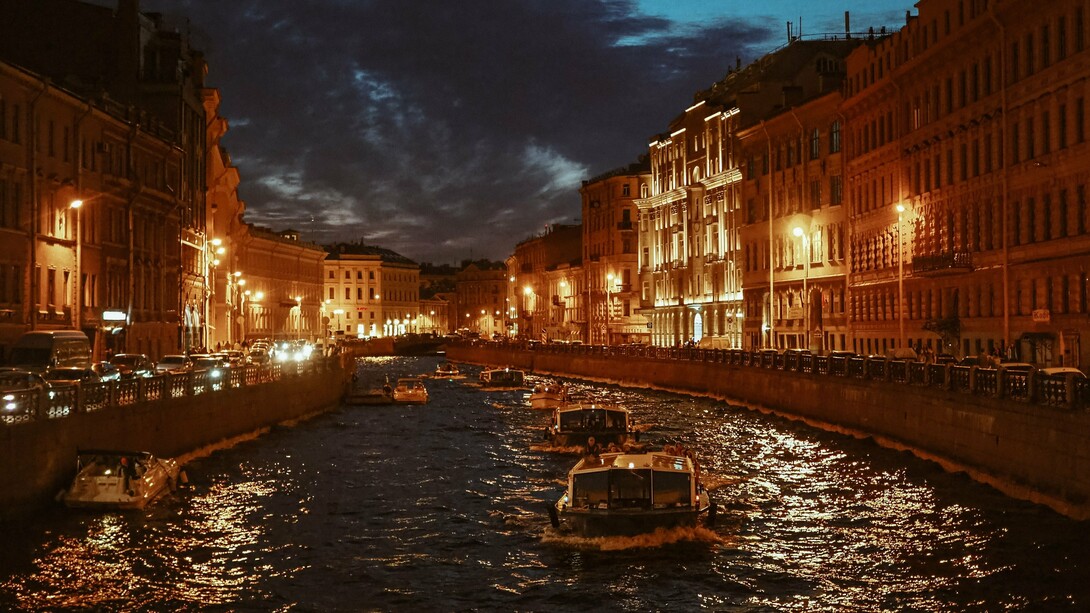
I first arrived with a Russia constructed by films and headlines. Several journeys and several cities later, I am still discovering how incomplete that picture was.
There is something almost funny about my relationship with Russia. Every time I leave, I think the journey has reached its natural conclusion, and somehow another invitation, another city or another story brings me back. Looking at it now, I realise that my experience of Russia was never one big revelation. It happened gradually, city after city and encounter after encounter.
Moscow changed my first impressions; Saint Petersburg and Rostov-on-Don showed me another side of the country; returning to Moscow brought me unexpected recognition for my journalism; Nizhny Novgorod made me think about Russia's relationship with a new international generation; Chechnya challenged perhaps the strongest stereotype I was still carrying with me; and most recently, Yekaterinburg surprised me by somehow reminding me of Sfax, my home in Tunisia.
Every trip seemed to correct something from the previous one. Before all of this, however, Russia was mostly a country I knew through a screen.
Like many people from my generation, I grew up with a very specific image of Russians, and cinema had done an excellent job of constructing it. The Russian character was usually a Soviet officer, a mafia boss, a corrupt businessman, a hacker, a dangerous spy or some enormous boxer Rocky Balboa eventually had to defeat. The streets were grey, the weather was miserable and Russians themselves rarely seemed particularly interested in smiling.
Then I booked my first flight to Moscow.
Moscow: when the script stopped working
I remember having more questions than answers before that first journey. Would people be cold with me? Would I feel safe? Would Moscow resemble the Russia I had watched for years in films and television? One of the first Russians I actually spoke to was sitting next to me on the plane. He had previously worked in Tunisia, so we immediately found something to discuss. He showed me photographs of his family, his house covered in snow and his dog. When we landed, he didn't simply disappear into the airport. He stayed until he was certain the person coming to collect me had arrived.
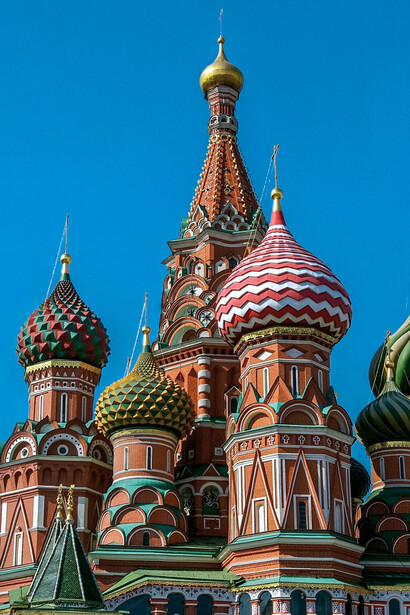
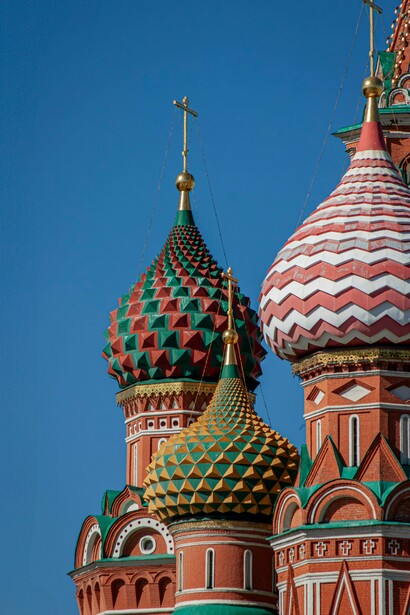
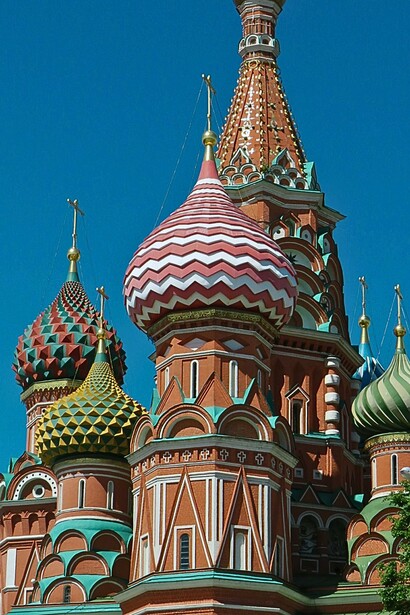
It was a tiny interaction, but I still remember it because nothing about it fitted the character I had expected. Then came Moscow itself, and the problem became bigger. I had expected something grey and intimidating. Instead, I became fascinated by the architecture, the metro stations, the streets and the mixture of different periods of Russian history sitting beside each other. I started watching ordinary people rather than looking for the Russia I had imagined. People were going to work, meeting friends, laughing, rushing through metro stations and enjoying their city exactly as people do everywhere else.
That first journey didn't suddenly make me an expert on Russia. Quite the opposite. It made me realise how strange it was that I had arrived with so many conclusions about a place I had never seen.
As a North African journalist, I should perhaps have recognised the mechanism earlier. We know what it feels like when foreign audiences receive an entire region through a limited collection of images. North Africa is frequently viewed from outside through politics, migration, instability, exoticism or tourism, while the everyday reality in between rarely travels as far. Russia made me ask whether I had been doing exactly the same thing to somebody else.
Moscow, Saint Petersburg and Rostov-on-Don: looking beyond the postcard
My next important journey took me deeper. This time Moscow was only the beginning. From there came Saint Petersburg and eventually Rostov-on-Don, and the subject wasn't tourism. I was travelling with other journalists to explore food security, an issue that matters enormously to my own country.
That changed the way I looked at Russia. I wasn't interested only in Red Square or another beautiful building anymore. I wanted to understand how the country produces, researches, adapts and thinks about food at a time of sanctions and enormous geopolitical pressure.
In Moscow, we met Russian specialists working across agriculture, food security, biotechnology and public policy. Coming from Tunisia, the discussions immediately felt relevant. My country knows what dependence on imported cereals means. We know what climate pressure means, and we know how food security can quickly become economic security.
Then came Saint Petersburg and one of the experiences that stayed with me most strongly from all my journeys through Russia was the Vavilov Institute of Plant Industry. Its history is almost difficult to believe. During the Siege of Leningrad, researchers protected an extraordinary collection of seeds while the city around them was starving. Some of those responsible for protecting the collection died from hunger rather than consume seeds they believed could be essential for future generations.
Walking through the institute, seeing Vavilov's preserved office, the seed chambers and the young researchers working there today transformed an abstract discussion about food security into something very human. It is easy to talk about resilience; it is different when you encounter its history physically.
From Saint Petersburg, the journey eventually took us south to Rostov-on-Don, where another Russia appeared. At Rostselmash, instead of historical archives and seed collections, there were tractors, transmissions, machinery and manufacturing. I watched a major agricultural company continuing to produce and develop equipment at a moment when sanctions and disrupted international supply chains were supposed to make exactly that increasingly difficult.
This was not proof that sanctions had no consequences, and it would be dishonest journalism to pretend otherwise. What interested me was the ability to adapt. Russia wasn't frozen, waiting for international circumstances to become easier. Institutions, researchers and industries were finding ways to continue. By then, the Russia I had first encountered through cinema was becoming almost impossible to recover.
Back to Moscow, but this time as a journalist
Then I returned to Moscow again, but this return felt different. The first time I had arrived as someone trying to understand Russia; now I was coming back carrying journalism produced from what I had actually seen.
My article about Russian agriculture and food security, Russia 'Still Got It, Still Thriving'... Ensuring Food Security for All, received recognition there. Winning that prize meant much more to me than adding another certificate or photograph to my career. There was something almost circular about it: I had initially travelled to Russia carrying questions created partly by other people's stories, and now one of my own stories about Russia was bringing me back.
But winning also created a responsibility. When you are rewarded for writing positively about a country you genuinely enjoy visiting, it becomes very easy to continue writing what people expect from you. I don't want to do that. Journalism loses its value the moment the conclusion comes before the journey.
Russia had surprised me precisely because reality had repeatedly contradicted my expectations. If I wanted to continue writing about it seriously, I had to remain willing to be surprised in both directions. That became increasingly important during what came next.
Nizhny Novgorod: the city I didn't expect to miss
Then came Nizhny Novgorod and the World Youth Festival Assembly. I really loved that city, not in the overwhelming way Moscow captures you when you first arrive, but differently. Nizhny felt calmer and simpler. I loved the weather, the churches, the bridge, the streets, the statues, the views and the little souvenirs I carried home. I remember walking through the city and filming the places I liked, trying to keep something from them because I already knew those images would make me nostalgic later.
There was something peaceful about Nizhny Novgorod, which made what happened there even more interesting. Suddenly this relatively calm Russian city was filled with young people from around the world. Different nationalities, languages, cultures and backgrounds were sharing the same event and discovering the same city. The scale of it impressed me, but what interested me more was what the gathering represented.
Russia was supposedly becoming isolated. That was the word we kept hearing. The conflict in Ukraine continued, sanctions had multiplied, travelling to Russia had become more complicated and the relationship between Moscow and many Western governments had deteriorated dramatically. Yet I was standing in Nizhny Novgorod watching people arriving from across the world.
That contradiction stayed in my mind. Political isolation from particular governments is one thing; losing the ability to attract people, build relationships and create new international networks is something else entirely. What I witnessed in Nizhny made me think that Russia wasn't simply trying to preserve old relationships. It was investing in new ones, and many of the people standing around me were young.
That matters because governments negotiate with the present, while youth programmes invest in what comes afterward. The friendships, professional relationships and memories created at gatherings like this may continue long after the political circumstances surrounding their creation have changed.
For me, that represented a different kind of Russian strength. Not military strength, not the size of its territory and not its natural resources, but the ability, despite everything happening around it, to remain a place thousands of foreigners were still curious enough to visit.
How Chechnya challenged another image
By this point, I might have thought Russia had finished surprising me. Then I went to Chechnya.
This time the stereotype wasn't mainly created by fictional villains. It came from real history: wars, destroyed buildings, terrorism, weapons and years of television images showing violence in the North Caucasus. Those events happened, and objective journalism doesn't require pretending they didn't. But something else had happened too: time.
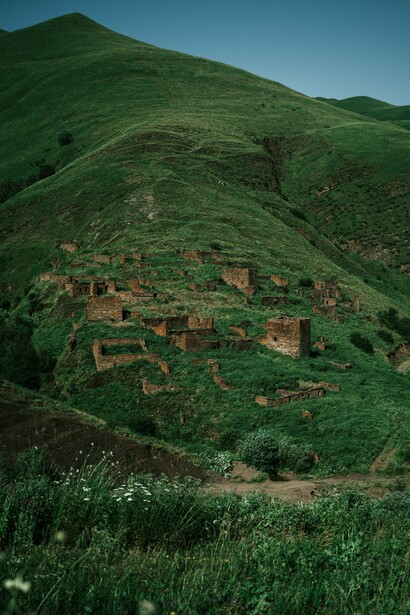
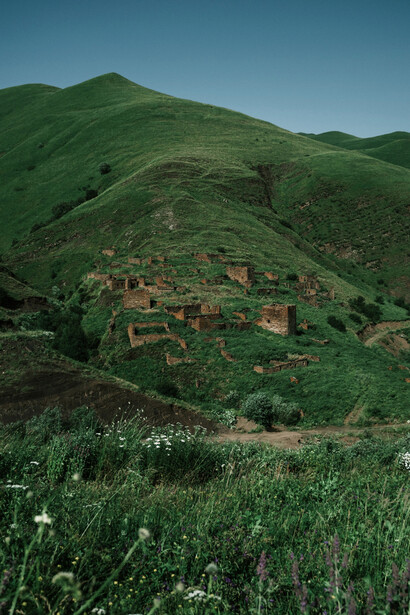
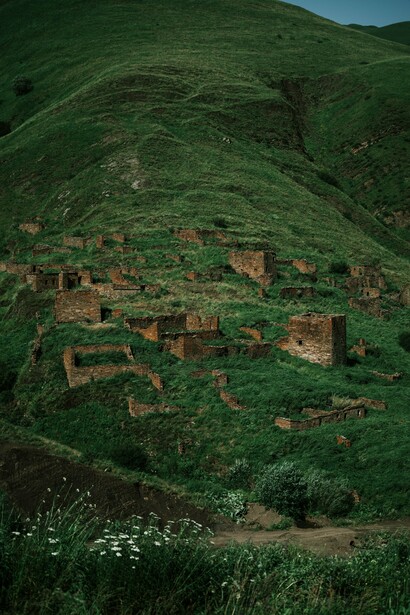
The Grozny I encountered wasn't the Grozny frozen inside those images. I found a modern city, enormous mosques, mountains, students, families, restaurants, and streets full of life and hospitality that felt surprisingly familiar to me as a North African. Some moments genuinely reminded me of visiting family back home. People wanted you to sit, eat, talk and then eat again even after you had made it very clear that there was absolutely no space left. Apparently, some international traditions require no diplomatic agreement.
Behind the humour, however, was a serious realisation. Places can become prisoners of their worst historical moment. A war ends, cities are rebuilt, children grow up, universities function, businesses open and an entirely new generation begins imagining its future. Yet thousands of kilometres away, the same archive footage can continue defining them.
Chechnya didn't make me forget its history. It made me realise that history wasn't enough to explain its present, and perhaps that distinction summarises almost everything Russia had been teaching me.
Moscow again, but never the same Moscow
Eventually, I found myself back in Moscow again, and by now returning felt strangely familiar. I knew places and had memories attached to streets. Russia was no longer the abstract country I had first approached with hesitation. It had become Moscow and Saint Petersburg, Rostov-on-Don and Nizhny Novgorod, Grozny and the mountains of Chechnya. It had become scientists, journalists, students, workers and people whose names existed in my phone rather than characters on a screen.
But familiarity creates its own danger. I like Russia; there is no point pretending otherwise. I love Moscow, I loved Nizhny Novgorod and I loved my experience in Chechnya. I have met people I genuinely care about, and every departure has carried some nostalgia with it. Yet liking a country should never require a journalist to stop questioning it.
During one trip, for example, accessing the internet as a foreign visitor became unexpectedly difficult. For a journalist who needs constant communication, it was frustrating. Security concerns may explain restrictions, but explanations don't erase practical consequences.
That detail matters to me because objective coverage shouldn't mean replacing a negative stereotype with a positive one. It should mean allowing reality to remain complicated. There are things about Russia I admire, things I question and things I still don't understand. That is a good thing because it means there are still stories to write.
What Russia taught me about power
Before these journeys, when somebody spoke about Russian strength, I thought about the obvious things: military power, territory, natural resources, history and political influence. After travelling through the country repeatedly, my definition has expanded.
Strength can also be a scientist protecting seeds for people who haven't been born yet. It can be an agricultural industry adapting when international supply chains become difficult. It can be a region refusing to remain permanently trapped inside the image of war. Sometimes strength is quieter: a Russian city suddenly filled with young people from dozens of countries at a time when the dominant international narrative says Russia is becoming disconnected from the world.
That doesn't mean the narrative is entirely false. It means it is incomplete, and incomplete stories are precisely where journalists should become interested.
The world surrounding Russia has undoubtedly changed since my first journey. Its relationship with the West has changed dramatically. Economic restrictions are real, the war is real and political confrontation is real. But another process is taking place alongside all of that: Russia continues looking outward, perhaps in different directions than before, but outward nonetheless.
From my perspective as a North African journalist, that is particularly interesting. Countries like mine don't live inside a simple East-versus-West diagram. We need economic partners, educational opportunities, food security, technology, cultural exchange and access to different markets. We have our own interests and our own relationships to build.
Nizhny Novgorod made me think seriously about the international generation Russia was trying to reach. Then Yekaterinburg gave me another opportunity to see that process for myself.
Yekaterinburg: somehow, I found home
And then came Yekaterinburg, my latest Russian chapter and, unexpectedly, one of the cities that felt most familiar to me.
I travelled there for the International Festival of Youth, wondering what another Russian city could possibly add to a journey that had already taken me through so many different versions of the country. I certainly didn't expect that one of my strongest reactions would be to think about Sfax, because Sfax is not simply another Tunisian city to me. Sfax is my home.
Nobody would confuse the Urals with the Mediterranean. The climate, landscape, architecture and history are completely different, yet there was something about Yekaterinburg's industrial character that immediately felt familiar. Sfax is a city shaped by work, industry and movement. It has an identity that is practical and productive, and those of us who call it home understand that character instinctively. Yekaterinburg gave me something of the same feeling. It didn't seem like a city designed simply to perform for visitors; it felt like a city with its own industrial rhythm and purpose.
There was something almost emotional about travelling thousands of kilometres from Tunisia, arriving in the Urals and finding a detail that made me think of home. Travel usually teaches us to notice differences, but sometimes its most surprising moments come when we recognise something familiar in a place that should feel completely foreign.
At the same time, Yekaterinburg was unmistakably Russian. Once again, I was fascinated by the way different periods of history remain physically present in Russian cities. Historical Soviet statues and architecture occupy the same urban landscape as beautiful churches, modern buildings and contemporary public spaces. I found myself walking through remarkably clean streets and noticing how the city seemed able to carry these different periods without completely erasing any of them.
Yet, once again, the strongest impression came from people rather than buildings. The volunteers, organizers and festival attachés were incredibly polite and attentive throughout my experience. After several journeys through Russia, this is no longer something I can dismiss as one lucky encounter. I have repeatedly experienced a particular seriousness about hospitality. Someone is usually ready to explain, guide, solve a problem or simply make sure that a foreign guest is comfortable.
People often speak about the "Russian soul," and as a journalist I am naturally cautious about romanticizing an entire country or pretending that millions of people can be reduced to one national personality. Still, after enough journeys, certain expressions begin to acquire meaning through experience. That generosity toward guests, sometimes expressed quietly rather than dramatically, is something I have encountered in different forms across several Russian cities. In Yekaterinburg, it was present everywhere in the people working around the festival.
A festival that learned from the details
The International Festival of Youth itself was extremely well organised. Bringing together large numbers of people from different countries, cultures and languages could easily become chaotic, yet the programme felt carefully prepared. Security was highly visible and thorough, and throughout the event I felt safe. The volunteers and organisers seemed to understand that successful international events depend not only on impressive ceremonies but also on hundreds of small practical details that determine how participants actually experience them.
One of those details was particularly important to me: the internet.
During an earlier trip, accessing the internet as a foreign visitor had become one of my genuine frustrations in Russia. For a journalist, being unable to communicate normally is not a small inconvenience. We need to speak with editors, send material, publish, follow developments and remain connected. This time, however, the organisers had clearly anticipated the issue and provided us with SIM cards, allowing us to stay connected without spending half the day trying to make VPNs or other complicated solutions work.
It might seem like a small logistical improvement, but I appreciated it enormously. More importantly, it gave me the impression that a problem foreign visitors had encountered before had been noticed and that someone had tried to provide a practical solution. Good organization is often revealed precisely through details like these.
The Russia of drones, technology and medicine
Another element that fascinated me in Yekaterinburg was the strong presence of advanced technology throughout the festival and its exhibition spaces. Alongside the cultural programmes, international delegations and discussions between young participants, there was another Russia being presented: one focused on engineering, technological development and innovation.
The exhibition included drones, vehicles, medical technologies and other technological projects. For me, this gave the festival another dimension. International youth events can easily become predictable collections of flags, traditional clothes, speeches and cultural performances. Those things have value, but here I was also walking through displays showing technologies connected with transportation, medicine, engineering and other areas of development.
The contrast was fascinating. Outside the festival, Yekaterinburg carried visible reminders of Russia's Soviet and industrial history. Inside, I was looking at drones, modern vehicles, medical technology and projects concerned with what comes next. The past and the future were not presented as separate Russias; they were occupying the same city.
That made my connection with Sfax even more interesting to me. Coming from an industrial city myself, I naturally think about what happens when an economy and a society shaped partly by industry confront technological transformation. Industry is not only about factories anymore. Increasingly it is connected to automation, artificial intelligence, advanced engineering, medical innovation, robotics and technologies that are changing how societies produce and work.
Seeing that technological presence in Yekaterinburg added another layer to my understanding of Russia. It was easy to photograph the historical monuments and beautiful churches, but the festival reminded me to pay attention to what the country wants to build as well as what it wants to preserve.
And then, after contemplating Russia's technological future, international cooperation and the transformation of industry, there was another important subject demanding my attention.
About Borscht
At some point during enough journeys through Russia, you inevitably develop an opinion about borscht. Mine is now quite simple: I genuinely like it. Somewhere along the way, it stopped being "the famous Russian beetroot soup I should try because I'm in Russia" and became something I was actually happy to see arriving at the table.
Perhaps this is not the most sophisticated conclusion a journalist can bring home from an international festival, but after discussing drones, medicine, technology and geopolitics, I am comfortable admitting that some cultural diplomacy can happen through a bowl of soup.
And borscht, apparently, is quite persuasive.
Another city, another correction
Looking back now, Yekaterinburg feels like a natural continuation of everything Russia has been teaching me since my first flight to Moscow. Moscow broke my first stereotype. Saint Petersburg connected history, science and sacrifice in a way I had never expected. Rostov-on-Don showed me industry and adaptation. Nizhny Novgorod made me think about Russia's attempt to build relationships with a new international generation, while Chechnya confronted perhaps the strongest image I had inherited from years of television coverage.
Yekaterinburg added something different. It gave me an industrial city that somehow reminded me of Sfax, my home, while simultaneously showing me another combination of the Russias I had encountered throughout these journeys: Soviet monuments, beautiful churches and historical memory existing alongside drones, vehicles, medical technology and young people discussing the future. At the same time, the experience remained intensely human because of the volunteers, organisers and ordinary people whose politeness and hospitality stayed with me after the official programme ended.
Perhaps that is one of the strangest gifts of travel. You can travel thousands of kilometres looking for difference and suddenly recognise something from home. Then, just as you begin to feel comfortable with that familiarity, the place shows you something completely new.
None of these experiences gives me the right to declare that I now understand the "real Russia." If anything, travelling there repeatedly has made me increasingly suspicious of that phrase. Which Russia would be the real one? Moscow's enormous avenues and metro stations? The scientists preserving agricultural heritage in Saint Petersburg? The factories of Rostov-on-Don? The river views and international youth gatherings of Nizhny Novgorod? The mountains and hospitality of Chechnya? Or Yekaterinburg, where Soviet history, industrial identity, Orthodox churches, technological exhibitions and an international youth festival somehow existed within the same experience?
They all exist, and that is precisely the point.
I don't want to replace the negative stereotypes I once carried with an equally simplistic positive picture in which everything is beautiful and every difficult question disappears. Both would be failures of journalism. What I want is what these journeys have gradually given me: encounters, contradictions, conversations, frustrations, friendships, historical memories and ordinary moments that cannot fit comfortably inside a single narrative.
Before my first journey, Russia existed mainly on a screen. Now it exists in memories: a stranger on a plane making sure I wasn't left alone at the airport; scientists protecting seeds in Saint Petersburg; factories in Rostov-on-Don; walking beside the river in Nizhny Novgorod; hospitality in Chechnya; returning to Moscow with journalism that had begun with curiosity about the country; and now Yekaterinburg, where an industrial Russian city unexpectedly made me think about Sfax and home.
It also exists in smaller memories that will probably never appear in a geopolitical analysis: volunteers patiently answering another question, an attaché making sure everything was fine, a SIM card that finally allowed me to work normally, drones and medical technologies that made me stop and look, clean streets explored between festival activities and, yes, a bowl of borscht that I enjoyed far more than I expected.
Several journeys later, I know considerably more about Russia than I did before that first flight to Moscow. Strangely, I am also much less certain that any country can be understood through the neat conclusions we construct about it from a distance. I consider that progress.
I didn't travel to Russia to prove that its critics were wrong, and I didn't travel there to prove that its admirers were right. What these journeys have taught me is something more useful for a journalist: go, watch, listen, question, meet people and allow reality to complicate whatever conclusions you brought with you.
After Moscow, Saint Petersburg, Rostov-on-Don, Nizhny Novgorod, Chechnya and now Yekaterinburg, perhaps the most important thing Russia has taught me has nothing to do with Russia alone.
Never allow somebody else's screen to become your only window onto a country. Open the door and look for yourself.