English
 Español
 Français
 Deutsch
 Italiano
 Português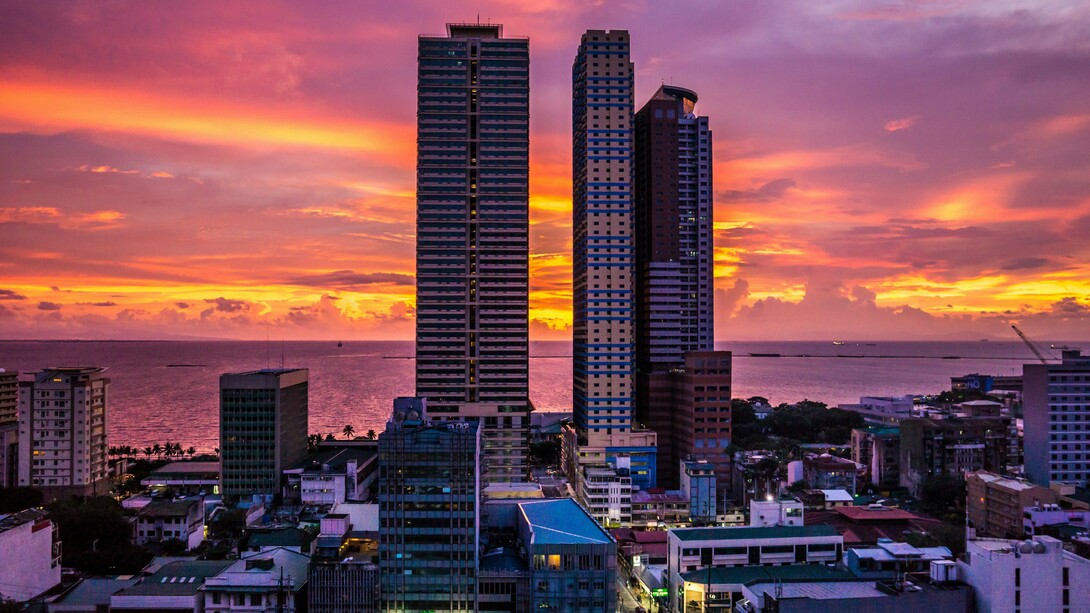
The phrase has followed me for years, echoing each time I return or move away. I first encountered it through an old film that portrayed Manila during World War II—a city fought over by American and Japanese forces and reduced to ruins. At the same time, ordinary people absorbed the greatest share of suffering.
Long before I learned the city through my own footsteps, that image shaped how I understood it: a place exposed to history, power, and loss, yet never fully conquered. Perhaps that is why the song “Manila” feels so accurate when it says, “Maraming beses na kitang iniwanan at iba ang pinuntahan parang babaeng mahirap talagang malimutan.” Manila is that kind of city—one people leave and return to, a city whose meaning reveals itself not all at once, but through patterns of movement, survival, belief, and everyday life.
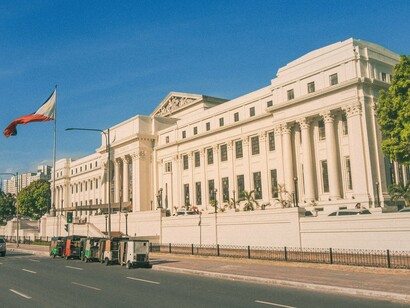
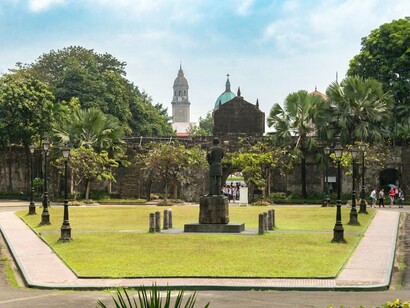
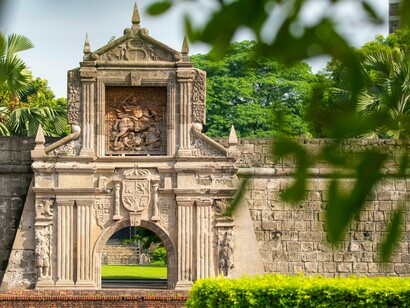
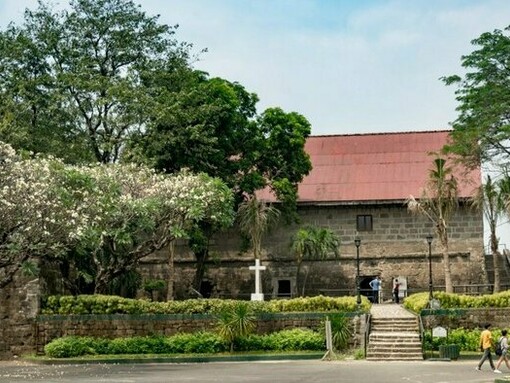
Manila is not my favourite city in the Philippines, but it is a city I deeply respect. That respect comes from its history, its contradictions, and the endurance of its people. There is nothing like Intramuros, a place where you can start your journey in Manila. Intramuros, the historic "Walled City" of Manila, is celebrated for its abundant Spanish colonial heritage, notable sites such as Fort Santiago and San Agustin Church (a UNESCO site), its cobbled streets, and its role as the former political and religious centre of the Philippines. It provides a window into the nation's history through restored structures, museums, and traditional kalesa (horse-drawn carriage) tours.
The city feels like a living archive. Every street holds memory. Every corner tells a story of destruction and recovery. Despite flooding, congestion, pollution, and inequality, Manila continues to move forward. It is never static; it is always rebuilding, always becoming. Doing street work in Manila is the best experience for me when I have a chance to train American Peace Corps Volunteers and really a rich source of my writings and even finding meaning in this life.
That respect was reinforced far from home. While I was in Seoul, South Korea, I met two elderly Koreans who learned I was a Filipino. They told me they had studied in Manila in the 1980s, a year after I was born, when the city, in their memory, was beautiful and progressive. With quiet nostalgia, they recalled wide roads, cultural vibrancy, and a sense of promise. One of them smiled and said that at the time, they wished Seoul would one day become like Manila.
Hearing this unsettled my assumptions. It reminded me that cities rise and fall in uneven rhythms—and that Manila, often judged by its present struggles, was once a reference point for aspiration in Asia. They even added that you should be more progressive than us because you speak well in English. I was just smiling but also reflecting; if we talk about the language, then Filipinos really should know a lot of words in English because it is our second national language apart from almost 100 dialects used in the different islands in the Philippines.
When you are in Manila, you need to speak the national language, Filipino, or, too commonly, call it "Tagalog", which means that someone is from the river or "taga Ilog", and the tone is soft-spoken, or else it will create a mess. However, every time I am in Manila, I am trying to listen to people’s accents and figure out where they are from in the Philippines because, by accent alone, it will tell you who is from where.
I am having a fun memory with one of my classmates from before at De La Salle University who is from Cebu because she used to talk with the drivers in the Bisayan dialect and she said that there is a need to change her accent or language because she discovered that most people in Manila are really Bisayans. Having a different accent will cause a lot of trouble because there are people who will take advantage of you not coming from Manila or, as they commonly term it, being “Promdi” or from the province.
I first encountered Manila at the age of fourteen. Davao, then, is still remote and, unlike Manila, does not have a skyway. At that time, I only knew its harshness. The traffic overwhelmed me, the pollution irritated me, and the crowds felt suffocating. Everything seemed loud and relentless. However, this long traffic, which is visible on the EDSA Road, reminded me of the Filipino power, which is the People Power in 1986 to overthrow the almost 23 years of dictatorship during which we recovered our freedom from martial law. I think that kind of movement was followed by several other protests, and maybe some of these are no longer sincere or focused on a particular kind of change.
It was only years later—when I spent nearly fourteen months studying at De La Salle University, Manila, and later working with the United States Peace Corps—that the city slowly unfolded itself to me, layer by layer. I live close on Taft Avenue and I can hear the LRT or Light Railway Transit when it starts or when it will end. Well, being a De La Salle University student felt like a poor girl suddenly winning a lottery ticket to live in a mansion—which is exactly how I would describe the campus.
The university itself seemed almost unreal: the restrooms felt like those in a five-star hotel, and the security guards, dressed in crisp white uniforms, looked like presidential guards. When I first visited, I was amazed by the escalators and the large elevators, which made the place feel more like a luxury shopping mall than a school. On both ends of the street, there were Starbucks cafés, inviting students to sip first-class coffee as if it were a daily ritual—another reminder of the university’s polished, upscale vibe. Inside DLSU, you could encounter celebrities, foreigners, and wealthy students—the university has long been associated with the affluent, except for scholars like me. So, enrolling there for my Master’s in Health Program truly felt like holding a winning lottery ticket—a rare and extraordinary opportunity.
Through De La Salle University, I was allowed to enhance my research skills, having our own space to write inside the university, and the programme had its own book collections. As La Salle students, we are sent to various scientific conferences, which allow us to visit the Heritage Hotel, the Bay View Park Hotel, and the famous Manila Hotel. After my DLSU days I was hired for the US Peace Corps training programme, which allowed me to enter inside the United States Embassy, the biggest embassy in the Philippines.
It was also in Manila where I first truly saw what survival looks like. In one of the city’s parks, I watched families travelling together on a single bicycle—parents, children, and sometimes their belongings carefully balanced as they moved through the streets. Some had dogs walking beside them, clearly part of the family. It was my first time witnessing how ingenuity becomes a form of endurance. There was no spectacle in it, only quiet determination. Even though there was a park filled with street dwellers in Binondo, and when we visited slum areas in Manila with the American Peace Corps volunteers, I clearly understood that poverty here is worse than in any other city.
Manila breathes differently at sunset. Along Roxas Boulevard, as the sun sinks into Manila Bay, the city softens. The sky becomes forgiving layers of gold, orange, and violet, stretching gently over the water. Walking there, I find myself reflecting on movement, loss, and persistence. For a fleeting moment, the noise fades, and it feels as if Manila itself listens. Nearby stands the Cultural Center of the Philippines, a space that celebrates Filipino creativity and artistic identity.
Whatever its political origins, the centre endures as a testament to imagination—a place where stories are told through movement, sound, and silence. From there, I often wander to Luneta Park. Standing before the statue of Dr. Jose Rizal, the great Filipino here, I am reminded that patriotism is not always loud. Rizal’s life embodies discipline, intellect, and moral courage. His pursuit of excellence persisted despite resistance and oppression, ultimately costing him his life.
I cannot help but question: why did the Filipinos not stop the Spaniards from killing him? Or why did he not simply escape, knowing the fate that awaited him at Luneta? Perhaps greatness lies precisely in facing death for the country one calls home. A national hero died on his own soil.
I sense that this kind of courage is woven into the Filipino DNA, shaping the belief that to be a hero, one must sacrifice for love of country. Yet I wonder—how many Filipinos have followed Rizal’s example and how many have left, seeking to forget that call to patriotic love? Luneta becomes a space for such questions. Up to what limits can we love our country? Is love of country greater than love for oneself, or is love for oneself also an expression of love for the nation? In Manila, at sunset, amidst history and memory, these questions linger, gentle and persistent, like the city itself.
Faith reveals itself most vividly in Quiapo. Inside the church, devotion is palpable—people kneel, weep, whisper prayers, and reach out to touch the image, carrying desperation and hope in equal measure. Yet just outside, if one observes quietly, faith fractures into survival strategies. Faith healers promise cures, palm readers sell glimpses of the future, and others discreetly offer Cytotec for abortion. The sacred and the transactional coexist without apology.
Manila also knows how to celebrate. International artists regularly hold concerts in the city, turning it into a cultural crossroads. I remember flying from Davao just to watch Alicia Keys perform at the SM Mall of Asia. The third biggest shopping centre in the world. That night, Manila pulsed with shared excitement—music echoing across the crowd and strangers united by song.
Basketball offers another form of collective joy. Filipinos love the sport with remarkable intensity. Inside crowded arenas, cheers erupt, strangers bond, and emotions spill freely. Basketball in Manila is more than entertainment—it is a shared language. Beyond celebration lies commerce and survival. In Divisoria, endless stalls and narrow alleys tell stories shaped by Chinese traders who had already learnt how to thrive in Manila long before Spanish colonisation. Shopping there is exhausting but educational. It reveals how migration, adaptation, and persistence are woven into the city’s fabric.
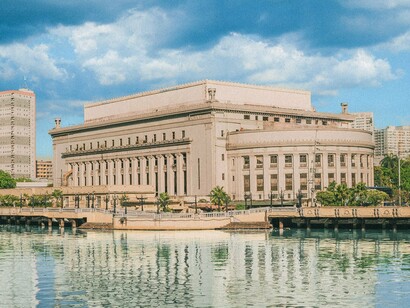
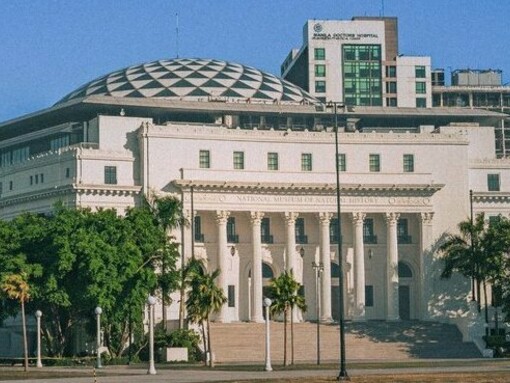
Modern Manila asserts itself boldly through massive malls—some of the largest in the world. If you want to glimpse the city’s future, you go to Bonifacio Global City, where wide roads, clean lines, and global aesthetics create an illusion of order and possibility. There is even a small enclave modelled after Venice, Italy—a reminder of Manila’s constant desire to reinvent itself. The city’s museums offer quieter encounters—places to pause, to remember, and to make sense of the past. In a city defined by movement, they offer stillness.
Manila taught me realism in ways no classroom ever could. In Intramuros, I see the grandeur of the Filipino past and the scars of colonisation—resilience etched into stone, faith sustained across centuries. Yet Manila also confronts you with its most uncomfortable truths, such as the red-light district of Malate, where young women trade their bodies for survival. The contrast is unsettling, but it is real.
For a social scientist, Manila is not merely a destination. It is a living laboratory of human experience—a city of contradictions, faith and fracture, celebration and struggle, memory and ambition. And perhaps that is why I keep coming back. Manila is not just a city; it is a door, a lens through which one can understand the many faces of the Filipino—resilient, inventive, devout, joyous, and endlessly striving.
Manila, the open city. Open to history and hope. Open to survival and joy. Open, always, to becoming.