English
 Español
 Français
 Deutsch
 Italiano
 Português
My relationship with Africa began in the early 1980s, when I first traveled across the continent on public health missions. From the start, the continent captured not only my attention but also my imagination. In many ways, it felt like a return to origins: my father was born there, the son of a Lebanese immigrant who had journeyed to the Transvaal—then a province in northeastern South Africa known for its mineral wealth—to supply food to miners.
Working in public health became an unexpected passport into the continent’s most hidden realities. Assignments in 20 African countries took me far beyond the routes familiar to tourists—into war‑scarred nations, communities absorbing waves of refugees, and regions where health systems were stretched to the breaking point. They also allowed me to witness the tremendous courage with which Africans confront extraordinarily difficult circumstances.
Across the continent, serious public health challenges persist: high rates of intestinal and respiratory infections, widespread malnutrition, malaria, HIV/AIDS, and tuberculosis. Intestinal and respiratory infections remain among the leading causes of death among children under five throughout the continent. These illnesses both aggravate and are aggravated by malnutrition, creating a vicious cycle that is difficult to break.
Malnutrition itself remains a major driver of child mortality. It can have lifelong consequences for physical and cognitive development, and it increases vulnerability to other diseases. The negative effects of malnutrition should not be underestimated, since nearly one‑third of children in the developing world are malnourished.
According to the World Health Organization, the African region accounts for 95 percent of global malaria cases—an estimated 265 million in 2024—and 579,000 deaths. Children under five are the most affected, representing 75 percent of all malaria deaths. After years of decline, malaria cases began rising again in 2020, driven by insecticide resistance, funding gaps, and weaknesses in health systems.
Sub‑Saharan Africa also remains the global epicenter of HIV/AIDS. As of early 2025, more than two‑thirds of all people living with HIV were in this region. Southern Africa continues to bear the heaviest burden, with adult prevalence rates exceeding 10 percent in several countries. Eswatini, formerly Swaziland, has the world’s highest prevalence, at more than 28 percent.
There is a stark disparity in who is affected by this infection. Young women and adolescent girls (ages 15 to 24) are disproportionately affected, accounting for more than 80 percent of new infections in their age group in some countries. Also of concern to public health officials is the emergence of HIV‑drug‑resistant strains, which threaten the effectiveness of current treatment regimens. In addition, marginalized groups—such as sex workers, men who have sex with men, and people who inject drugs—still face high levels of stigma and even legal barriers that prevent them from accessing care.
Tuberculosis continues to exact a heavy toll as well. More than one‑third of global TB deaths occur in the African region, which records an estimated 2.5 million cases annually and 424,000 deaths in 2022. The rise of multidrug‑resistant TB—difficult and costly to treat—combined with overcrowding, malnutrition, and poor living conditions, fuels its spread.
Many organizations and individuals are working to improve health conditions across the continent, including the WHO and other UN agencies that provide food assistance, technical support, and help strengthen health systems. Yet recent and drastic cuts in USAID funding have had a profoundly negative impact. USAID has long been one of the main providers of health assistance in Africa, representing roughly 31 percent of all U.S. foreign aid in recent years. These cuts have disrupted HIV treatment, halted malaria and TB programs, and severely affected maternal and child health services.
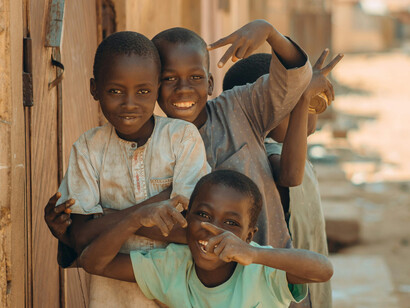
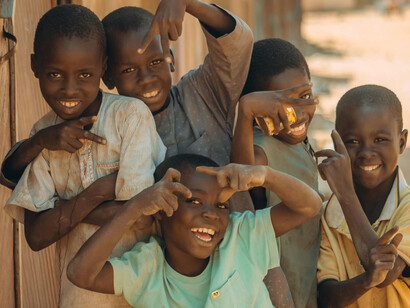
These are only some of the challenges Africans face—and yet they confront them with grace and courage. What stayed with me most from my travels was not only the hardship but the extraordinary resilience I encountered everywhere. Centuries of exploitation by colonial powers may have hardened Africans’ determination to overcome adversity. Even in the most difficult circumstances, people display a remarkable capacity for endurance, meeting challenges with humor, dignity, and an undiminished appetite for life.

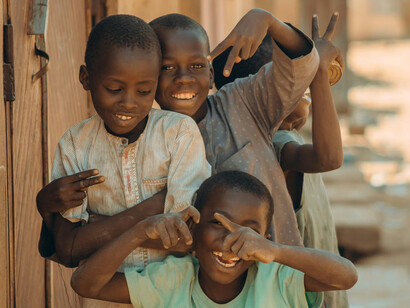
Photos by © Cesar Chelala
In recent years, despite the seriousness of the situation, Africa has made important advances in the area of public health. In several countries, new HIV infections have declined; AIDS‑related deaths have fallen by 64 percent thanks to effective antiretroviral therapy; life expectancy has risen from 56.5 years in 2010 to 62.3 years in 2024; and mother‑to‑child HIV transmission has dropped significantly in many areas. These are notable achievements for a continent grappling with widespread poverty, limited education, inadequate sanitation, fragile health services, and the growing impact of climate change.
Very early in my travels, I came to believe that there are, in effect, two Africas. One is the version that dominates global headlines: a continent defined by poverty, disease, and conflict. The other is the Africa I came to know firsthand—a dynamic, hard‑working society of men and women striving for a better future; a place filled with children whose energy and curiosity defy the bleak narratives imposed upon them; a continent rich in laughter, music, and creativity.
It is this Africa—the Africa of my heart—that gives me hope for a brighter future.