English
 Español
 Français
 Deutsch
 Italiano
 Português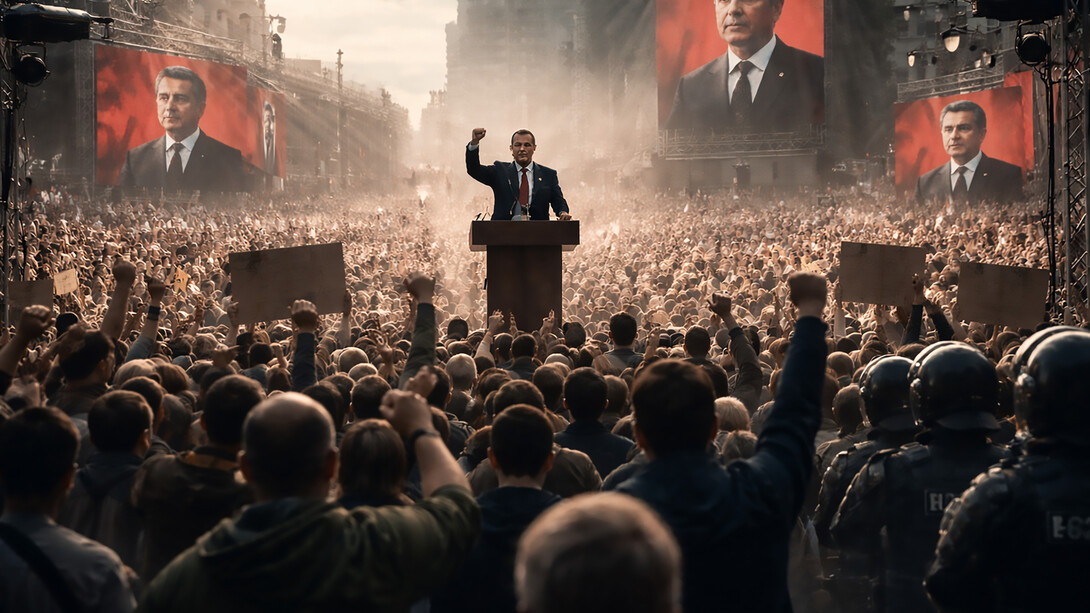
We talk about tyranny like it's this external force. A monster that shows up, grabs power, and destroys freedom. Some villain. Some strongman. Some bad guy we can point to. This way of thinking about it is convenient because it lets us pretend tyranny happens to us, that we're just victims who had no choice.
But that's not how it works. Tyranny works because people choose to follow it. Not just tolerate it. Not just survive under it. Actually follow it.
You could spot tyranny easily in the past. One guy in charge. No opposition allowed. Violence right out in the open. Now it's learned to be subtler. It talks about protection, identity, security, and national rebirth. It doesn't say, "I'm going to dominate you." It says, "Let me handle this so you don't have to worry anymore."
Look at Trump, Putin, Xi, Netanyahu, Erdoğan, and Meloni. They're not just individuals making bad decisions. They're symptoms. They emerge when societies get tired of dealing with complexity, exhausted by ambiguity, and start craving someone who'll just decide things already.
These leaders don't all run the same kind of system. Some are in democracies, some aren't. But they do the same thing: they concentrate power by making reality simple, and people let them do it. That's the part nobody wants to talk about.
Tyranny today doesn't usually start with soldiers in the streets. It starts with relief. The relief of finally hearing someone who "tells it like it is." Who names your enemies for you? Who promises everything will make sense again. When your life feels unmanageable—when the economy's in chaos, when culture wars are exhausting, when you're just tired—tyranny offers you an out: stop trying to understand everything.
Just pick a side.
That's why we follow it.
We don't follow tyranny because we're evil or stupid. We follow it because freedom is honestly exhausting. Freedom means you have to make decisions, live with doubt, negotiate with people you disagree with, and accept that you might be wrong about things. Tyranny lifts all of that off your shoulders. It tells you: you're not confused; the world is just broken. You're not failing; you've been betrayed. And here's the most seductive part: none of this is your fault.
Once you believe that, violence stops being a problem.
Once reality splits into us versus them, protectors versus threats, then killing becomes administration. Bombs are security measures. Borders are defense. Dead people become numbers, or they become proof that you were right to be afraid. Tyranny always involves death—sometimes loud, sometimes quiet, sometimes through policy that just lets certain people disappear. But it never calls it killing. It calls it keeping order.
So when I say these leaders are killers, I'm not being dramatic. War leaders, authoritarian rulers, and strongmen—they don't preside over death by accident. They use it as a tool. Some do it openly. Some hide it in bureaucracy. Some just decide which lives don't count. The method varies, but the logic is always the same.
And here's what really gets me: tyranny doesn't survive because people are blind. It survives because people see exactly what's happening and adjust.
We scroll past the violence. We get used to it. We say it's complicated. We say it's just how geopolitics works. We say there's no other option. And by doing that, we're not actively supporting it, but we're not stopping it either. It's something colder than support. It's resignation that comes with benefits.
Why don't we fight back?
Because fighting tyranny now would mean giving up what it gives us. The comfort of knowing exactly who the enemy is. The comfort of belonging somewhere. The comfort of never having to question whether you might be part of the problem. Tyranny hands you identity before it asks about justice.
Certainty before truth. Protection before freedom. A lot of people take that deal.
There's another reason too, and it's more cynical: tyranny is fast. It gets things done. It doesn't waste time debating. Borders get closed, enemies get dealt with, and critics get silenced. Democracy, meanwhile, is slow and messy and almost never gives you the satisfaction of seeing immediate results. When everyone's obsessed with productivity and speed, tyranny actually looks efficient. It looks modern.
That's why the danger now isn't military coups. It's the applause that follows speeches about law and order. It's elections where the outcome stops mattering. It's not censorship—it's people choosing silence because speaking up is too tiring. Tyranny doesn't need to ban words anymore. It just floods the space with so much noise that nothing you say can matter.
So what is tyranny?
It's not just someone abusing power. It's all of us deciding to stop resisting oversimplification, even when that oversimplification gets people killed. It's the moment a society agrees that some lives can be sacrificed so others can feel safe, coherent, and superior.
And why do we keep following it?
Because tyranny doesn't demand that we fix anything. It doesn't ask us to build something better or harder or more complicated.
It just asks us to stop asking questions. That's the genius of it. That's the horror.