English
 Español
 Français
 Deutsch
 Italiano
 Português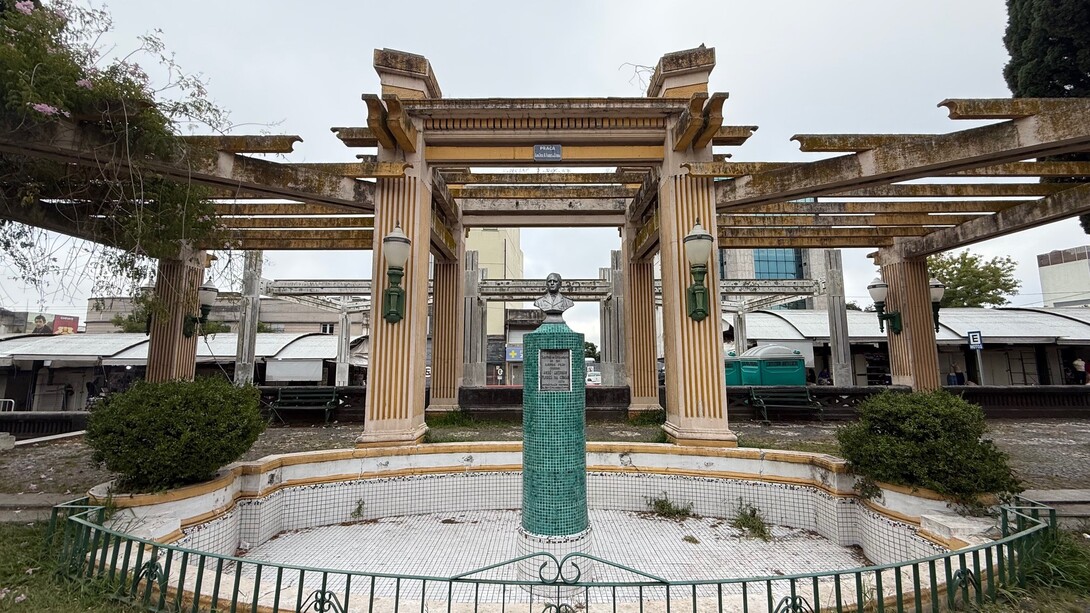
Having reported from borders shaped by conflict and fragile coexistence, from the Middle East to South America. I found a rare exception on the line between Santana do Livramento and Rivera, where history took a different course.
Borders are rarely quiet places.
Over the course of my reporting from frontiers between Brazil and Colombia, Turkey and Syria, Iraq and Syria, and across the divided island of Cyprus, I became familiar with what borders tend to produce: restriction, control, and, often, the visible or latent presence of conflict.
At checkpoints between Israel and Palestine, movement is regulated through infrastructure, barriers, permits, and surveillance. In Kashmir, between India and Pakistan, the border is reinforced by military presence and historical tension. Even in the absence of open conflict, what persists is often a fragile equilibrium.
This has been the dominant model: borders as sites of division, shaped by dispute and maintained through control.
The line between Brazil and Uruguay, however, followed a different trajectory.
Its origins date back to a series of territorial negotiations in the 18th and 19th centuries, when the Iberian empires Portugal and Spain sought to define their spheres of influence in South America. Over time, treaties and diplomatic agreements gradually stabilized the boundary, avoiding the prolonged armed conflicts that marked other regions.
Unlike many borders forged through war and later hardened by militarization, this one was consolidated through negotiation and coexistence.
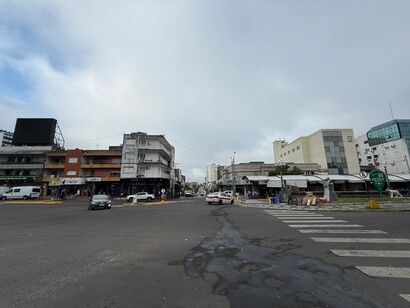
In the late 19th and early 20th centuries, the towns of Santana do Livramento and Rivera began to grow side by side. Rather than turning away from each other, they expanded in parallel, eventually forming a continuous urban space.
Trade played a central role in this process. So did migration, intermarriage, and shared economic activity. Over generations, the border became less a line of separation and more a point of contact.
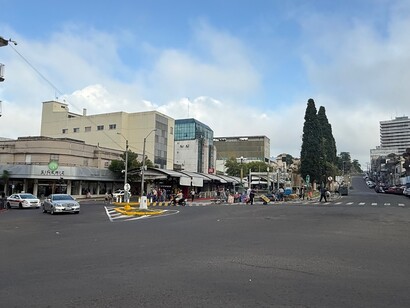
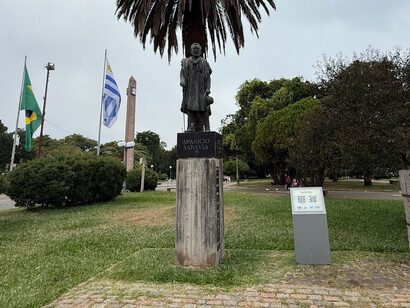
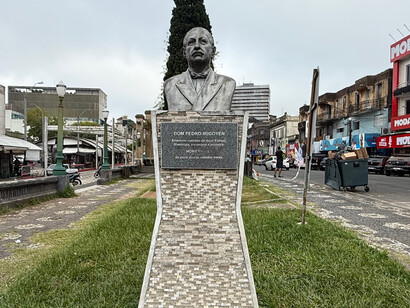
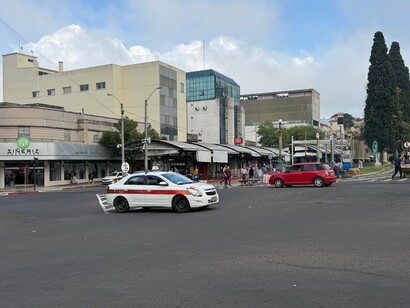
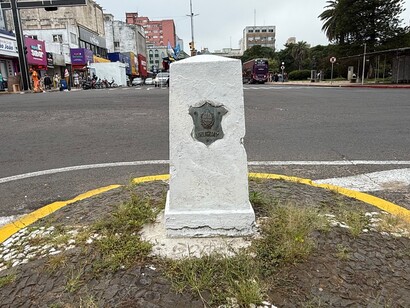
At the center of this shared development lies Praça Internacional, a symbolic and practical space where the two countries meet. Established as a gesture of integration, the square embodies the idea of a border without barriers.
There are no fences. No checkpoints. No interruptions.
A street extends from one country into the other. Shops operate across currencies. Conversations move fluidly between Portuguese and Spanish. Daily life unfolds without the need to acknowledge the border as a limit.
This does not mean the border disappeared in a legal sense. National systems remain intact: laws, institutions, and economies.
But in practice, the line has lost much of its separating force.
Today, it is common to live on one side and work on the other, to study, shop, and maintain relationships across the divide without treating it as a barrier.
Families are part of this history.
One woman I spoke to shared her story. She comes from Porto Alegre; he, from Montevideo, two lives that began apart and, over time, found their way to the same ground.
For years, Santana do Livramento was simply the middle, a place that made distance possible.
So they met there. Again and again.
Until distance stopped being something to manage and became something they had already crossed.
They decided to stay together in Santana do Livramento.
What had once been just a meeting point became the beginning of a life together.
Their story is not exceptional here. It is part of a broader reality in which the border does not prevent connection; it allows it.
The region is known as the “Border of Peace.”
It may sound like a slogan. Until you are here. Because peace here is not imposed. It is lived.
It exists in routine, in familiarity, in the absence of friction. It does not depend on control to hold.
It simply does.
Differences remain. Laws, currencies, systems—they are all still there. But they do not divide. They coexist.
And perhaps this feels even more significant at a time when some countries no longer respect borders.
From years of reporting on places where borders define limits of movement, identity, and possibility, this place suggests something else.
Not what a border is. But what it can stop being.
In Santana do Livramento and Rivera, the boundary still exists. It can be traced, mapped, and named.
But in the rhythm of everyday life, it no longer behaves like a border.
People cross without noticing.
Conversations shift without effort.
Life continues without interruption.
In most places I’ve reported from, borders demand attention, imposing pauses, creating tension, and defining limits.
This one does something else.
It disappears. Not officially. Not politically.
But in the only place where it truly matters. In how people live.
I stand there, between two countries, and for a moment, there is no need to explain where one ends and the other begins.
No need to ask permission. No need to wait. No need to justify movement.
Only the quiet certainty of being able to stay.
And it is there, in that almost unremarkable continuity, that something shifts.
Because after everything I have seen, borders marked by control, by conflict, by the constant negotiation of presence, this feels unfamiliar.
And yet, strangely simple.
Not an absence. But a different presence.
And in that space, where a line was meant to divide, I find something I was not looking for but recognize immediately: peace.